This is the second of the Hokuriku history notes. It follows the prehistory note and covers the Asuka period (late 6th century to about 710), centered on the three places we will visit: Komatsu, Kanazawa, and Toyama. For a summary of all the notes, see the Hokuriku history overview.
The year 507, when Emperor Keitai acceded, already places Hokuriku in the story of royal legitimacy. Fukui Prefectural History notes that the Nihon Shoki, Kojiki, and Joguki connect Keitai’s origin to Echizen, Omi, and Mikuni; in its interpretation, Keitai was born in Omi but grew up in his maternal home region of Echizen1.
The Asuka period usually refers to the transitional era from the late 6th century to the relocation to Heijo in 710. In the Kinai area, it appears through the concentration of palaces, temples, writing, and ritsuryo institutions; in Hokuriku, it has to be read through settlements, production sites, writing materials, and administrative-related remains2.
Komatsu, Kanazawa, and Toyama’s Asuka-period picture is drawn mainly from local excavation and survey materials: settlements, Sue ware and Haji ware, kiln production, industrial remains, Buddhist or ritual objects, written materials, administrative-related remains, and tomb change from the late Kofun period into the early ancient period.
1. What the Asuka period is
“Asuka” is first and foremost a place name in the southern Nara Basin, centered on today’s Asuka Village. From the late 6th century to the early 8th century, palaces, temples, stone structures, powerful clan bases, and administrative installations clustered here. Asuka Village’s official material describes this area as a key zone in the formation of the ancient Japanese state3.
The Asuka period can be read through four aspects.
The first is the political center. The Asuka Palace ruins include multiple palace remains, and the Asuka Itabuki Palace is associated with Empress Kogyoku, Empress Saimei, and events linked to the Taika Reform4. By the 7th century, Asuka was a place where political events and the palace landscape overlapped closely.
The second is Buddhism and temples. The date Buddhism first arrived is not uniform across the written sources, but from the mid-6th century onward, Baekje transmitted Buddha images, scriptures, artisans, and temple-building techniques to Wa. That is an important background for Asuka culture. The Cultural Heritage Online entry for the Asuka-dera roof tile says that in 588 Soga no Umako began building Asuka-dera, with a Baekje roof-tile specialist taking part; Asuka-dera is one of Japan’s earliest tiled temples5.
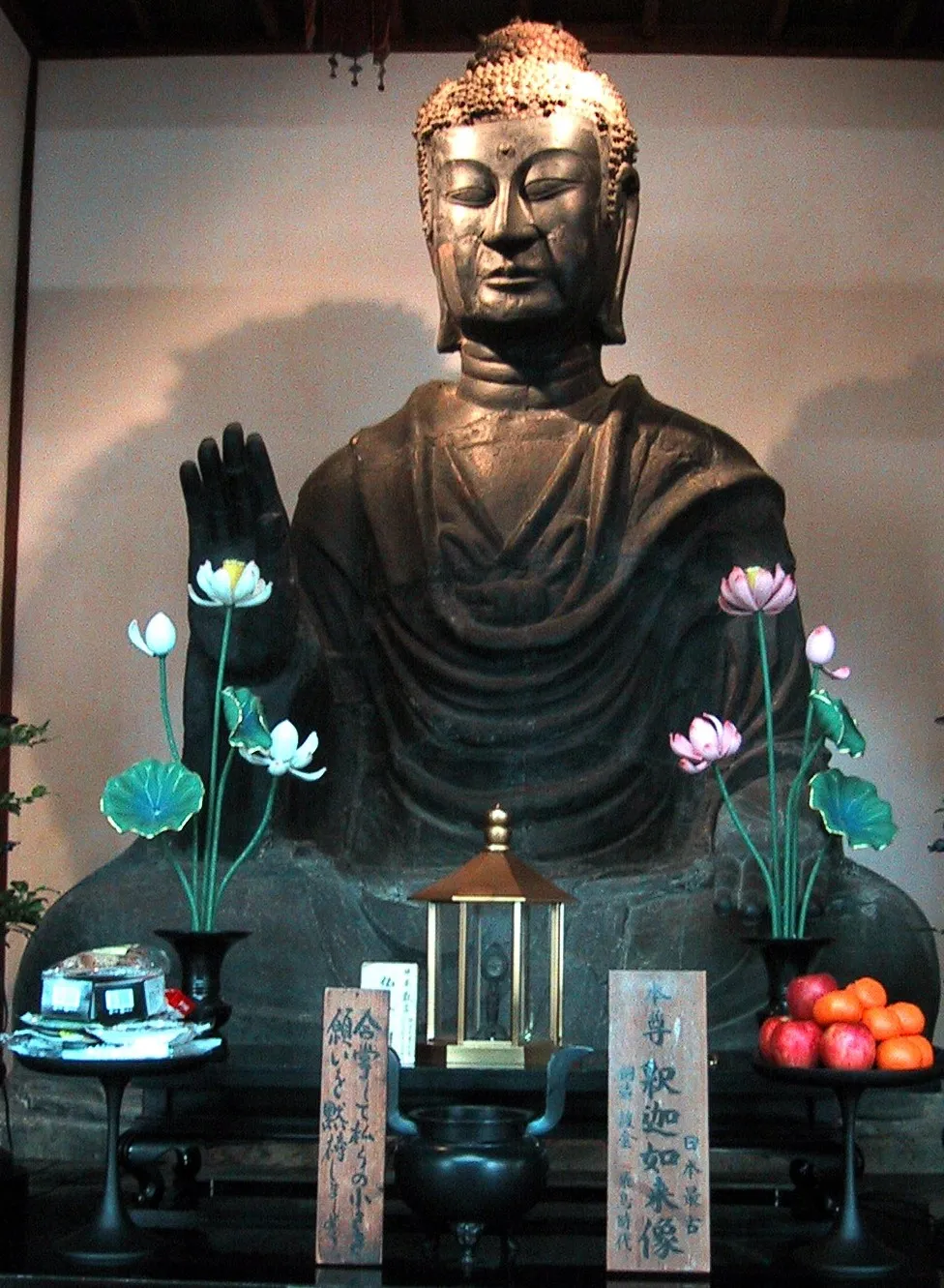
The Great Buddha of Asuka-dera. Source: Wikimedia Commons
The third is writing culture. Wooden tablets, ink inscriptions, and administrative records gradually appear in the Asuka period. The Kojiki was compiled in 712 and the Nihon Shoki in 720, both after the Asuka period itself. The National Museum of Japanese History explains that Buddhism brought kanji and writing culture into the archipelago in the 6th century, and that Baekje and Silla were important conduits for writing culture6.
The fourth is East Asian geopolitics. In the 6th and 7th centuries, Wa faced the unification of China under the Sui and Tang, while the Korean Peninsula saw competition among Goguryeo, Baekje, Silla, and Gaya. The National Museum of Japanese History’s Gaya exhibition explains that from the 4th to the 6th century Gaya was based on maritime trade and iron production, interacted with Silla, Baekje, Wa, and China, and disappeared in 5627. Buddhism, writing, artisans, tiles, and diplomacy in the Asuka period all unfolded within this East Asian exchange sphere.
On the chronology side, Emperors Suiko, Jomei, Kogyoku/Saimei, Tenchi, Tenmu, Jito, and Monmu are standard reference points for understanding political change in the Asuka period. The Asuka Palace explanation links the Asuka Itabuki Palace directly to Empress Kogyoku, Empress Saimei, and the Taika Reform. The Horyuji official page places Prince Shotoku, the 607 creation of Horyuji under Emperor Suiko, the Twelve Cap Ranks, the Seventeen-Article Constitution, and the envoys to Sui in the same explanatory block8. These figures and events are the basic background for the central politics and institutional adoption of the Asuka period.
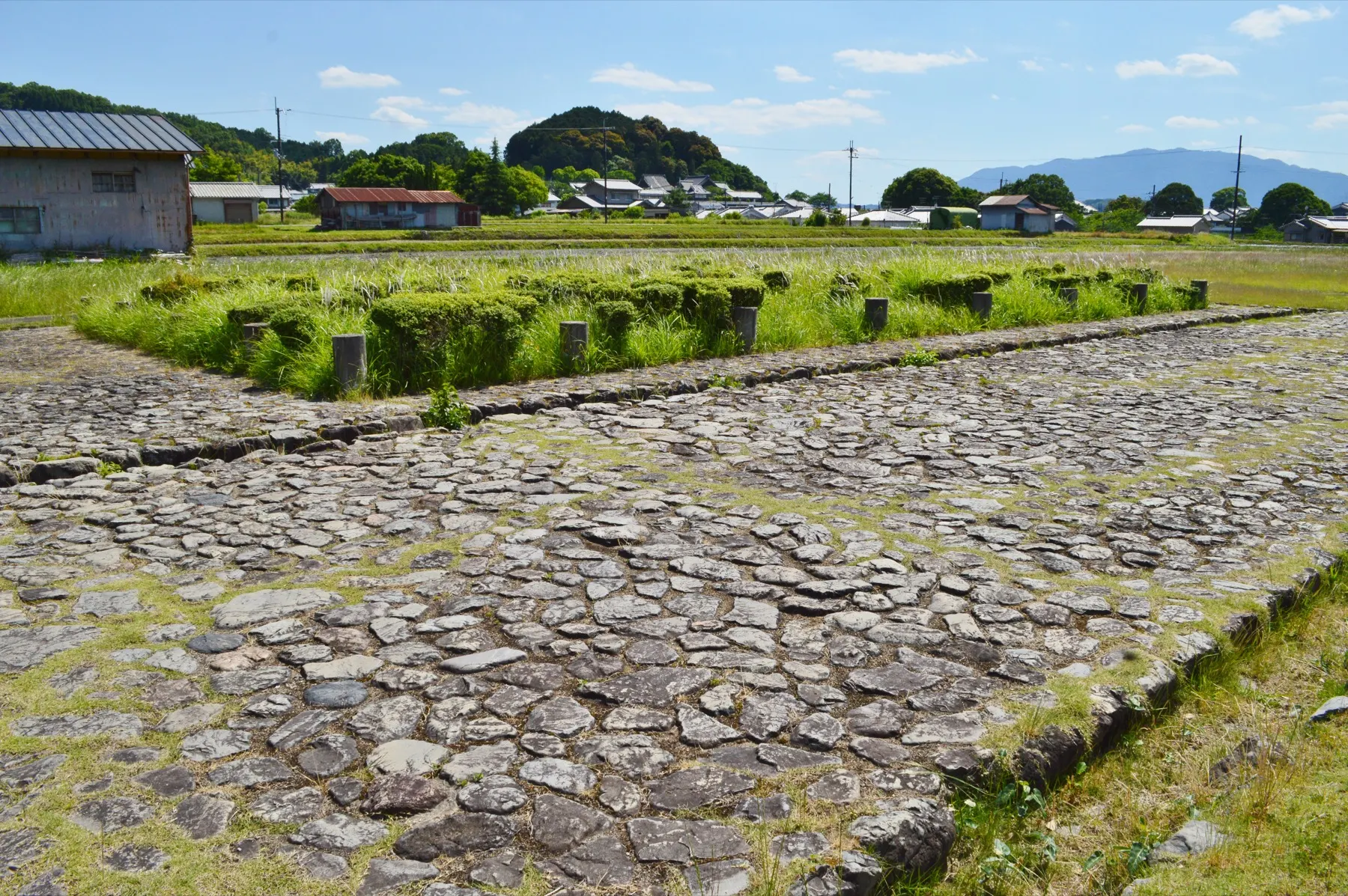
The Asuka Palace ruins. Source: Wikimedia Commons
Horyuji’s Saiin Garan provides a concrete example of Asuka-period architecture and Buddhist art. The Horyuji official explanation identifies the Kondo as a National Treasure of the Asuka period and describes the Kondo as the world’s oldest surviving wooden building8. The material from the three Hokuriku cities is mostly settlements, kilns, pottery, wooden tablets, or administrative-related remains; no surviving Asuka-period architecture on the scale of Horyuji has been found in Hokuriku.
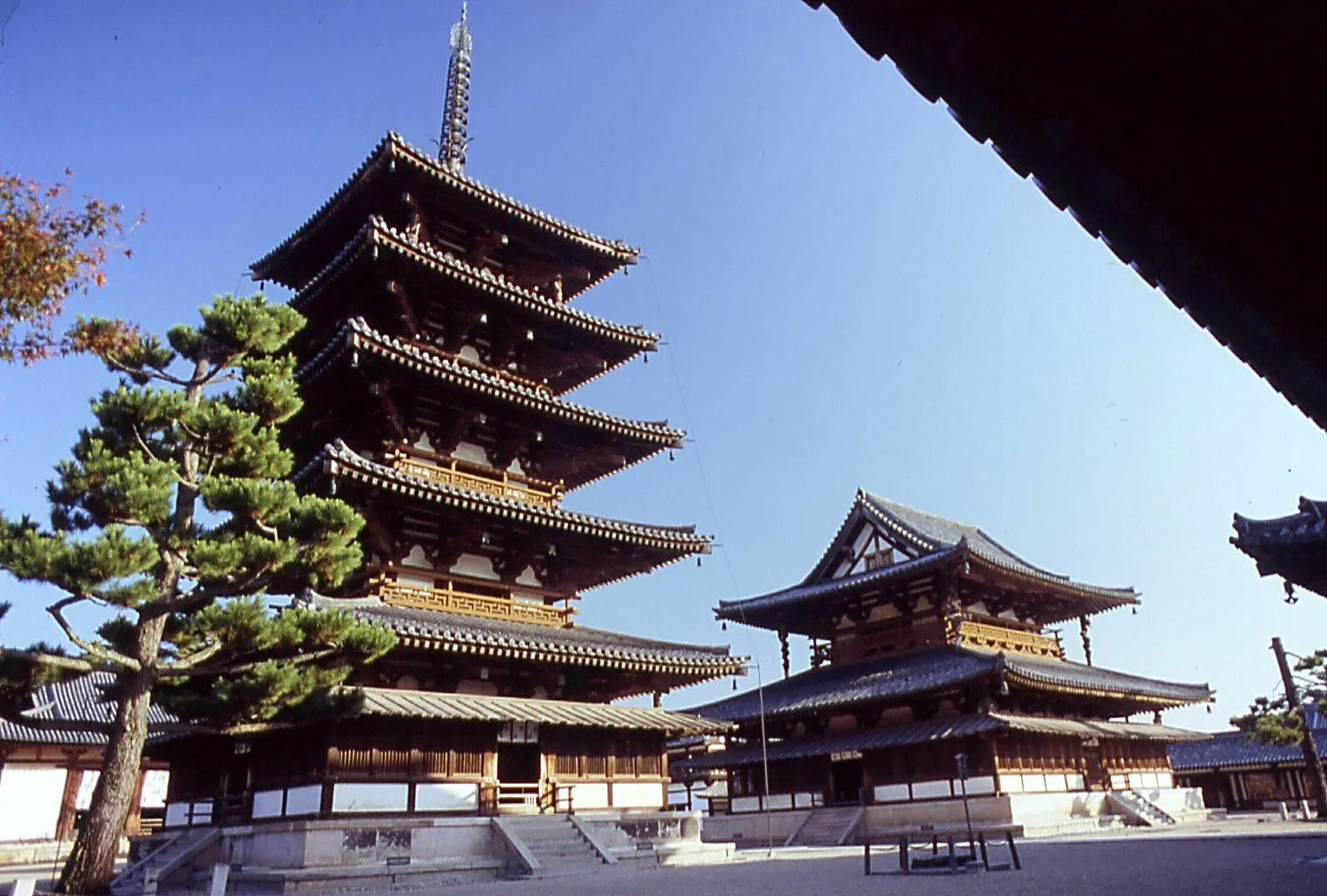
The Kondo and five-story pagoda of Horyuji’s Saiin Garan. Source: Wikimedia Commons
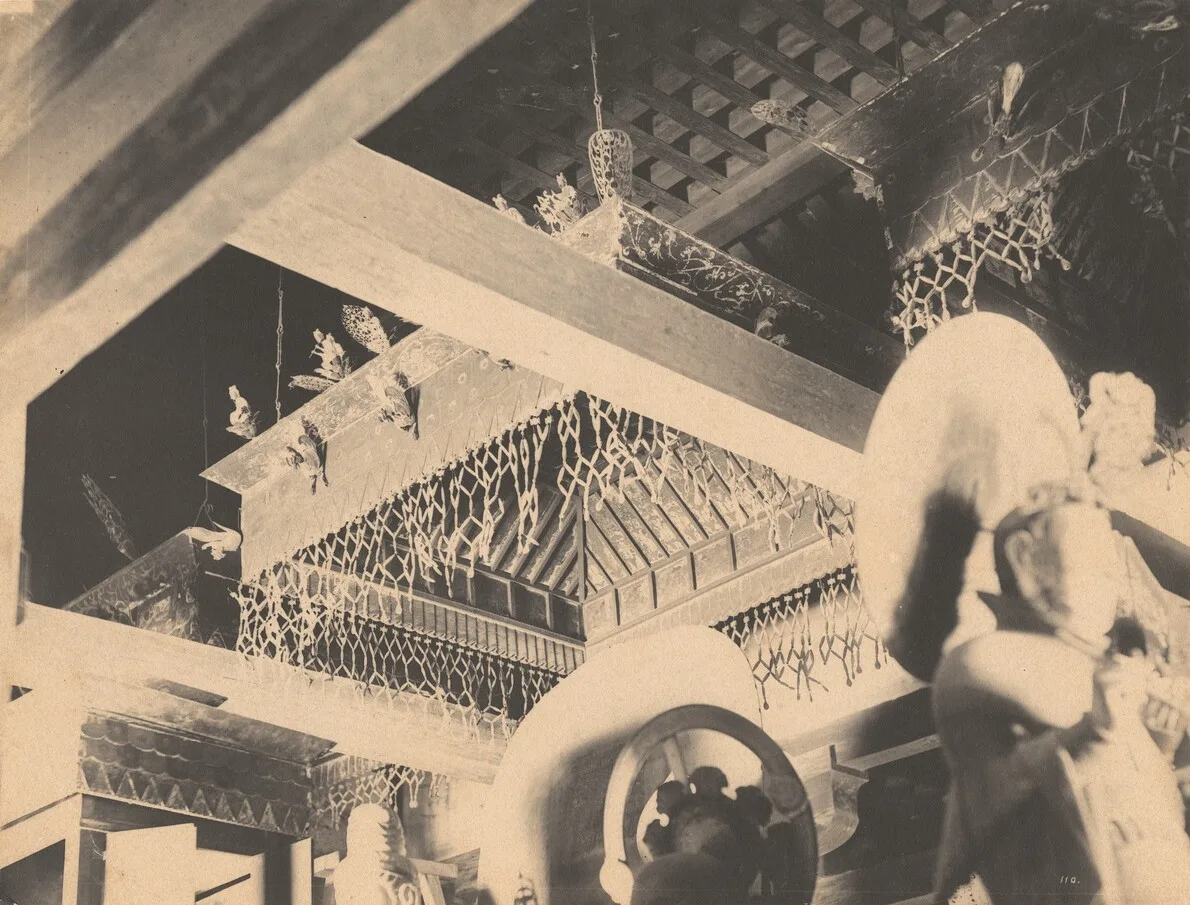
The canopy of the Horyuji Kondo. Source: Wikimedia Commons
2. Hokuriku in the Asuka period
When discussing Hokuriku in the Asuka period, the administrative map has to be placed back in the 7th century context. Ishikawa Prefecture’s chronological overview says that ancient Hokuriku was broadly called “Koshi,” that Noto separated from Echizen in 718, and that Kaga Province was only established in 8239. Fukui Prefectural History also notes that by 642, the first year of Empress Kogyoku, the name “Koshi” is already used; in 658, the fourth year of Empress Saimei, there is also a record of “Koshi no kuni no kami” Abe no Hiketa no Omi Hirafu10.
So the southern part of present-day Ishikawa Prefecture, including Komatsu and Kanazawa, should still be read within the broader “Koshi” or Echizen framework in the Asuka period. “Kaga Province” is a later administrative formation. Toyama sits in what later became Ecchu Province, whose outline as a ritsuryo province becomes clearer in the second half of the 7th century and after.
Here, “Koshi” is not the same as the northeastern “Emishi” frontier. It is a broad Sea of Japan-side name that was gradually incorporated into the ritsuryo framework. The Nihon Shoki entry for the 31st year of Emperor Kinmei records the 570 drift-landing of a Goguryeo mission on the “Koshi coast”11 (see the prehistory note). By 642 and 658, the historical record already shows “Koshi” and “Koshi no kuni no kami,” and Hokuriku had moved more directly into the administrative framework of the Asuka period10.
3. Komatsu: production, tiles, and worker settlements
Hayashi Takayama Kiln Site is in Hayashi-machi, Komatsu. Komatsu City’s explanation labels it as Asuka-period material and places it within the Southern Kaga pottery site cluster, describing it as a newly formed Sue ware production site in the Asuka period12.
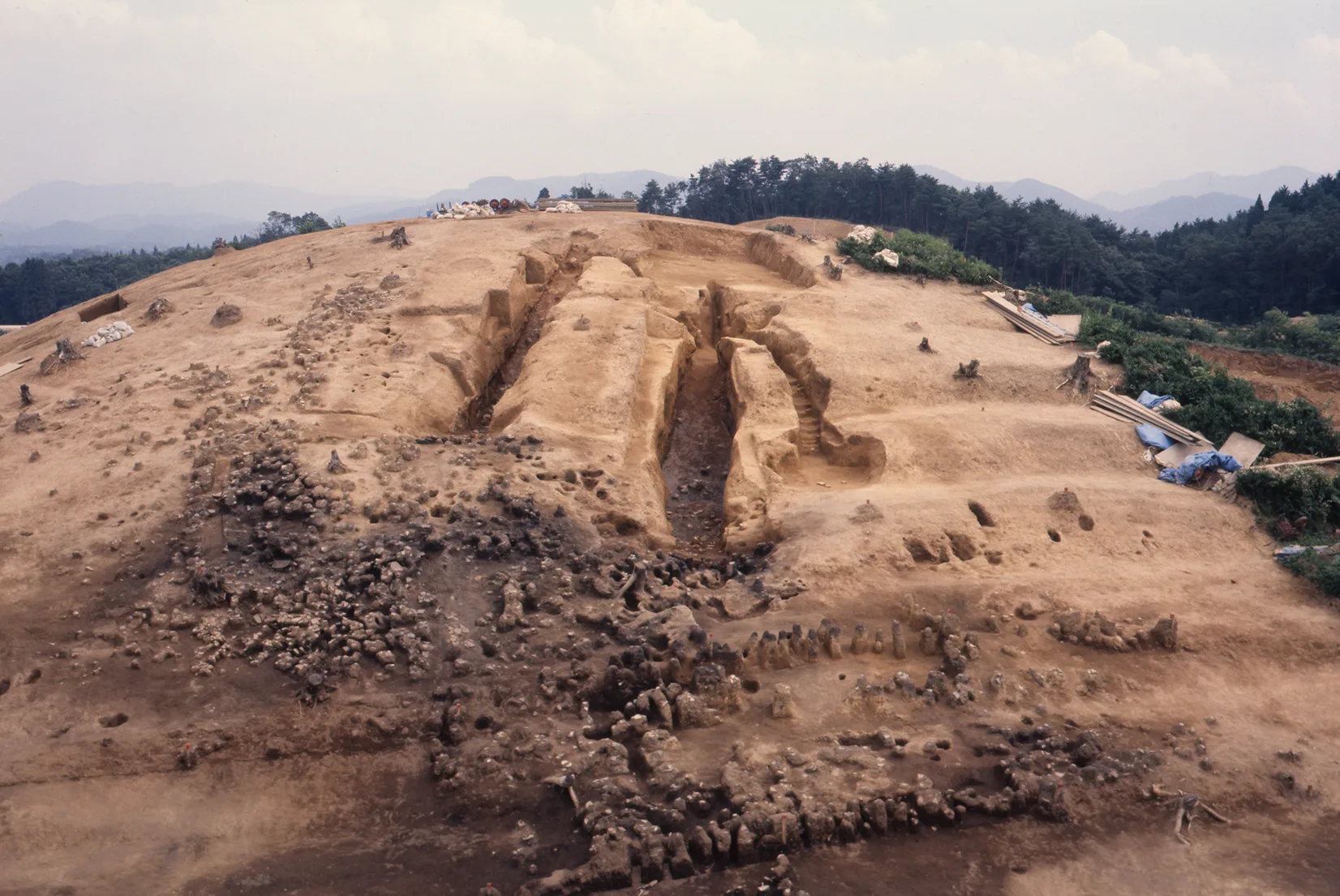
Distance view of the Hayashi Takayama kiln site. Source: Komatsu City
Komatsu City says the site sits on the Takayama hill and includes three Sue ware kilns. Each kiln has smoke-control trenches and is more than 10 meters long, a change interpreted as production oriented toward mass output12.
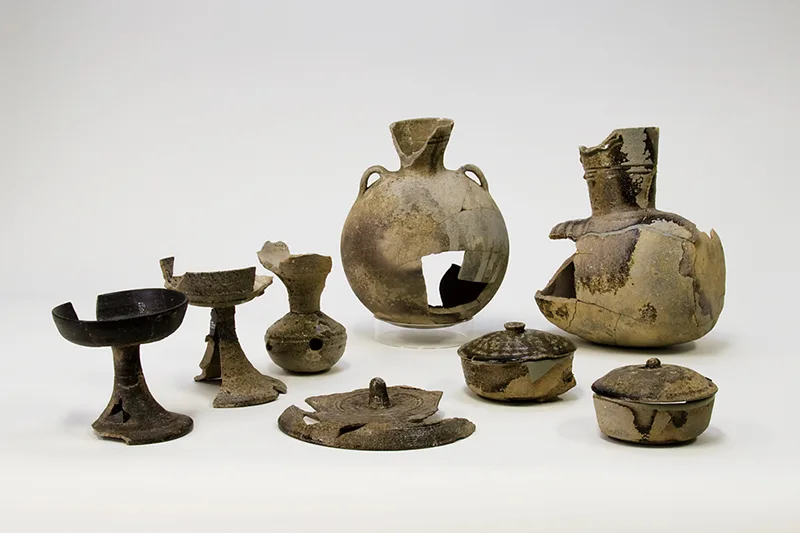
Asuka-period Sue ware related to the Hayashi Takayama kiln site. Source: Komatsu City
Another important place is Rendaiji Gasshotan Site. Komatsu City lists its main periods as Asuka and Heian, and explains that within the Asuka-period remains a large charcoal kiln over 10 meters long was found; it is thought to have produced charcoal for ironworking. The same page explicitly says this is strong evidence that ironworking was already being carried out in the Asuka period13.
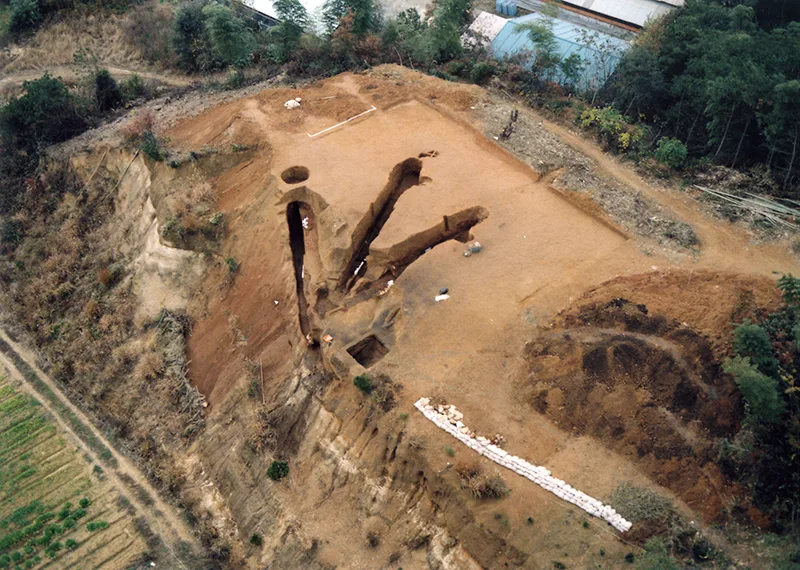
The charcoal kiln at Rendaiji Gasshotan. Source: Komatsu City
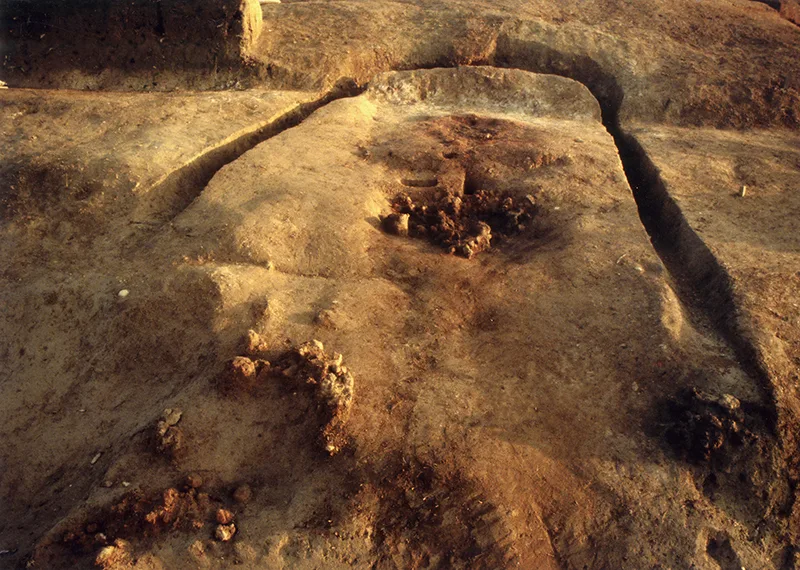
The iron furnace at Rendaiji Mukonyama. This furnace belongs to the late Heian to Kamakura period, not the Asuka period; it is included only as a later reference for ironworking in the Rendaiji area. Source: Komatsu City
Komatsu City also has a Southern Kaga pottery site cluster page, which places the area as the largest ancient ceramic production zone in Hokuriku and says it continued for roughly 500 years from the Kofun period to the Heian period14. Within this cluster, the Tozu kiln group in Tozu Town is a representative kiln complex. Komatsu City says the area has more than 50 kiln remains and a large amount of Sue ware, plus Haji ware firing pits and charcoal kilns related to iron production15.
Beyond production sites, Komatsu also preserves data on tiles and settlements. Chiyo Ookida Site is in Chiyo Town; Komatsu City lists its periods as Jomon, Yayoi, Kofun, Asuka, Nara, Heian, Kamakura, and Muromachi, and says the finds include pottery, ceramics, stone tools, wooden objects, ritual horse figures, clay bells, and Asuka-period (Hakuhō) tiles16.
Nukamimachi Site and Yakushi Site add the settlement and worker-settlement dimension. Nukamimachi Site is on the Tsukizu plateau overlooking Shibayama Lagoon; Komatsu City says there are more than 400 buildings from the Asuka through Heian periods, including L-shaped hearths derived from the Korean Peninsula’s ondol tradition, as well as tools related to pottery and metalworking17. Yakushi Site, by the edge of Kibagata Lagoon, has more than 20 buildings, several with L-shaped hearths, plus metalworking tools and stone belts18.
4. Kanazawa: fewer clearly identifiable Asuka remains
Kanazawa has relatively limited Asuka-period material. Kanazawa City’s heritage planning materials say that Asuka-period remains in the city are few, mainly flatland sites with scattered finds; the clearest example is the Nukatani Doshinda Site, and there are not many other prominent remains19.
After the Nara period, ancient temples, kiln sites, and shōen-related remains become much easier to identify19.
5. Tomb change from the late Kofun into early Asuka: the Nihon’enoki site
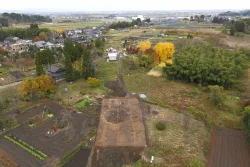
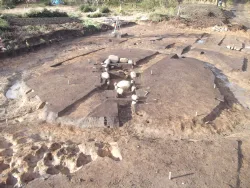
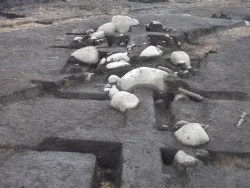
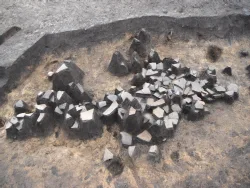
The horizontal stone chamber at Nihon’enoki Site in Toyama straddles the end of the Kofun period and the beginning of the Asuka period. The Toyama Buried Cultural Property Center says that from the late 6th century to the 7th century many horizontal stone-chamber tombs were built across Japan; the Nihon’enoki chamber is estimated, by comparison with similar examples, to date to the late 6th century through the early 7th century. The tomb itself was built and first used around the beginning of the 7th century, and later interments continued until around the mid-7th century20.
6. Toyama: settlements, administrative-related remains, writing, and ritual
Toyama Buried Cultural Property Center’s overview of ancient history says that Asuka-, Nara-, and Heian-period sites are concentrated along both banks of the middle Jinzu River, around Tomi and Tomosugi, around Sunagoda and Nakamyo in Fuchu Town, around Toyoda and Yoneda in the northern part of the city, in the Mizuhashi area near the mouth of the Joganji River, and on the western Imizu Hills. It also says that settlements begin to appear in the Asuka and Nara periods, and that the number of sites increases in the Heian period21. Toyama Prefecture also notes that Noto separated from Echizen in 7189.
Tomi Miyata Site is an important example of an ancient Toyama settlement. Toyama City says its date ranges from the late 7th to the early 10th century; it has about 200 pit dwellings, 20 post-built structures, one stone-built structure, and earthenware firing remains. The finds include about 810 inscribed pottery sherds, Buddhist bowls, bells, bronze bowls, ash-glazed pottery, green-glazed pottery, round inkstones, bird-shaped Sue ware, and stone belt fittings21.
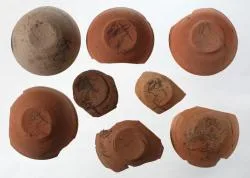
The inscribed pottery from the Tomi Miyata Site, reading “Shirocho.” Source: Toyama Buried Cultural Property Center
Yoneda Daikaku Site is classified by Toyama City as an administrative-related site. The explanation says that from the district office area 208 inscribed pottery sherds were excavated, together with green-glazed pottery, ash-glazed pottery, stone belt fittings, an inkstone shaped like the character 風, ceramic masu (square measuring vessels), and ritual implements such as purification rods (igushi)21.
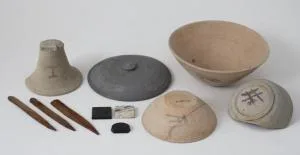
Artifacts from the Yoneda Daikaku Site: inscribed pottery, purification rods, and stone belt fittings. This image shows artifacts from an administrative-related site, not the administrative building itself. Source: Toyama Buried Cultural Property Center
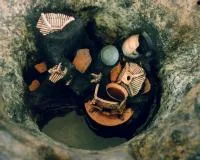
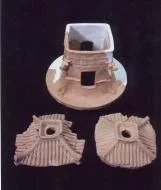
Toyama’s ancient overview notes that because Hokuriku is snowy and humid, ancient temples with heavy tiled roofs were not common. Tile stupas and other small Buddhist remains, on the other hand, appear more often in settlement-based temples or Buddhist halls. The Yoshikura B Site and the Tomi Miyata Site also yielded inscribed pottery reading “Shibadera” and “Kannonji,” but no tiles21. The tile stupa found in the well at the Mukainoike Site is one of the small Buddhist objects visible in Toyama.
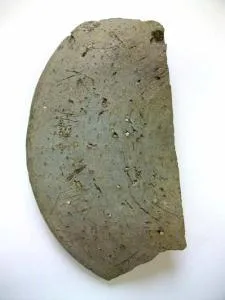
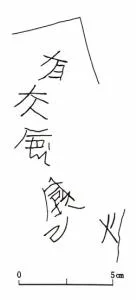
For written material, Kanakusa First Kiln Site can be read as an earlier case. The Toyama Buried Cultural Property Center says that a Sue ware lid from the Asuka-period Kanakusa First Kiln Site bears incised letters made with a spatula; the material is said to be one of the oldest examples of incised writing in Toyama Prefecture, though the reading remains difficult and uncertainty must be kept in mind22. Another page says the kiln is a late-7th-century Sue ware kiln, and that the bowls, tall bowls, jars, flattened bottles, and bowls from the ash layer resemble finds from Fujiwara Palace23.
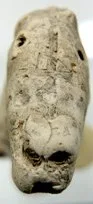
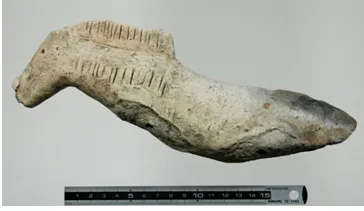
Kureha Moguraike Site preserves one of the most concrete ritual finds: an ornamental clay horse. The Toyama center explains that the horse is a 24.5 cm, 540 g earthenware figure with clearly modeled eyes, nose, mouth, and mane; it is dated to the mid-7th century (Hakuhō period). The same page says the find may be related to ritsuryo-era ritual, but since there are no other contemporary remains at the site, the production kiln and ritual settlement still need further study24.
Hyakuzuka Sumiyoshi D Site is on the northern edge of the Kureha Hills, on a terrace above the former Jinzū River bank. Toyama City says that in the 2011 survey, post-built structures, fence lines, ditches, pits, and fields from the Asuka to Heian periods were found, along with Asuka-period salt-making pottery and Sue ware, as well as Nara- to Heian-period Haji ware and Sue ware25.
The salt-making pottery shows that life on the northern Kureha Hills and the old Jinzū River terrace was connected to salt production or salt consumption on the Japan Sea side; the finds do not directly show the route of salt circulation.
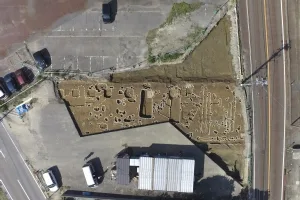
Overview of the Hyakuzuka Sumiyoshi D Site. Source: Toyama Buried Cultural Property Center
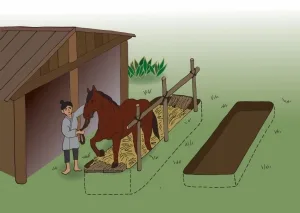
The large pit horse-stall restoration drawing at the Hyakuzuka Sumiyoshi D Site. Source: Toyama Buried Cultural Property Center
7. Legends and temple origins
The Asuka-period stories in Hokuriku are mostly preserved in later documents, temple and shrine origin stories, and local tradition.
The first group is Emperor Keitai and Echizen. Fukui Prefectural History says that the Nihon Shoki places Keitai’s upbringing in Echizen, while the Kojiki gives him an Omi origin. Its interpretation is that Keitai was born in Omi but grew up in his maternal home region of Echizen, which makes Echizen part of his power base1.
The second group is Kehi Shrine and the name-exchange story. Fukui Prefectural History’s “Kehi deity name-exchange story” explains that the Kojiki and Nihon Shoki include a tale of a prince associated with Emperor Ojin exchanging names with Isasawake no Okami. Fukui Prefectural History interprets this as a symbolic narrative showing the Kehi shrine authority of the Tsuruga area being folded into Yamato court order26.
The third group is Mount Hakusan and Taicho. The Hakusan faith explanation on the Shirayama Hime Shrine website says that in 717, the first year of Yoro, Taicho climbed Mount Hakusan and opened the mountain; Hakusan, originally a taboo sacred peak, later became the core site for the spread of Hakusan faith27. Taicho’s opening of the mountain already falls in the early Nara period27. How Hakusan worship became institutionalized in the Heian period is covered in the Heian note.
After the move of the capital to Heijō-kyō in 710 comes the Nara period, which continues in the Nara note.
8. Places you can still visit
Not all Asuka-period sites can be visited on the ground. Some are now roads, forests, or points in survey reports. The map below only marks display facilities, visitable remains, and transport nodes that are reasonably easy to include in a trip.
| Area | Place | Type | Notes |
|---|---|---|---|
| Komatsu | Kaga Kokufu Monogatari Museum | Exhibition facility | Displays the history of Komatsu, the Kodayama Kofun Cluster, and the period before and after the Kaga provincial capital28 |
| Komatsu | Komatsu Buried Cultural Property Center | Exhibition / consultation | Komatsu’s site pages repeatedly recommend contacting the buried cultural property center if you have questions12 |
| Kanazawa | Ishikawa Prefectural History Museum | Exhibition facility | Displays historical materials from Ishikawa Prefecture |
| Toyama | Toyama Folk and Folkcraft Village Archaeological Museum | Exhibition facility | Displays archaeological materials from Toyama City |
| Imizu | Asuka Craftsmen House | Exhibition facility | In the area related to the Kosugi Maruyama Site; useful for understanding the kiln and worker-settlement context of the Imizu Hills |
References
Footnotes
-
Fukui Prefectural History, Volume 1, “Keitai’s Origins: Echizen or Omi?”: https://www.library-archives.pref.fukui.lg.jp/fukui/07/kenshi/T1/2a3-01-02-01-01.htm ↩ ↩2
-
Asuka Museum, “About the Asuka Museum”: https://www.nabunken.go.jp/asuka/about/ ↩
-
Asuka Village, “About Asuka Village”: https://www.asukamura.jp/chiikiokoshi/about.html ; Asuka Village, “Reference PDF”: https://www.asukamura.jp/files/syogaigakusyu_about_02.pdf ↩
-
Asuka Village, “Asuka Palace Ruins”: https://www.asukamura.jp/gyosei_bunkazai_shitei_10.html ; Asuka Village, “Sakafuneishi Site Survey Report”: https://www.asukamura.jp/gyosei_bunkazai_shitei_1_sakafune2.html ↩
-
Cultural Heritage Online, “Ornamented Lotus Roof Tile”: https://online.bunka.go.jp/index.php/heritages/detail/544736 ↩
-
National Museum of Japanese History, “Writing Connects”: https://archive.rekihaku.ac.jp/exhibitions/project/old/141015/index.html ↩
-
National Museum of Japanese History, “Gaya - History of a Kingdom that Lived in Ancient East Asia”: https://www.rekihaku.ac.jp/event/2022_exhibitions_kikaku_kaya.html ↩
-
Horyuji, “Kondo”: https://www.horyuji.or.jp/garan/kondo/ ; Horyuji, “Horyuji Garan”: https://www.horyuji.or.jp/garan/ ↩ ↩2
-
Ishikawa Prefecture statistics, “Chronology” PDF (Heisei 25): https://toukei.pref.ishikawa.lg.jp/dl/2623/h25j_all.pdf ↩ ↩2
-
Illustrated Fukui Prefectural History, “The Formation of Wakasa and Echizen”: https://www.library-archives.pref.fukui.lg.jp/fukui/07/zusetsu/A06/A061.htm ↩ ↩2
-
Nihon Shoki, Kinmei 31st year entry: https://nihonsinwa.com/page/1716.html ; Ishikawa Prefectural Library SHOSHO, “Michi no Kimi”: https://www.library.pref.ishikawa.lg.jp/shosho/furucolle/list/prsn15445 ↩
-
Komatsu City, “Hayashi Takayama Kiln Site”: https://www.city.komatsu.lg.jp/soshiki/1052/kokabetsurekishijiman/ytn_k/htym.html ↩ ↩2 ↩3
-
Komatsu City, “Rendaiji Gasshotan Site and Rendaiji Mukonyama Site”: https://www.city.komatsu.lg.jp/soshiki/1052/kokabetsurekishijiman/rdj_k/gst_mky.html ↩
-
Komatsu City, “Southern Kaga Pottery Site Cluster”: https://www.city.komatsu.lg.jp/soshiki/1052/kokabetsurekishijiman/aw_k/mnm_pt.html ↩
-
Komatsu City, “Tozu Kiln Group”: https://www.city.komatsu.lg.jp/soshiki/1052/kokabetsurekishijiman/aw_k/tz.html ↩
-
Komatsu City, “Chiyo Ookida Site”: https://www.city.komatsu.lg.jp/soshiki/1052/kokabetsurekishijiman/nomi_koka/sdo.html ↩
-
Komatsu City, “Nukamimachi Site”: https://www.city.komatsu.lg.jp/soshiki/1052/kokabetsurekishijiman/tkd_k/nkm.html ↩
-
Komatsu City, “Yakushi Site”: https://www.city.komatsu.lg.jp/soshiki/1052/kokabetsurekishijiman/im_k/yks.html ↩
-
Kanazawa City, “Kanazawa City Historical Heritage Preservation and Use Master Plan”: https://digilib.city.kanazawa.ishikawa.jp/doc/74/ ↩ ↩2
-
Toyama Buried Cultural Property Center, “Nihon’enoki Site”: https://www.city.toyama.toyama.jp/etc/maibun/center/now/nihonenoki/nihonenoki.htm ↩
-
Toyama Buried Cultural Property Center, “Ancient History Viewed through Toyama City Archaeology”: https://www.city.toyama.toyama.jp/etc/maibun/center/rekishi/kodai/kodai.htm ↩ ↩2 ↩3 ↩4
-
Toyama Buried Cultural Property Center, “Incised Writing Excavated from Kinkusa First Kiln Site”: https://www.city.toyama.toyama.jp/etc/maibun/center/now/k-senkoku/k-senkoku.htm ↩
-
Toyama Buried Cultural Property Center, “Kinkusa First Kiln Site”: https://www.city.toyama.toyama.jp/etc/maibun/center/topics/ksdi/ksdi.htm ↩
-
Toyama Buried Cultural Property Center, “Decorated Clay Horse from the Kureha Moguraike Site”: https://www.city.toyama.toyama.jp/etc/maibun/center/now/k-mogura-d/k-mogura-doba.htm ↩
-
Toyama Buried Cultural Property Center, “Hyakuzuka Sumiyoshi D Site”: https://www.city.toyama.toyama.jp/etc/maibun/center/topics/hyaku-sumiD/hyaku-sumiD.htm ↩
-
Fukui Prefectural History, Volume 1, “The Kehi Deity Name-Exchange Story”: https://www.library-archives.pref.fukui.lg.jp/fukui/07/kenshi/T1/2a3-02-03-03-02.htm ↩
-
Shirayama Hime Shrine, “Hakusan Faith, Oku-no-miya”: https://www.shirayama.or.jp/about/hakusan-worship/ ↩ ↩2
-
Komatsu City, “Kaga Kokufu Monogatari Museum”: https://www.city.komatsu.lg.jp/soshiki/1052/2300.html ↩