This note follows eight earlier ones on Hokuriku, from prehistory to the early and middle Edo period. It covers about 1780 to the change of era name to Meiji in 1868, following the Hokuetsu campaign and Maeda Yoshiyasu to 1869–1874. Month and day dates follow the Japanese calendar of the time and are not converted to Gregorian dates; dates from the English memoir are given as Satow wrote them.
In the late Edo period Kenroku-en was gradually enlarged into the garden seen today, and Hokuriku’s shipping, medicine trade, and Kutani ware kept growing. The Hietsu earthquake of 1858 brought down mountainsides around Tateyama, and two debris flows later swept across the Toyama plain. In the bakumatsu years the Kaga domain watched foreign ships off its coast, was drawn into politics in Kyoto, and in 1868 sent troops into Echigo. This note follows the people and events around Kanazawa, Toyama, and Komatsu, and the buildings and monuments that can still be seen.
1. The Late Edo Period and the Bakumatsu
The late Edo period is usually taken to run from about 1780 to about 1850; 1853 to 1868 is the final period, the bakumatsu1. Through most of these years Kaga was ruled by a father and son: the thirteenth lord, Maeda Nariyasu (1811–1884), and the fourteenth, Maeda Yoshiyasu (1830–1874)2.
Nariyasu became lord in 1822. In 1827 he married Yō-hime, a daughter of the eleventh shogun Tokugawa Ienari, tying the Maeda more closely to the shogunate3. Yoshiyasu, Yō-hime’s son, took over in 1866; Nariyasu stayed involved after retiring and backed his son in major crises2.
2. Kenroku-en and Seisonkaku
Part of today’s Kenroku-en was the site of the domain schools, the Meirindō and Keibukan, built in 1792. The twelfth lord, Narinaga, moved the schools and in 1822 built his retirement residence, the Takezawa palace, in their place; the garden was named Kenroku-en that year4.
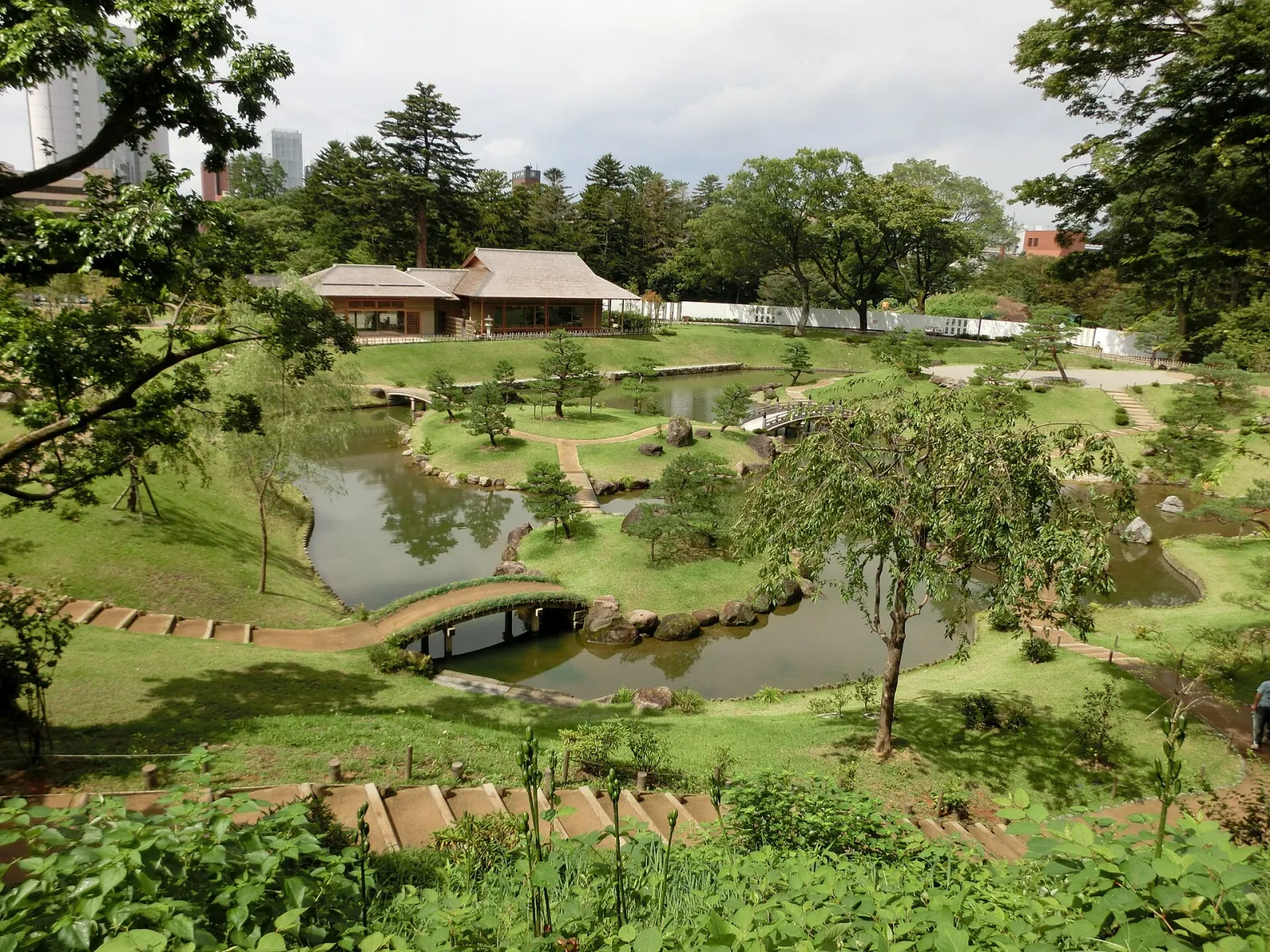
After Narinaga died, Nariyasu pulled down the Takezawa palace, enlarged Kasumi-ga-ike pond, planted trees, and in 1860 removed the gate and wall between it and the neighbouring Renchi garden, joining the two4.
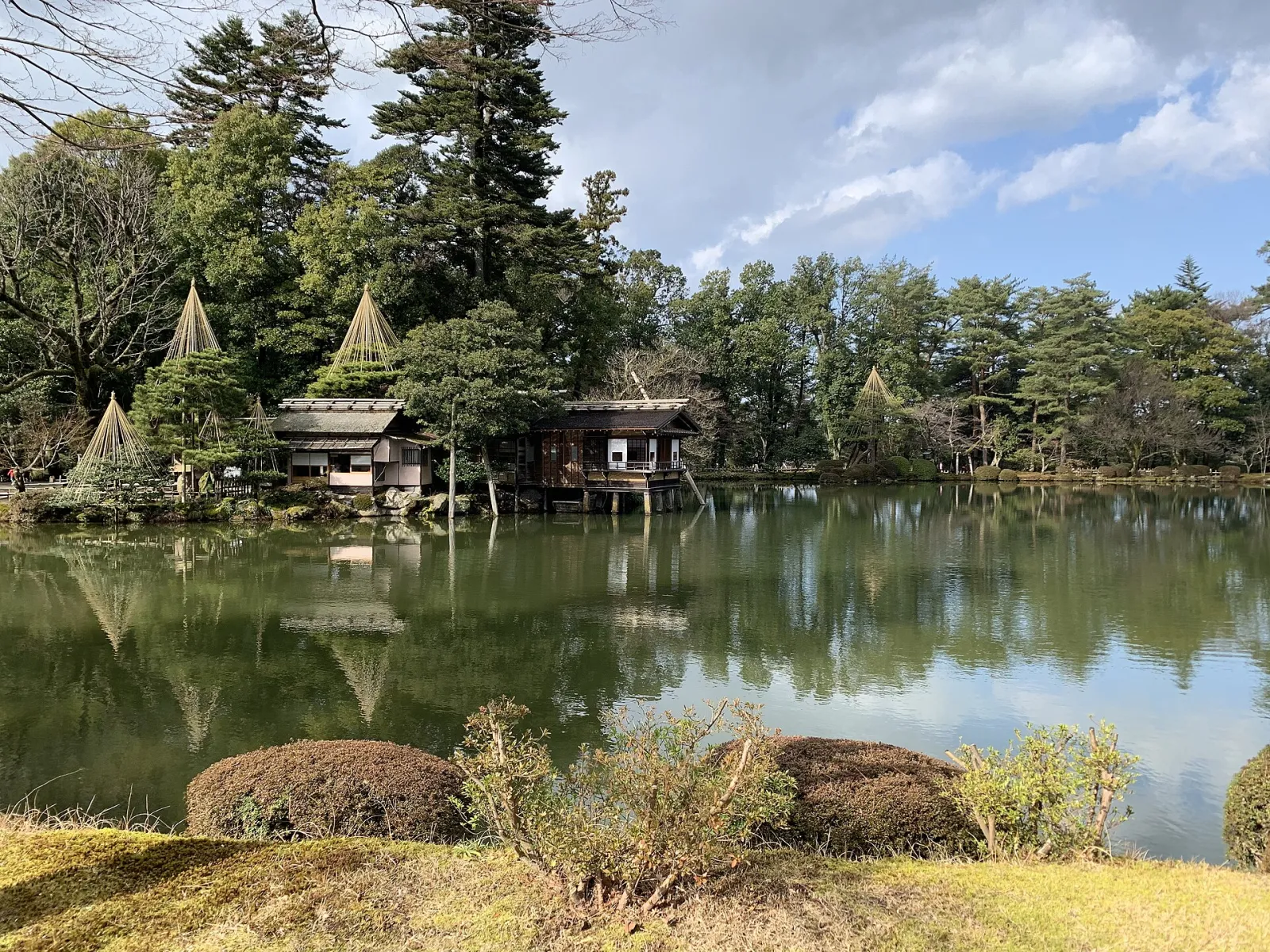
The pond Nariyasu enlarged. Photo: Tbatb, licensed under CC BY-SA 4.0, resized and converted to WebP. Source: Wikimedia Commons
In 1863 Nariyasu built the Tatsumi palace as a retirement home for his mother, Shinryūin. It is now Seisonkaku, and with it the garden reached roughly its present form4. Tatsumi means southeast, the building’s direction from Kanazawa Castle5. It combines formal daimyo shoin architecture with the lighter sukiya style, and its snow-viewing shōji are glazed with glass imported from the Netherlands at the time. It became an Important Cultural Property in 19505. The Seikōken tea room, the Seikō Shoin, and the Hikaku-tei garden are normally closed5.
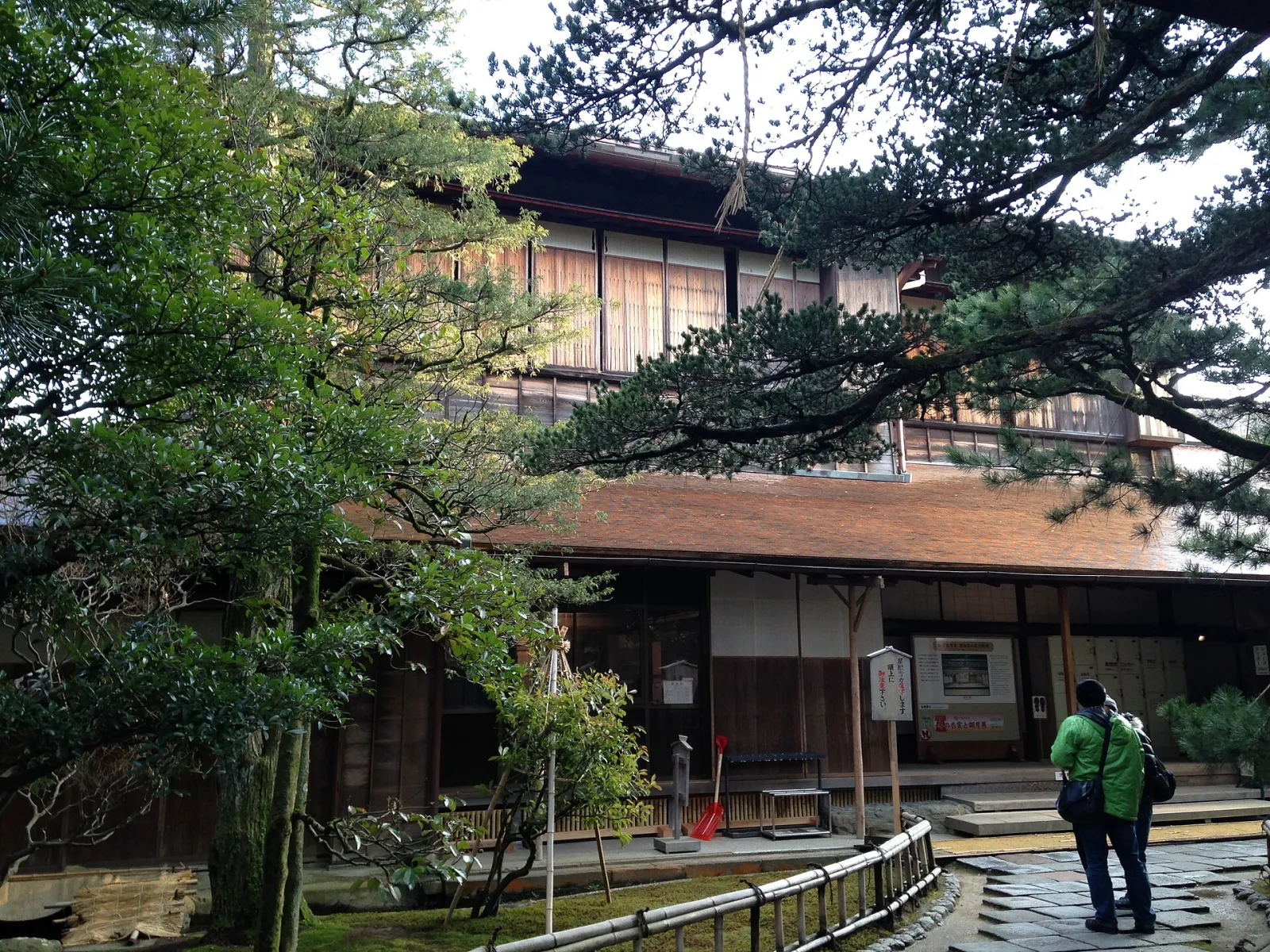
The Tatsumi palace built for Shinryūin in 1863. Photo: そらみみ, licensed under CC BY-SA 4.0, resized and converted to WebP. Source: Wikimedia Commons
3. Sea and Merchants: Zeniya Gohei and Ōno Benkichi
Source: Wikimedia Commons (Public domain, converted to WebP)
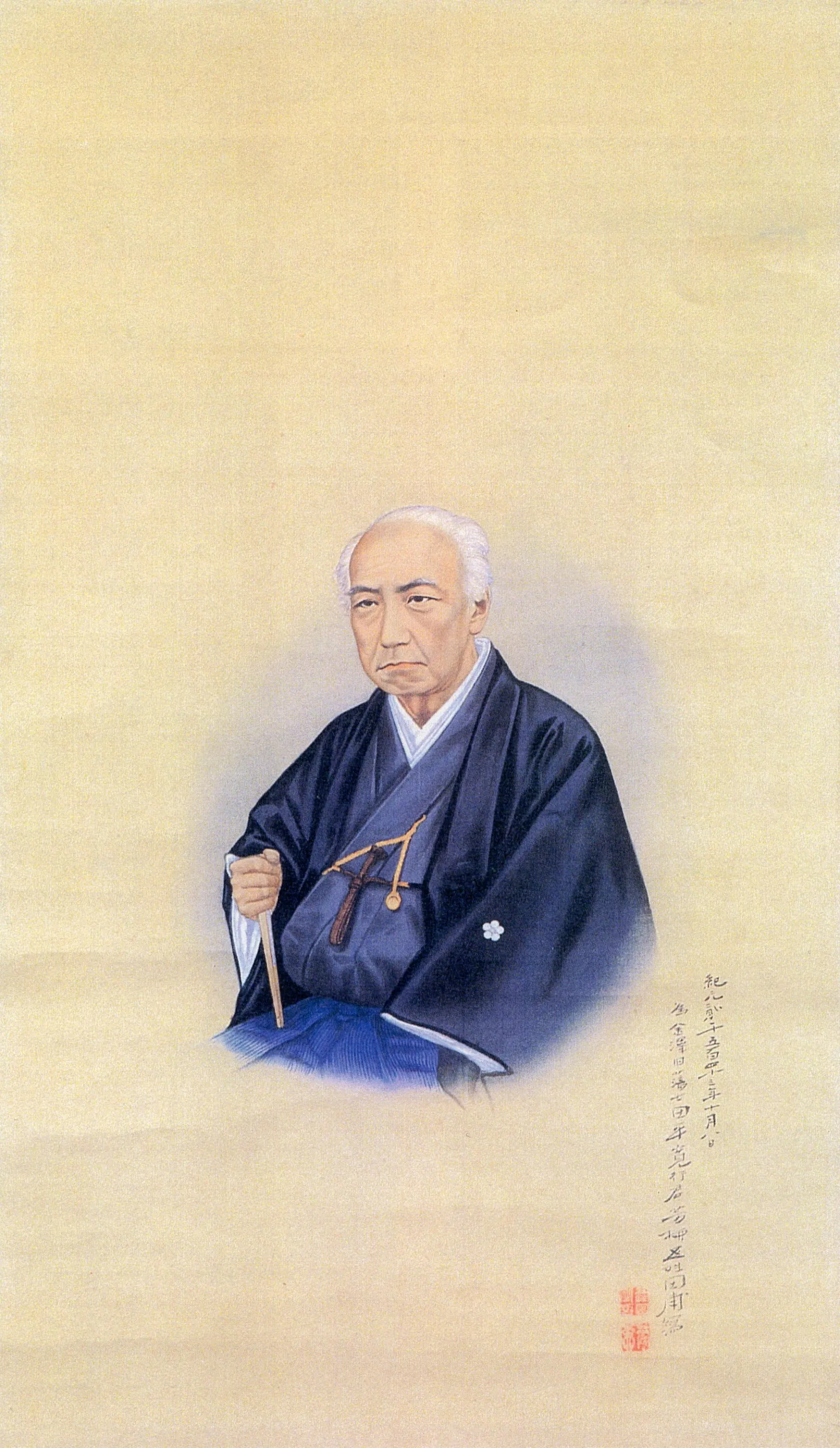
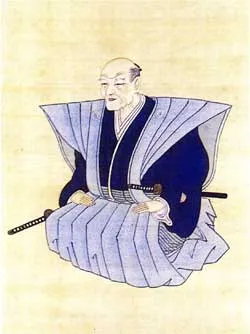
Zeniya Gohei was born in 1773 at Miyanokoshi, now Kanaiwa in Kanazawa, into a family that had been money-changers for six generations. He took over at seventeen and added wholesale trade in cloth, used clothing, timber, marine products, and rice. Only in his late fifties did he go seriously into shipping with kitamaebune vessels, and over the next twenty years he became one of the great shippers of the Edo period. He also raised funds for the domain more than once6.
Late in life Gohei began a scheme to reclaim Kahoku-gata lagoon. He died in prison in 1852, aged eighty. The Zeniya Gohei Memorial Museum says he was falsely accused, slandered by opponents who used a case of poisoning from dead fish against him67. The museum presents the stories of his voyages abroad only as legend that it cannot confirm8. The lagoon was finally reclaimed by a national project begun in 1963 that took more than twenty years9.
Zenigo-no-Yakata today incorporates part of the Zeniya main house, moved to the site, and its tea room Shūsuien also came from the old Zeniya residence. Zenigo Park in Kanaiwa has a bronze statue of Gohei106.
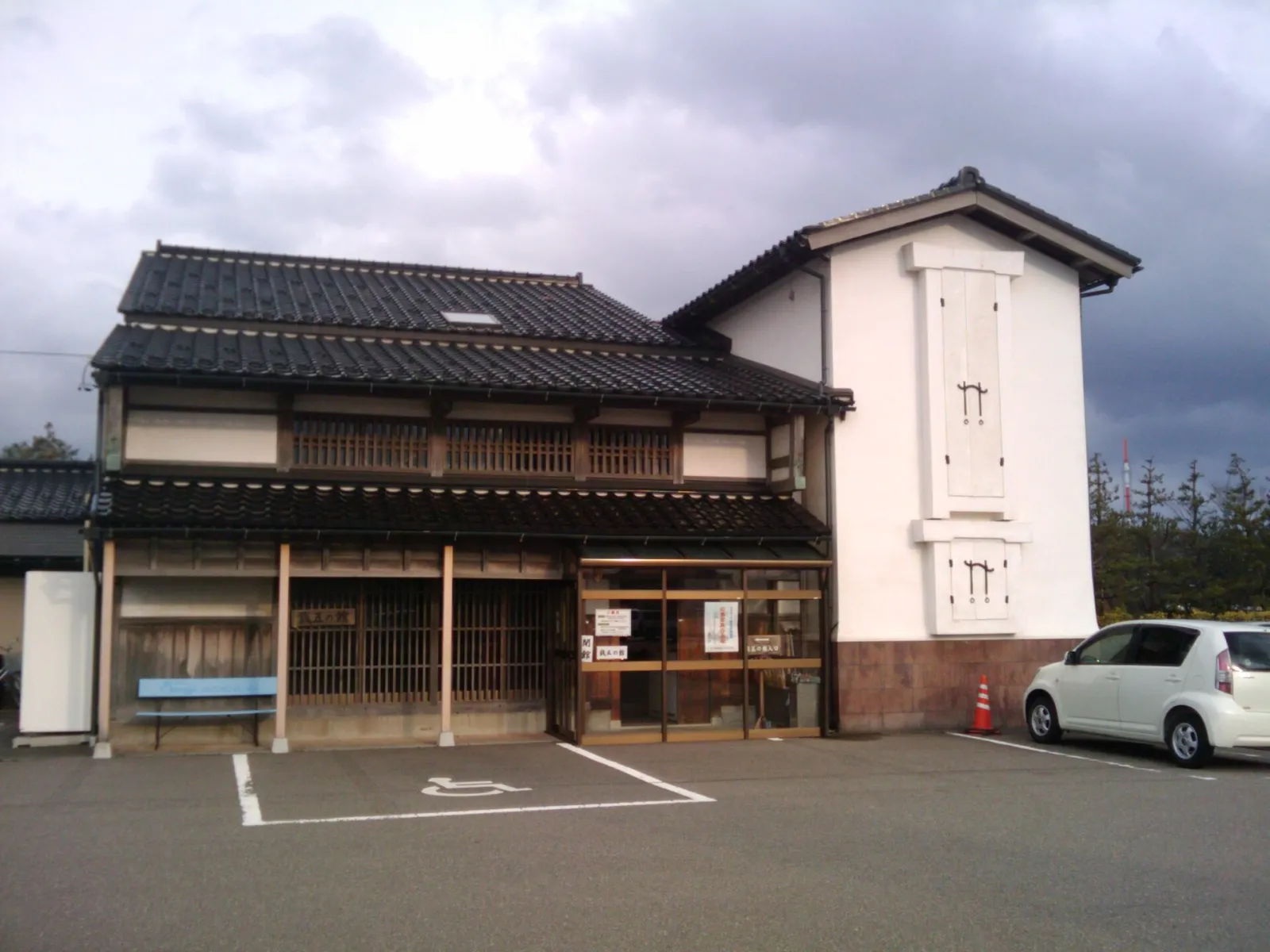
The building that incorporates part of the relocated Zeniya main house. Photo: Saigawasakurabashi, licensed under CC BY-SA 3.0, resized and converted to WebP. Source: Wikimedia Commons
The inventor Ōno Benkichi settled in 1831 at Ōno village, next to Kanaiwa, and knew Zeniya Gohei11. Besides mechanical dolls he designed clocks, lighters, cameras, and telescopes, built an erekiteru static-electricity machine, and left many finely carved netsuke12. The Ōno Karakuri Memorial Museum near Kanazawa port shows about 100 items: exhibits connected with Benkichi, mechanical dolls, and working mechanical pieces12.
4. Learning and Industry: Ishiguro Nobuyoshi, Medicine, and Takamine Jōkichi
Source: Wikimedia Commons (Public domain, converted to WebP)
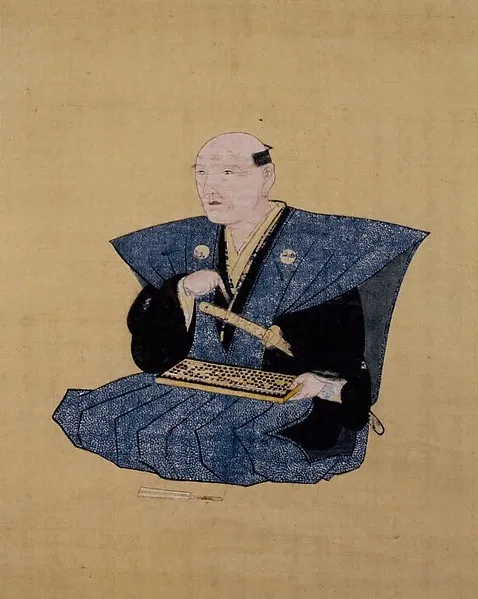
Ishiguro Nobuyoshi (1760–1836), born in Takagi village in Imizu district, Etchū, was a mathematician and surveyor. He and three generations of descendants left about 12,000 items on mathematics, calendars, surveying, and mapmaking, known as the Kōju Bunko. The collection is kept at the Imizu City Shinminato Museum, and several thousand items in it are national Important Cultural Properties13.
The Toyama domain set up a Hangontan office in 1816 to protect and regulate the medicine trade14. By 1853 the domain’s itinerant medicine sellers numbered 2,258 in 22 groups and paid the domain about 3,200 ryō14. Around 1850 the tenth lord, Maeda Toshiyasu, compiled the Honzō Tsūkan, a 94-volume work on medicinal plants15.
Toyama’s medicine sellers followed regular rounds recorded in customer ledgers (kakebachō). They left Toyama once or twice a year and came home when the round was done16. By the Bunsei era (1818–29) at the latest some were trading in the Matsumae domain in Hokkaido, and in the Ansei era (1854–59) a petition was filed to sell medicine farther north in Ezo16.
Takamine Jōkichi was born in Takaoka in 1854, entered the Meirindō in Kanazawa in 1862, and in 1865 was chosen by the Kaga domain to study in Nagasaki17.
5. Komatsu: Revived Kutani, Kanjinchō, and the Haneda Insect Mound
In 1807 the Kyoto potter Aoki Mokubei came to the Kasugayama kiln in Kanazawa. His assistant, Honda Teikichi, found porcelain stone at Hanasakayama in Komatsu. With help from Hayashi Hachibei, the tomura of Wakasugi village (a local notable appointed by the Kaga domain to manage villages and collect taxes), Teikichi used Hachibei’s tile kiln to fire porcelain in 181118. This Wakasugi kiln was later expanded by the domain to promote local industry19. After a fire in 1836 it moved to neighbouring Yawata, whose climbing kiln was used until about 1965 and is now preserved at the Komatsu City Noborigama Exhibition Hall20.
The kabuki play Kanjinchō shows Yoshitsune’s party passing the Ataka barrier in Kaga. The seventh Ichikawa Danjūrō created a new version in 1840, borrowing the backdrop and costumes from noh21. Ataka and Kanjinchō are covered in the Kamakura note.
The Tenpō era (1830–1843) brought repeated crop failures, famine, and epidemics. In 1839 the weather was good and a fine harvest was expected, but from the middle of the seventh month planthoppers swarmed and badly damaged the rice as it came into ear22. The domain had villages spread nut oil on the paddies to make a film, then knock the insects into it so they suffocated. The insects collected in Haneda village are said to have filled 23 bags22.
Tanaka Saburōemon, the tomura who led the work, buried the bags, raised a memorial mound for the insects, and carved instructions on its stone for dealing with future outbreaks22. The Haneda insect mound is a Komatsu City historic site. Iwabuchi village has a similar mound, now moved to the grounds of Hakusanmachi Shrine in Iwabuchi-machi22.
6. Etchū: The Hietsu Earthquake of 1858 and the Ukita House
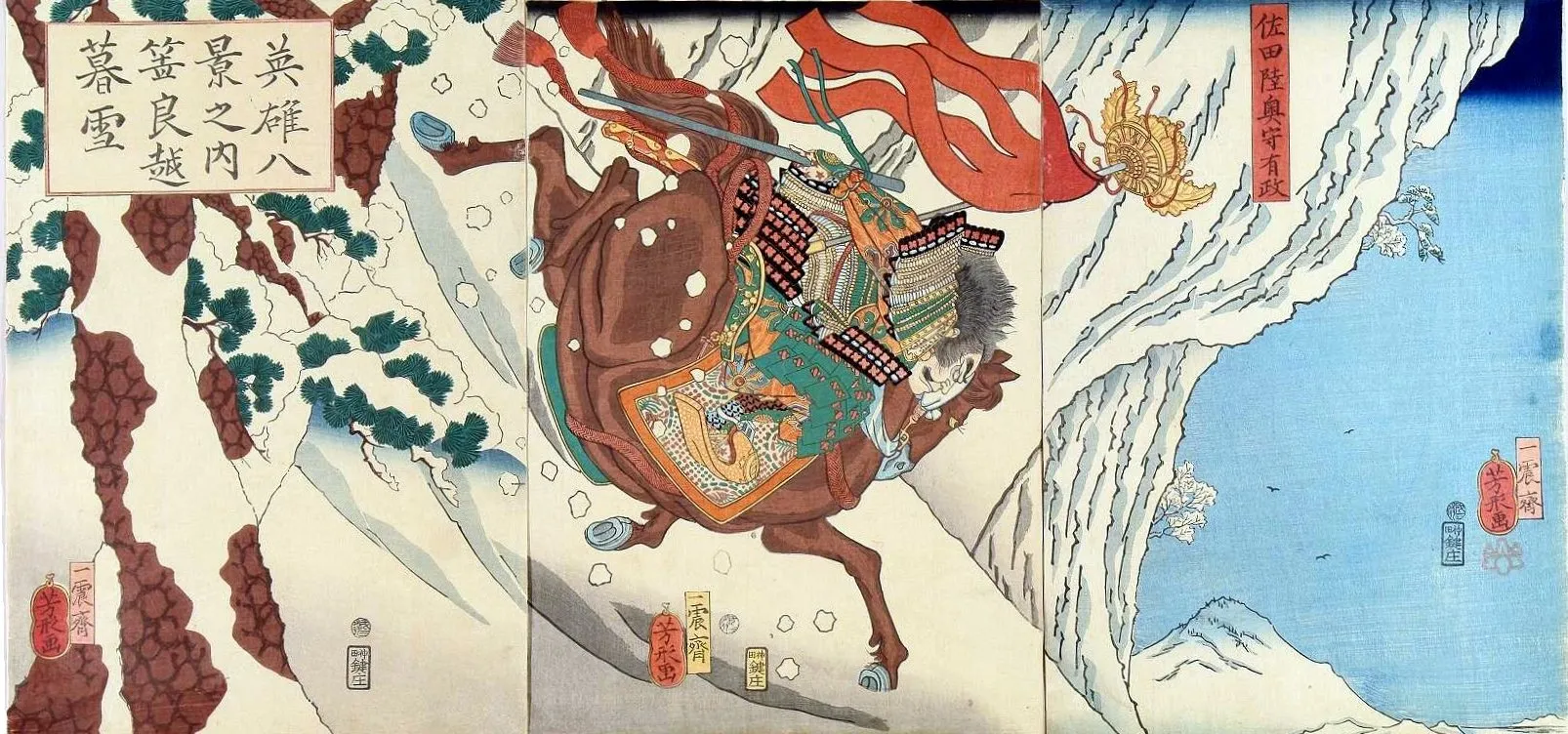
Before dawn on the twenty-sixth day of the second month of 1858 (9 April in the Gregorian calendar), a major earthquake struck along the Atotsugawa fault23. Ōtombi and Kotombi mountains and other parts of the Tateyama caldera collapsed, and the debris dammed the upper Jōganji River. About a hundred villages are said to have been affected, with 140–150 houses destroyed23.
On the night of the twenty-eighth, warnings went out across Toyama’s castle town, and everyone from samurai to townspeople fled to higher ground23. On the tenth day of the third month (23 April), another tremor broke the debris dam; mud and boulders swept down on the temple lodgings and houses of Iwakuraji23. On the twenty-sixth day of the fourth month (7 June) a second great debris flow broke the embankments and poured onto the Toyama plain, killing 140 people and injuring 8,945 in Kaga territory alone23.
The Ukita house in Ōta-minami-machi, Toyama, built in 1828, was the official residence of a Kaga okuyamamawari, an officer who patrolled the Tateyama and Kurobe area to guard the forests and the border24. Its main house, gate, and storehouse survive; it is a national Important Cultural Property and open to visitors24.
7. Foreign Ships, Castaways, and the Englishmen of 1867
In 1839 the Chōjamaru from Etchū drifted at sea. Its crew were rescued by a foreign ship and came home in 1843 by way of Hawaii, Kamchatka, Okhotsk, and Alaska25. Sado Yōjun, a doctor in Takaoka, wrote down crewman Kinzō’s account as the Hyōkai Ryakki, and the domain questioned the returned men and compiled a record named Tokei Monogatari after the clock they brought back25. On the seventeenth day of the third month of 1849, four crewmen told their story before Lord Nariyasu, Kinzō wearing clothes he had been given in Russia25.
When Perry reached Uraga in 1853, the shogunate asked the daimyo for their views. Nariyasu answered that Japan should act leniently until its defences were ready and then respond as the other side behaved; Yoshiyasu agreed25.
In the fourth month of 1855 a foreign ship was seen off Kanaiwa, and in the fourth month of 1859 others were sighted off Fushiki and Uozu in Etchū. Naruse Masaoki, stationed at Uozu, drew the ship’s flag, a cross on a white ground; the Kanazawa City Tamagawa Library suggests it was Russian25.
In the eleventh month of 1858 Hori Oribe-no-shō Toshihiro, newly appointed as a shogunal commissioner for foreign affairs, toured the Hokuriku coast with more than 120 people and made his last stop at Ataka for a midday rest. Ataka borrowed about sixty percent of the cost of receiving him from the domain; its later request to have the loan forgiven was refused26. In the sixth month of 1859 a foreign ship appeared off Ataka itself, and Komatsu was thrown into an uproar27. From 1863 farmers were drilled with muskets and enrolled as riflemen; by the end of 1864 Nomi district had four units, 114 men in all27.
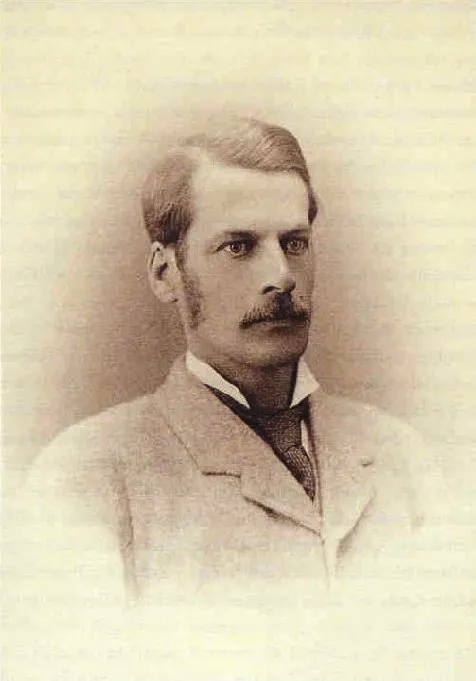
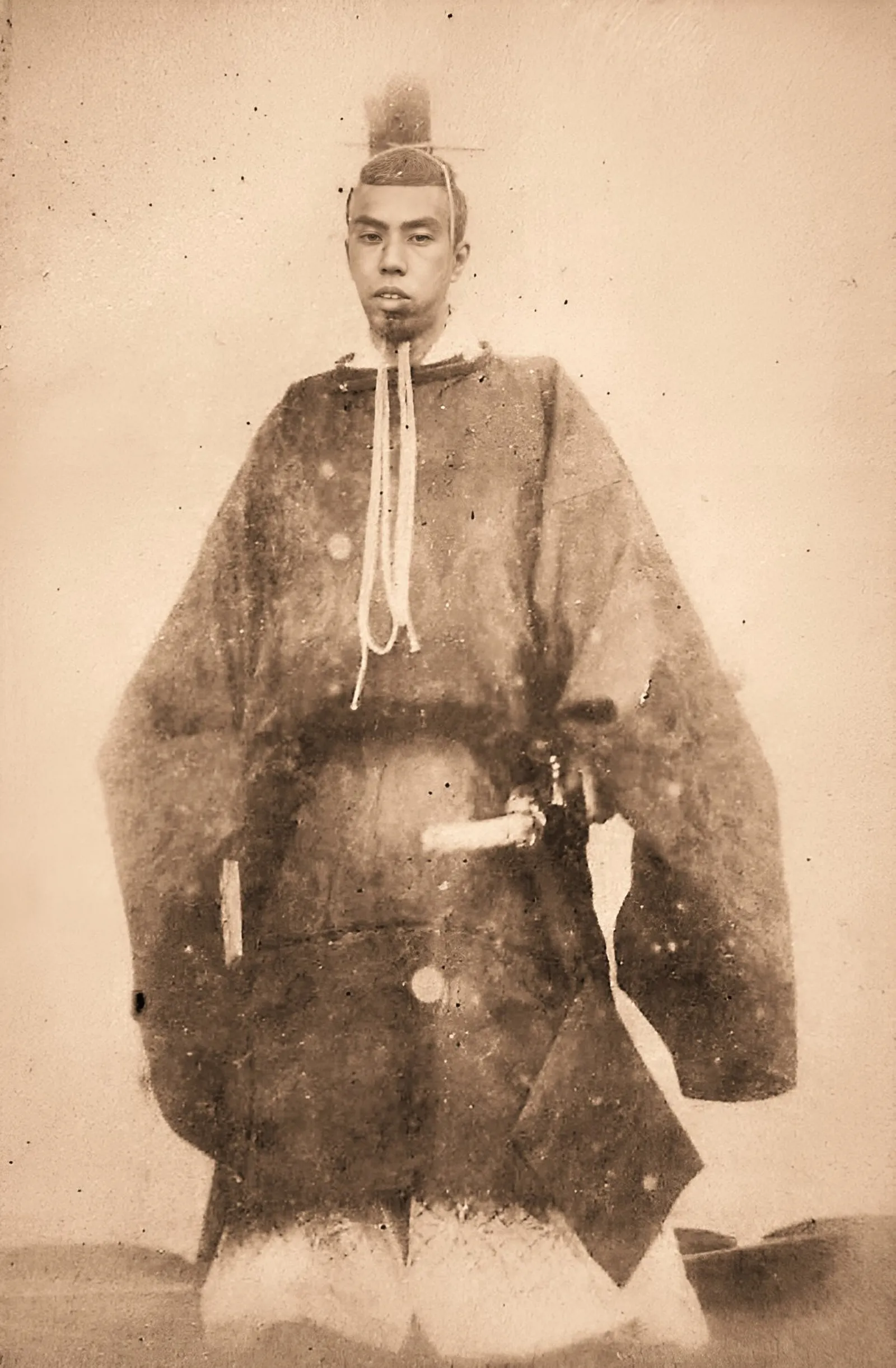
In 1867, as interpreter to the British legation, he travelled overland through Kanazawa and Komatsu to Osaka. Source: Wikimedia Commons (Public domain, converted to WebP)
In 1867 the port of Tokoroguchi, now Nanao, was considered as a Sea of Japan port that might be opened in place of Niigata, and American, British, and French ships came to survey it25. In the seventh month the British minister Harry Parkes arrived with the interpreter Ernest Satow and the secretary Algernon Mitford, and Satow and Mitford were told to travel overland from there to Osaka25. On the twelfth day of the seventh month Murai Matabei issued a notice that the Englishmen would reach the castle town the next day and that there must be no discourtesy25.
Satow described the journey in his memoir A Diplomat in Japan, published in 192128. The party passed Tsubata and Morimoto and caught “a glimpse of the white castle walls of Kanazawa peeping through the pine trees.” At one of the first houses in the town they met domain officials and were served “delicious melons and apples … with frozen snow from the mountains behind the town”28.
When Mitford asked to thank the lord in person, the messenger answered, “My master is unfortunately indisposed”; Satow suspected another reason28. In his account, the Kaga men he spoke with “wished to trade with foreigners, but did not wish avowedly to make an open port of Nanao, because the Tycoon’s government would then try to deprive them of it.” They also felt the shogunate “ought to be supported, and not done away with altogether,” but with limits on its authority28. These are a memoir written many years later, not Kaga records.
The party left Kanazawa “on the morning of August 14,” lunched at Matto, reached Komatsu that evening, and crossed into Daishōji territory the next day28.
8. Kyoto Politics, the Tengu Party, and 1868
Yoshiyasu Leaves Kyoto
After Nariyasu accompanied the shogun Tokugawa Iemochi to Kyoto in 1863, the Kaga domain kept a senior retainer stationed at Kennin-ji there2. During the Kinmon Incident in the seventh month of 1864, the heir Yoshiyasu left the city, and the domain was thrown into turmoil; afterwards Yoshiyasu was confined and dozens of retainers were punished229. In the eighth month he wrote from Kaizu in Ōmi that he would obey his father as a son should and told his retainers not to stir up trouble230.
The Tengu Party at Tsuruga
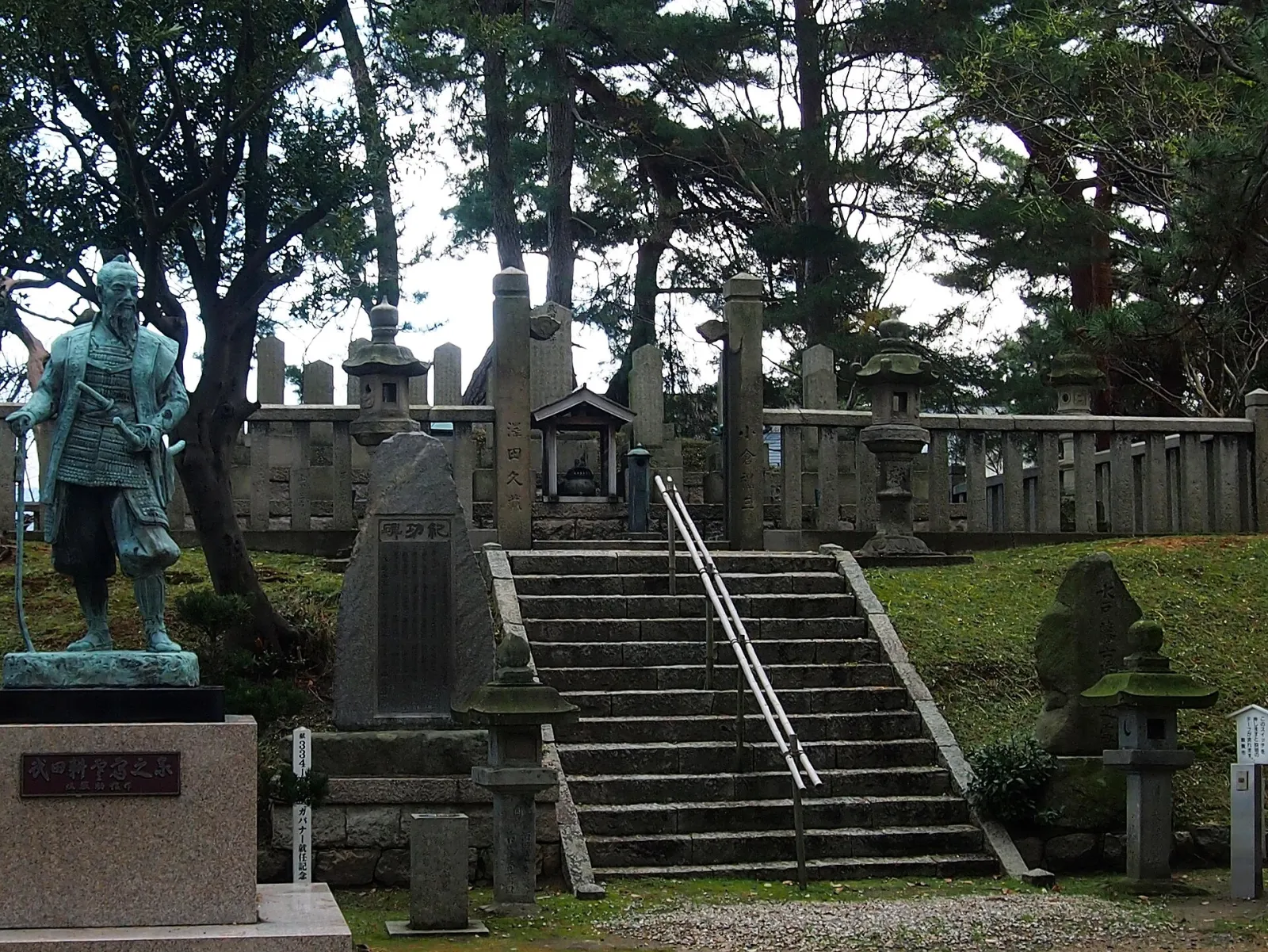
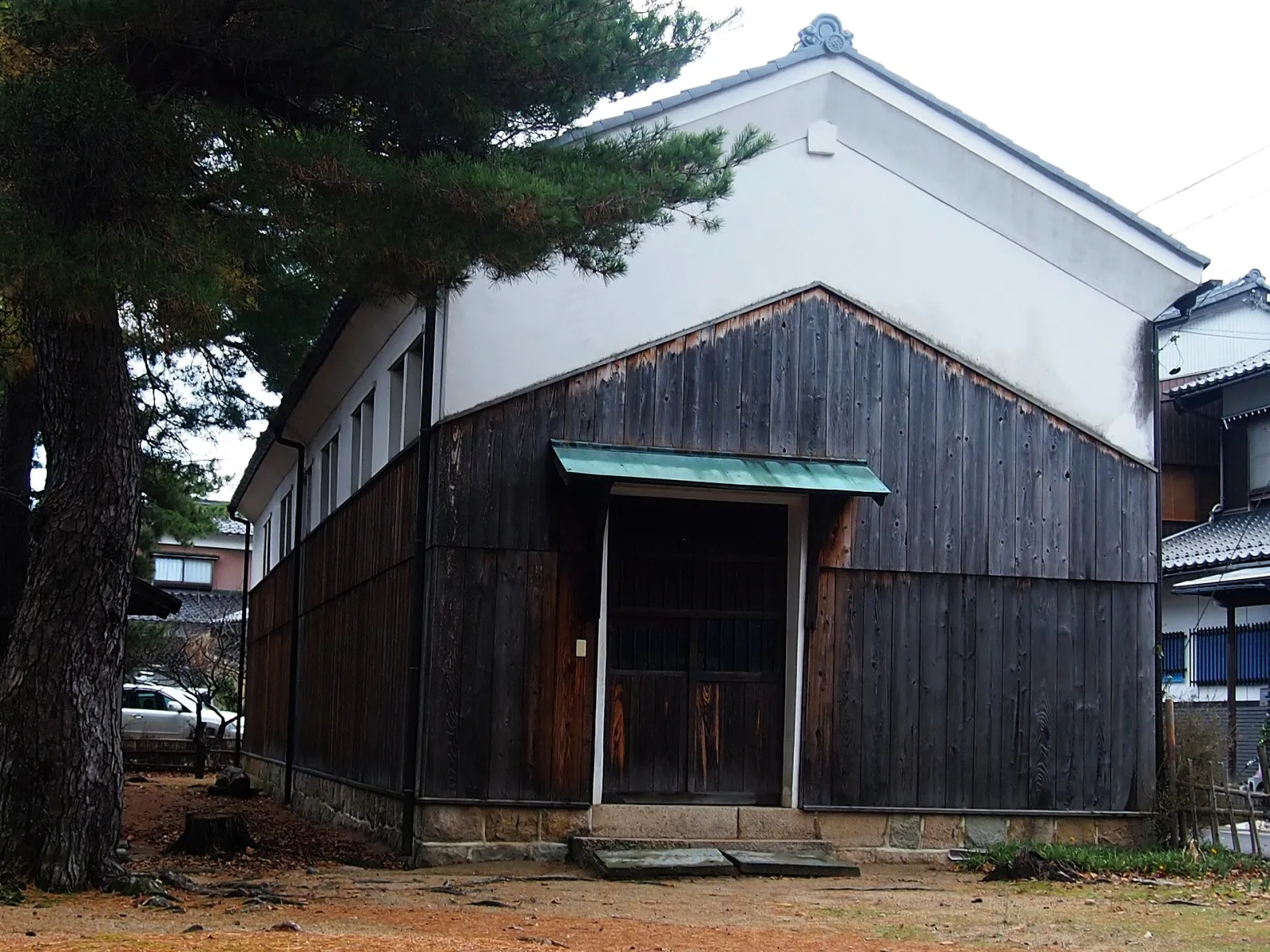
After the Kinmon Incident the Kaga domain sent troops on the shogunate’s orders for the first Chōshū expedition and against the Mito Tengu party’s march west3. The Tengu party, Mito’s sonnō jōi faction, rose at Mount Tsukuba in 1864 and marched toward Kyoto, but were surrounded at Tsuruga and surrendered31. The next year 353 of them were executed at Raikō-ji in Tsuruga; their graves are now the national historic site “Graves of Takeda Kōunsai and Others”32. The 823 who surrendered were held in sixteen warehouses at the port, one of which was later moved and is now the Mito Martyrs Memorial Hall, the former herring storehouse33. A Tengu diary records a petition from their leader, Takeda Kōunsai, to the Kaga domain3134.
Strife in the Toyama Domain
From around 1844 the tenth lord of Toyama, Maeda Toshiyasu, and his son, the twelfth lord Toshikata, fought over control of the domain. Toshikata issued large amounts of paper money to fix the finances, which only threw them into confusion, and the domain split into a Toyama faction and an Edo faction35. In 1857 Toshikata fell from power, and the Edo-faction senior retainer Tomita Hyōbu committed seppuku3536.
Yamada Kazen, a senior retainer from 1859, brought the four-year-old thirteenth lord Maeda Toshiatsu from Kaga and set about reforming the domain. Seven retainers, including Hayashi Tachū, formed a league to press for change. One of them, Fujita Gokō, tried to stop the plan and, failing, left; the remaining six submitted a memorial, which was rejected, and they were confined to their homes36.
In 1864 one of the six, Shimada Shōma, killed Kazen inside Toyama Castle, and was later ordered to commit seppuku3637.
The Utatsuyama Development
In 1867–1868 Yoshiyasu developed Mount Utatsu, east of Kanazawa, setting up a hospital (yōjōsho), a welfare facility (buikusho), and a workhouse (shosasho)38. According to Naitō Seisai’s Utatsuyama Kaitakuroku, workshops for pottery, lacquer, and smithing, a theatre, restaurants, and a bathhouse were built on the lower slopes and opened to the public38. Work on the hospital began in the sixth month of 1867 and finished in the tenth; the project stalled with the Meiji Restoration38. Utatsuyama Tenmangū on the mountain is the shrine Yoshiyasu moved from the Takezawa palace in Kenroku-en39.
Siding with the New Government and the Hokuetsu Campaign
On the ninth day of the twelfth month of 1867, the day Yoshiyasu reached Kyoto, the restoration of imperial rule was proclaimed2. On the sixth day of the first month of 1868, after consulting Nariyasu and senior retainers, Yoshiyasu told his household that the domain would go to Kyoto to support Tokugawa Yoshinobu against Satsuma2. After the battles of Toba and Fushimi, however, the Tokugawa were declared enemies of the court, and Kaga dropped its support for them, declared its loyalty to the court, and submitted to the new government23.
In the fourth month of that year Kaga was ordered to join Satsuma and Chōshū in subduing the Hokurikudō and sent units under Ogawa Sennosuke and others2. Its troops went into action at Kujiranami at the end of the intercalary fourth month and helped take Nagaoka Castle at the end of the seventh month; the last unit came home to Kanazawa in the second month of 18692. The dead were buried in Echigo, and the Kanazawa City Tamagawa Library holds a plan marking eighteen of their burial places2. The Toyama domain followed Kaga to the government side, sent troops to Echigo, and fought on into southern Aizu and Shōnai40.
The era name changed to Meiji in 1868. Yoshiyasu moved to Tokyo after the domains were abolished in 1871 and died in 18742.
9. Later Works
The list below keeps to what publishers and broadcasters state in their own descriptions. Plot details are not treated as history.
- Shibata Renzaburō, Nemuri Kyōshirō Sappōchō: the Shūeisha bunko edition’s blurb has Kyōshirō heading into Hokuriku to foil “the plot of the Kaga merchant Zeniya Gohei”41; Daiei filmed it in 1963 with Ichikawa Raizō42.
- Dōmon Fuyuji, Zeniya Gohei to Bōkensha-tachi: Shūeisha’s description presents Zeniya Gohei and Ōno Benkichi as men who took the path of “internationalisation” in the turbulent bakumatsu years43.
- Yoshimura Akira, Tengu Sōran: Shinchōsha’s description says the Tengu party, abandoned by Yoshinobu, met a merciless end in Echizen44.
- NHK taiga drama Seiten wo Tsuke, episode 18, “Hitotsubashi no Futokoro”: the official synopsis has Seiichirō deliver Yoshinobu’s secret letter to Kōunsai and witness the Tengu party’s plight45.
10. Places You Can Visit Today
| Area | Place | Type | Notes |
|---|---|---|---|
| Kanazawa | Kenroku-en | Garden / Special Place of Scenic Beauty | Named in 1822; joined with the Renchi garden in 1860 to form the present layout4 |
| Kanazawa | Seisonkaku | Building / Important Cultural Property | The Tatsumi palace of 1863; some areas normally closed5 |
| Kanazawa | Utatsuyama’s three shrines (Utatsuyama Tenmangū) | Shrine | The Tenmangū moved by Yoshiyasu; grounds free39 |
| Kanazawa | Zeniya Gohei Memorial Museum and Zenigo-no-Yakata | Museum | Part of the Zeniya main house relocated; 9:00–17:00 (last entry 16:30); closed Tuesdays December–April (the next day if Tuesday is a holiday) and 29 December–3 January10 |
| Kanazawa | Zenigo Park (statue of Zeniya Gohei) | Park / statue | Kanaiwa6 |
| Kanazawa | Ōno Karakuri Memorial Museum | Museum | About 100 items: exhibits related to Ōno Benkichi, mechanical dolls, and working mechanical pieces12 |
| Komatsu | Komatsu City Noborigama Exhibition Hall | Museum | Climbing kiln at Yawata after the Wakasugi kiln moved; 11:00–15:00 (last entry 14:30), free; closed Mondays (except public holidays), the weekday after a holiday, and 29 December–3 January20 |
| Komatsu | Haneda insect mound | Historic site | Memorial mound for the 1839 plague, with instructions carved on the stone22 |
| Toyama | Ukita house | Building / Important Cultural Property | The 1828 residence of an okuyamamawari officer; 9:00–17:00 (last entry 16:30), adults 100 yen; closed Mondays (except holidays), the day after a holiday (except weekends), and 28 December–4 January24 |
| Toyama | Toyama Medicine Museum, Toyama Folk Crafts Village | Museum | Peddlers’ wicker boxes, customer ledgers, medicine prints, and more46 |
| Imizu | Imizu City Shinminato Museum | Museum | Holds Ishiguro Nobuyoshi’s Kōju Bunko13 |
| Tsuruga | Graves of Takeda Kōunsai and Others; Mito Martyrs Memorial Hall | National historic site / building | The hall is normally viewed from outside only; interior visits need a guide booked a week ahead3233 |
References
Footnotes
-
Edo period (late period about 1780 to about 1850; final period 1853–1868; ends with the change to Meiji in 1868): https://ja.wikipedia.org/wiki/%E6%B1%9F%E6%88%B8%E6%99%82%E4%BB%A3 ↩
-
Kanazawa City Tamagawa Library, Early Modern Historical Materials, 2015 special exhibition catalogue Bakumatsu Ishin-ki no Kaga-han (Nariyasu b. 1811, succeeded 1822, retired 1866, d. 1884; Yoshiyasu b. 1830 to Yō, succeeded 1866, moved to Tokyo 1871, d. 1874; the Kyoto posting; the Kinmon Incident, Yoshiyasu’s withdrawal and confinement, and the punishment of dozens of retainers; the Kaizu letter; the restoration of imperial rule; the declaration of the 6th of the 1st month of Keiō 4 and the later submission; the Hokuetsu campaign, the Ogawa unit, Kujiranami, Nagaoka, return in the 2nd month of Meiji 2. The catalogue also shows the Ogawa unit’s flag, roster, and diary and a plan of Hokuetsu graves listing eighteen sites, including Tamon-ji in Kasashima village, Kubiki district, and Myōgyō-ji in Kashiwazaki, Kariwa district): https://www2.lib.kanazawa.ishikawa.jp/kinsei/ishinkitenji.pdf ↩ ↩2 ↩3 ↩4 ↩5 ↩6 ↩7 ↩8 ↩9 ↩10 ↩11 ↩12
-
Ishikawa Prefectural Museum of History, permanent exhibition “Early Modern,” 3: The Kaga Domain in the Bakumatsu (Yō-hime’s marriage in 1827; troops for the Chōshū expedition and against the Tengu party; abandoning support for the Tokugawa after Toba-Fushimi): https://www.ishikawa-rekihaku.jp/exhibition/04.html ↩ ↩2 ↩3
-
Ishikawa Prefecture Kanazawa Castle and Kenroku-en Management Office, “History of Kenroku-en” (domain schools 1792; Takezawa palace and the name Kenroku-en 1822; Nariyasu’s enlargement; 1860; Tatsumi palace 1863): https://shiro-niwa.pref.ishikawa.lg.jp/kenrokuen-garden/history.html ↩ ↩2 ↩3 ↩4
-
Seisonkaku, “Activities” (built 1863; Shinryūin’s retirement residence; old National Treasure 1938, Important Cultural Property 1950): https://seisonkaku.com/about/jigyo.html ; Seisonkaku, “Highlights” (name from its southeast position relative to the castle and from the Takatsukasa “Tatsumi-dono” of Kyoto; imported glass in the snow-viewing shōji; Seikōken, Seikō Shoin, and Hikaku-tei normally closed): https://seisonkaku.com/midokoro/index.html ↩ ↩2 ↩3 ↩4
-
Ishikawa Prefectural Zeniya Gohei Memorial Museum, “Zeniya Gohei” (born at Miyanokoshi on the 25th of the 11th month of 1773; money-changing family; kitamaebune shipping; funds for the domain; Kahoku-gata reclamation; “反対派の中傷による無実の罪”; died in prison on the 21st of the 11th month of 1852; statue in Zenigo Park): https://www.zenigo.jp/zenigo/3/ ↩ ↩2 ↩3 ↩4
-
Ishikawa Prefectural Library SHOSHO, “Statement by Zeniya Gohei concerning the Kahoku-gata dead-fish affair” (dated 子(嘉永5年)9月19日; Ishikawa Kenshi vol. 2, p. 763; the statement itself not read): https://www.library.pref.ishikawa.lg.jp/shosho/detail/orgn/B999002025 ↩
-
Ishikawa Prefectural Zeniya Gohei Memorial Museum, “The Overseas Trade Theory” (“肯定もできないが,” “伝説として紹介している”): https://www.zenigo.jp/zenigo/8/ ↩
-
Ishikawa Prefectural Zeniya Gohei Memorial Museum, “Kahoku-gata Reclamation” (new fields from Enpō 1 (1673); national project from Shōwa 38 taking over twenty years and more than 28.3 billion yen): https://www.zenigo.jp/zenigo/10/ ↩
-
Ishikawa Prefectural Zeniya Gohei Memorial Museum (relocation of Zenigo-no-Yakata and Shūsuien; hours; closing days): https://www.zenigo.jp/ ↩ ↩2
-
Ōno Karakuri Memorial Museum (Benkichi’s settlement at Ōno village in 1831; dealings with Zeniya Gohei; address Ōno-machi 4-chōme, Kanazawa): https://www.ohno-karakuri.jp/ ↩
-
Ōno Karakuri Memorial Museum, “Exhibits” (Ōno Benkichi; about 100 items; netsuke; erekiteru; late Edo mechanical dolls): https://www.ohno-karakuri.jp/collection.php ↩ ↩2 ↩3
-
Imizu City, “What is Ishiguro Nobuyoshi’s Kōju Bunko?” (1760–1836; 12,000 items from Nobuyoshi, Nobuyasu, Nobuyuki, and Nobumoto; the 2011 page gives 3,765 as Important Cultural Properties; Shinminato Museum): https://www.city.imizu.toyama.jp/faq/svFaqDtl.aspx?servno=149 ↩ ↩2
-
Toyama Medicine Museum, “Chronology of the Toyama Medicine Trade” (Hangontan office 1816; 2,188 sellers in 21 groups 1844; 2,258 in 22 groups and about 3,200 ryō 1853; this chronology dates the Honzō Tsūkan to Kaei 1 (1848)): https://www.city.toyama.toyama.jp/etc/minzokumingei/baiyaku/baiyaku_nenpyou.html ↩ ↩2
-
University of Toyama, Wakan-yaku Wiki, “Honzō Tsūkan” (Maeda Toshiyasu; about 1850; 94 volumes in 56; differs from the medicine museum’s 1848): https://www.inm.u-toyama.ac.jp/wiki/hztk_list.html ↩
-
Toyama Medicine Museum, “Toyama Medicine: From Visitors’ Questions” (kakebachō; once or twice a year; Matsumae in the Bunsei era; Ezo petition in the Ansei era; 22 groups and the Nanbu group): https://www.city.toyama.toyama.jp/etc/minzokumingei/baiyaku/baiyaku_about.html ↩ ↩2
-
Kanazawa City, “Chronology of Dr Takamine Jōkichi” (born in Takaoka 1854; Meirindō 1862; study in Nagasaki 1865): https://www4.city.kanazawa.lg.jp/shiseijoho/kensho_hyoshoseido/12458.html ↩
-
Tomura system (farm administration set up by Maeda Toshitsune, third lord of Kaga, in which local notables were appointed tomura to manage villages and collect taxes): https://ja.wikipedia.org/wiki/%E5%8D%81%E6%9D%91%E5%88%B6 ↩
-
Nomi City, “Wakasugi Kiln” (Aoki Mokubei 1807; Honda Teikichi and the Hanasaka stone; Hayashi Hachibei; porcelain fired 1811; Wakasugi kiln 1811–1875): https://nomishizukan.com/kutani/treasure/products/52 ↩
-
Komatsu City, “Noborigama Exhibition Hall” (Wakasugi kiln 1811; moved to Yawata after the 1836 fire; climbing kiln used until about Shōwa 40; hours, closing days, free entry): https://www.city.komatsu.lg.jp/kanko_bunka/kanko/2/6022.html ↩ ↩2
-
Japan Arts Council Digital Library, kabuki dictionary, “Kanjinchō” (Ataka barrier; first Danjūrō in the Genroku period; seventh Danjūrō’s new version in Tenpō 11; drawing on noh): https://www2.ntj.jac.go.jp/dglib/modules/kabuki_dic/entry.php?entryid=1091 ↩
-
Komatsu City, “Haneda Insect Mound” (planthopper plague of Tenpō 10; nut-oil method; “23俵にも及んだといわれる”; Tanaka Saburōemon, tomura of the Tokuhashi group; instructions on the stone; 16 bags at Iwabuchi; city historic site): https://www.city.komatsu.lg.jp/material/files/group/13/city002hanedanomushiduka.pdf ↩ ↩2 ↩3 ↩4 ↩5
-
MLIT Tateyama Sabo Office, “The Disaster of Ansei 5” (earthquake at about 2 a.m. on the 26th of the 2nd month; M7.0–7.1; collapse of Ōtombi and Kotombi; about 100 villages, 140–150 houses destroyed and 300–400 half-destroyed “と伝えられています”; evacuation on the 28th in the Chisui Kenbunroku; debris flows on the 10th of the 3rd and 26th of the 4th month; 140 dead and 8,945 injured in Kaga territory): https://www.hrr.mlit.go.jp/tateyama/jigyo/river/syousai01.html ↩ ↩2 ↩3 ↩4 ↩5
-
Toyama City, “Ukita House” (built Bunsei 11; residence of a Kaga okuyamamawari; national Important Cultural Property; main house, gate, storehouse; hours, closing days, fees): https://www.city.toyama.lg.jp/bunka/bunka/1010547/1010551/1007442.html ↩ ↩2 ↩3
-
Kanazawa City Tamagawa Library, Early Modern Historical Materials, exhibition text “Foreign Ships and the Kaga Domain” (the Chōjamaru adrift 1839, home 1843; Sado Yōjun’s Hyōkai Ryakki; Tokei Monogatari compiled by Endō Takanori and others; the account before Nariyasu on the 17th of the 3rd month of Kaei 2; Perry and the views of Nariyasu and Yoshiyasu, per the Kaga-han Shiryō; sightings off Miyanokoshi on the 14th of the 4th month of Ansei 2 and off Fushiki and Uozu on the 24th of the 4th month of Ansei 6, the Russian identification being the library’s suggestion; the Tokoroguchi survey; Murai Matabei’s notice of the 12th of the 7th month): https://www2.lib.kanazawa.ishikawa.jp/kinsei/bakumatsuikokusen.pdf ↩ ↩2 ↩3 ↩4 ↩5 ↩6 ↩7 ↩8
-
Komatsu City, Zusetsu Komatsu no Rekishi, Early Modern 39, “Inspection by the Commissioner for Foreign Affairs,” pp. 138–139 (Hori Oribe-no-shō’s party of over 120 in the 11th month of Ansei 5; midday stop and inspection at Ataka; about sixty percent of costs borrowed; request to forgive the loan refused): https://www.city.komatsu.lg.jp/material/files/group/39/339gaikoku.pdf ↩
-
Komatsu City, Zusetsu Komatsu no Rekishi, Early Modern 40, “Komatsu in the Turmoil of the Bakumatsu,” pp. 140–141 (foreign ship off Ataka in the 6th month of Ansei 6; musket drill and riflemen from the 4th month of Bunkyū 3; four units of 114 in Nomi district in the 12th month of Genji 1): https://www.city.komatsu.lg.jp/material/files/group/39/340bakumatsu.pdf ↩ ↩2
-
Ernest Satow, A Diplomat in Japan, London: Seeley, Service & Co., 1921, Chapter XX “Nanao to Ozaka Overland,” pp. 239–251 (scan on Wikimedia Commons): https://commons.wikimedia.org/wiki/File:A_diplomat_in_Japan;_the_inner_history_of_the_criticial_years_in_the_evolution_of_Japan_when_the_ports_were_opened_and_the_monarchy_restored_(IA_diplomatinjapani00sato).pdf ↩ ↩2 ↩3 ↩4 ↩5
-
Ishikawa Prefecture Kanazawa Castle Research Institute, bulletin Kanazawa-jō Kenkyū no. 13, contents (Ikeda Hitoko, “元治元年前田慶寧の退京・謹慎と金谷御殿における治療”; the article itself not read): https://www.pref.ishikawa.lg.jp/kyoiku/bunkazai/kanazawazyo/kiyou-13.html ↩
-
Kanazawa City Tamagawa Library, Early Modern Historical Materials, “Letters of Maeda Nariyasu on Maeda Yoshiyasu’s withdrawal from Kyoto” (Kawachi collection 39.14-3; 8th month of Genji 1; Kaizu in Ōmi): https://jmapps.ne.jp/amhr/det.html?data_id=20809 ↩
-
Fukui Prefectural Archives, 2014 exhibition “The Mito Tengu Party Falls at Tsuruga” (rising at Mount Tsukuba 1864; surrounded and surrendered at Tsuruga; about 350 executed; the Mito Rōshi Nikki includes “武田伊賀守加賀藩上書”): https://www.library-archives.pref.fukui.lg.jp/fukui/08/2014exhb/2014exhb00.html ↩ ↩2
-
Tsuruga Tourism Association, “Graves of Takeda Kōunsai and Others” (captured at Shinbo; 353 executed at Raikō-ji; national historic site): https://tsuruga-kanko.jp/spot/history_culture/takedakounsai-grave/ ↩ ↩2
-
Tsuruga City, “Mito Martyrs Memorial Hall (former herring storehouse)” (823 men held in Genji 2; sixteen warehouses in Funa-machi; moved 1954; relocated and restored 2021–2023; usually exterior only): https://www.city.tsuruga.lg.jp/page/4430.html ↩ ↩2
-
Ishikawa Prefectural Library SHOSHO, “≪天狗党監禁の様子≫ 加賀藩石黒堅三郎手記” (1st month of Keiō 1; Ishikawa Kenshi vol. 2, p. 912; the catalogue notes its location as unconfirmed, and this note relies on the catalogue entry only): https://www.library.pref.ishikawa.lg.jp/shosho/detail/orgn/B999002108 ↩
-
Toyama Municipal Folk Museum, Hakubutsukan Dayori no. 16, “Toyama Bakumatsu Stories 3” (Toshikata’s paper money and financial confusion; Toyama and Edo factions; this issue gives the 1858 earthquake as about M6.8, unlike the Sabo Office’s 7.0–7.1): https://www.city.toyama.toyama.jp/etc/muse/tayori/tayori16/tayori16.htm ↩ ↩2
-
Toyama Municipal Folk Museum, Hakubutsukan Dayori no. 48, “Toyama Domain Figures: Fujita Gokō” (Toshiyasu versus Toshikata; Toshikata’s fall and Tomita Hyōbu’s seppuku 1857; Yamada Kazen and Toshiatsu; the league of seven and Fujita Gokō’s withdrawal; the six’s memorial and confinement; Kazen killed inside Toyama Castle and Shimada Shōma’s seppuku 1864): https://www.city.toyama.toyama.jp/etc/muse/tayori/tayori48/tayori48.htm ↩ ↩2 ↩3
-
Toyama Prefectural Library, rare books gallery, “Maeda documents no. 23” (record of Shimada Shōma’s examination at the Kanazawa court and his seppuku): https://www.lib.pref.toyama.jp/gallery/collection/intro.aspx?isnvmngcd=1%3A1036 ↩
-
Kanazawa City, Plan for Utatsuyama Park’s 100th Anniversary, 2-2 Historical Development, pp. 3–4 (Yoshiyasu’s development; hospital, welfare facility, workhouse; Naitō Seisai’s Utatsuyama Kaitakuroku; hospital begun on the 11th of the 6th month of Keiō 3 and completed in the 10th month; stalled with the Restoration): https://www4.city.kanazawa.lg.jp/material/files/group/72/utatuyama.pdf ↩ ↩2 ↩3
-
Kanazawa Tabimonogatari, “Utatsuyama’s Three Shrines” (Tenmangū moved by Yoshiyasu from the Takezawa palace; grounds free): https://www.kanazawa-kankoukyoukai.or.jp/spot/detail_10020.html ↩ ↩2
-
Toyama Municipal Folk Museum, 2018 exhibition “The Bakumatsu Upheaval and the Toyama Domain” (domain dispute 1857; assassination 1864; foreign ship in Toyama Bay 1859; troops to Echigo and campaigns in southern Aizu and Shōnai 1868): https://www.city.toyama.toyama.jp/etc/muse/kikakuhaku/list/h30/3003/3003.html ↩
-
Shūeisha, Nemuri Kyōshirō Sappōchō, vol. 2 (Shūeisha Bunko, 2019): https://www.shueisha.co.jp/books/items/contents.html?isbn=978-4-08-745890-9 ↩
-
Kadokawa, “Nemuri Kyōshirō Sappōchō” (1963; Daiei; directed by Tanaka Tokuzō; starring Ichikawa Raizō): https://cinemakadokawa.jp/product/entry-5469.html ↩
-
Shūeisha, Zen’issatsu Zeniya Gohei to Bōkensha-tachi (Shūeisha Bunko, 2005): https://books.shueisha.co.jp/items/contents.html?jdcn=08747893946049000000 ↩
-
Shinchōsha, Tengu Sōran (Shinchō Bunko, 1997): https://www.shinchosha.co.jp/book/111738/ ↩
-
NHK On Demand, Seiten wo Tsuke, episode 18 “Hitotsubashi no Futokoro”: https://www.nhk-ondemand.jp/goods/G2021114180SA000/ ↩
-
Toyama Medicine Museum, “Exhibits” (Hangontan Kyūki, wicker boxes, kakebachō, mortars, pill-makers, medicine prints): https://www.city.toyama.toyama.jp/etc/minzokumingei/baiyaku/baiyaku_tenji.html ↩