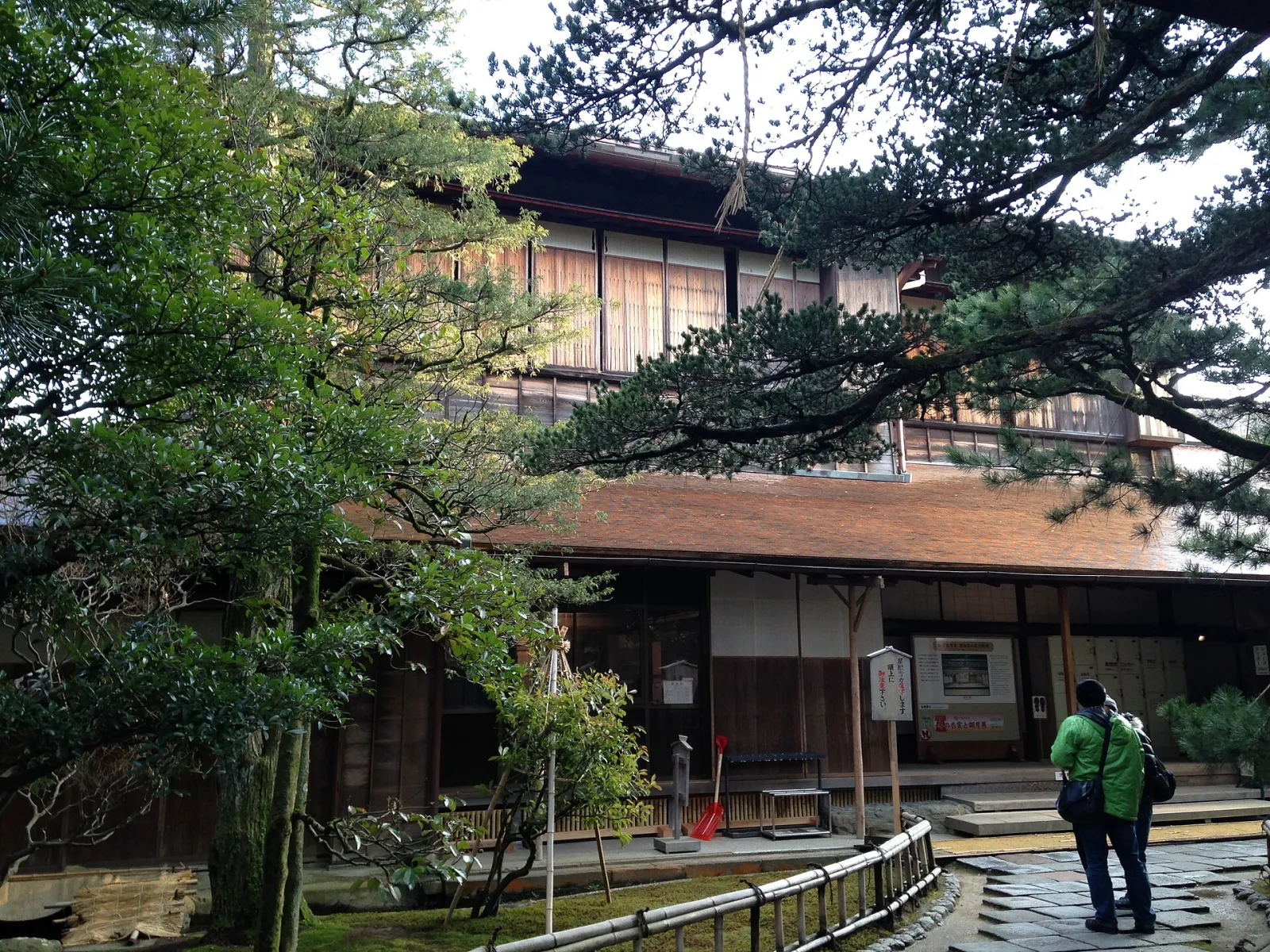
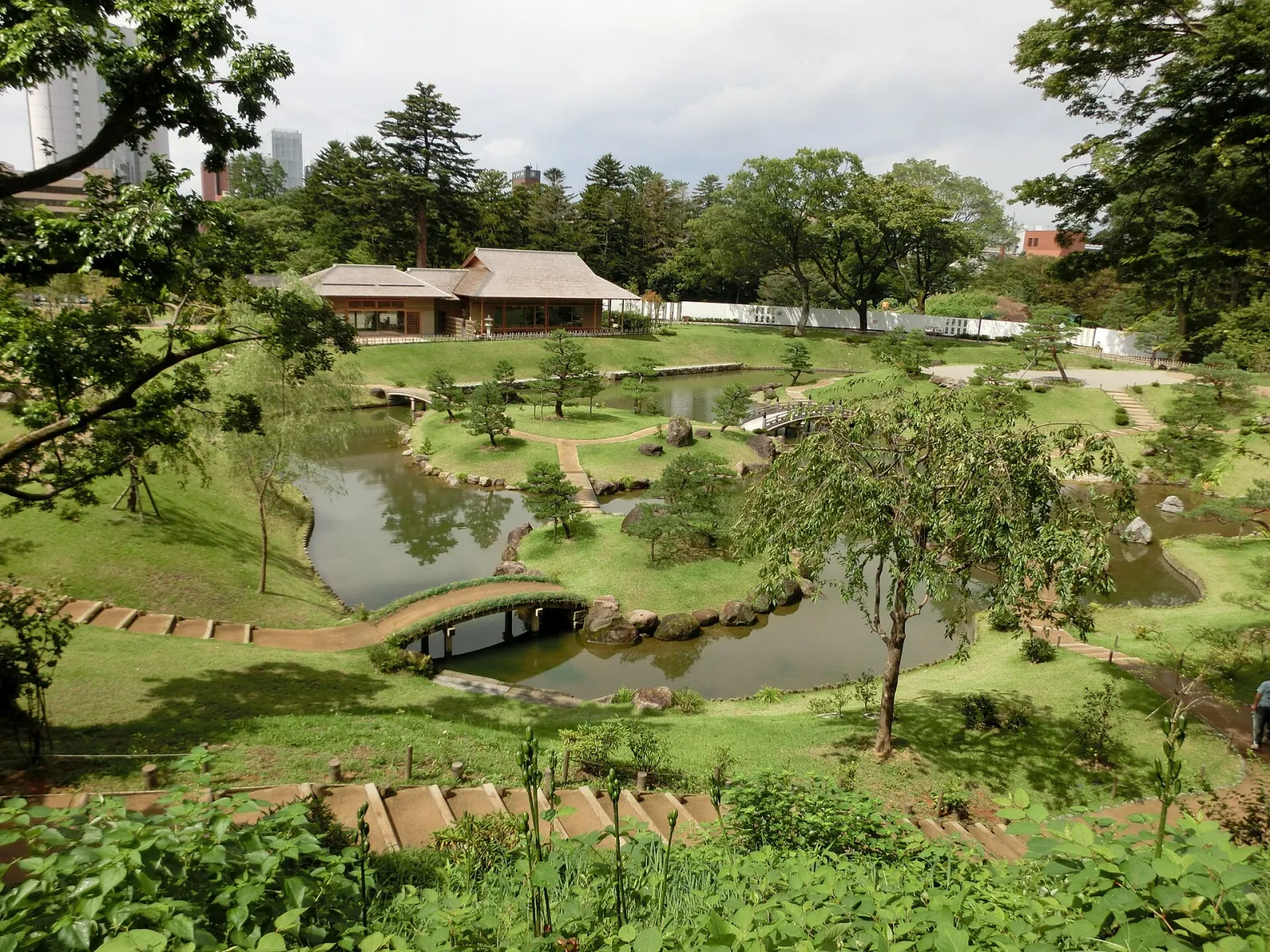
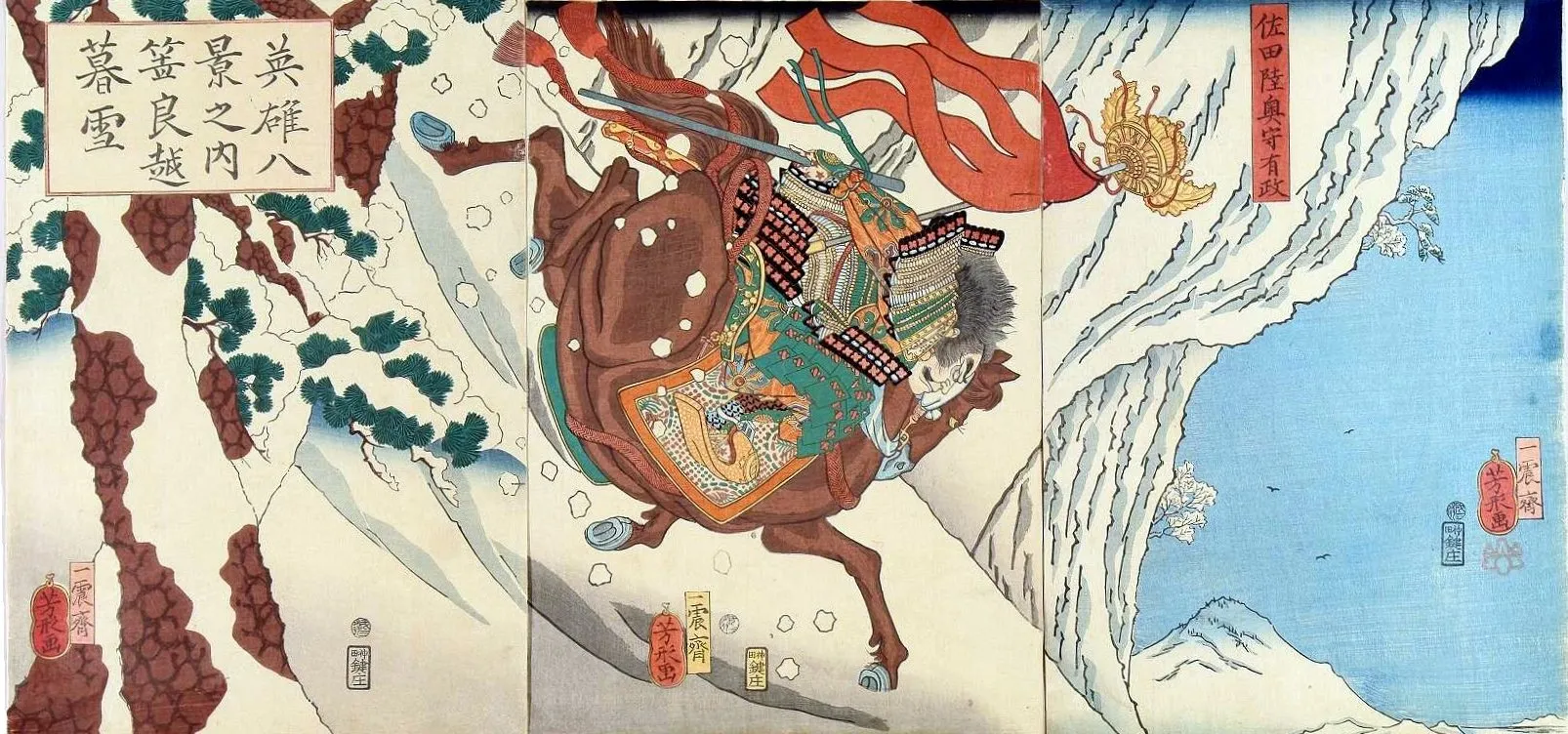
This note follows nine earlier ones on Hokuriku, from prehistory to the late Edo and bakumatsu years, and covers the Meiji era (1868–1912). Later work by Hatta Yoichi and others in the Taishō and Shōwa periods is only mentioned briefly; the memorials and buildings named here are present-day sites. Month and day dates up to Meiji 5 (1872) follow the Japanese calendar of the time; later dates are Gregorian.
In the Meiji era the Kaga and Toyama domains became prefectures, and Etchū split from Ishikawa Prefecture in 1883 to become Toyama Prefecture. As the samurai class declined, Kanazawa turned to silk reeling, weaving, and loom making, and from 1898 it was the base of the 9th Division. Toyama and Takaoka burned in 1899 and 1900, and the rebuilding produced the fireproof dozō-zukuri merchant houses that still stand. Foreign teachers, doctors, missionaries, and a river engineer also came to Hokuriku in these years, and Kanazawa’s schools produced Nishida Kitarō and D. T. Suzuki.
1. The Meiji Era and the Creation of Toyama Prefecture
The Meiji era runs from the change of era name in 1868 to the death of the Meiji Emperor in July 19121. With the abolition of the domains in the seventh month of 1871, Kanazawa Domain (the name used for Kaga Domain after the return of the domain registers in 1869) became Kanazawa Prefecture, and Toyama Domain became Toyama Prefecture2.
Etchū then changed hands several times. In the eleventh month of 1871 most of it became Niikawa Prefecture, and in April 1876 it was merged into Ishikawa Prefecture2. Discontent grew in Etchū, and Yonezawa Monzaburō and others started a campaign for a separate prefecture, presenting petitions at the Dajōkan every day for two months. Toyama Prefecture was created by Dajōkan Proclamation No. 15 on 9 May 1883, and the prefectural office opened on 1 July2.
2. Unrest and the People’s Rights Movement
The Bandori uprising
In 1869 a cold summer left Funahashi village in Etchū short of rice, yet the village officials took even the farmers’ own food as tax3. Led by Miyazaki Chūjirō, the farmers gathered wearing a kind of straw raincoat called bandori and carrying bamboo spears to demand lower taxes. Their numbers grew to 50,000, and they clashed with village officials at Namerikawa3. The uprising was put down, and only Chūjirō was executed3.
The assassination of Honda Masachika and the last vendetta
On the seventh day of the eighth month of 1869, Honda Masachika, the Kanazawa Domain executive leading domain reform, was stabbed to death inside the Ninomaru palace of Kanazawa Castle by Iguchi Gihei and Yamabe Okitarō4. Honda’s retainers later avenged their lord. On the fourth day of the eleventh month of 1872, Ishikawa Prefecture passed sentence on those involved: twelve were ordered to take their own lives, and they were buried beside Honda Masachika’s grave at Daijōji4. The Dajōkan notice of February 1873 that banned vendettas is said to have been prompted by this case4. Ishikawa Prefectural Library holds 310 documents related to Honda Masachika4.
The Kioichō Incident
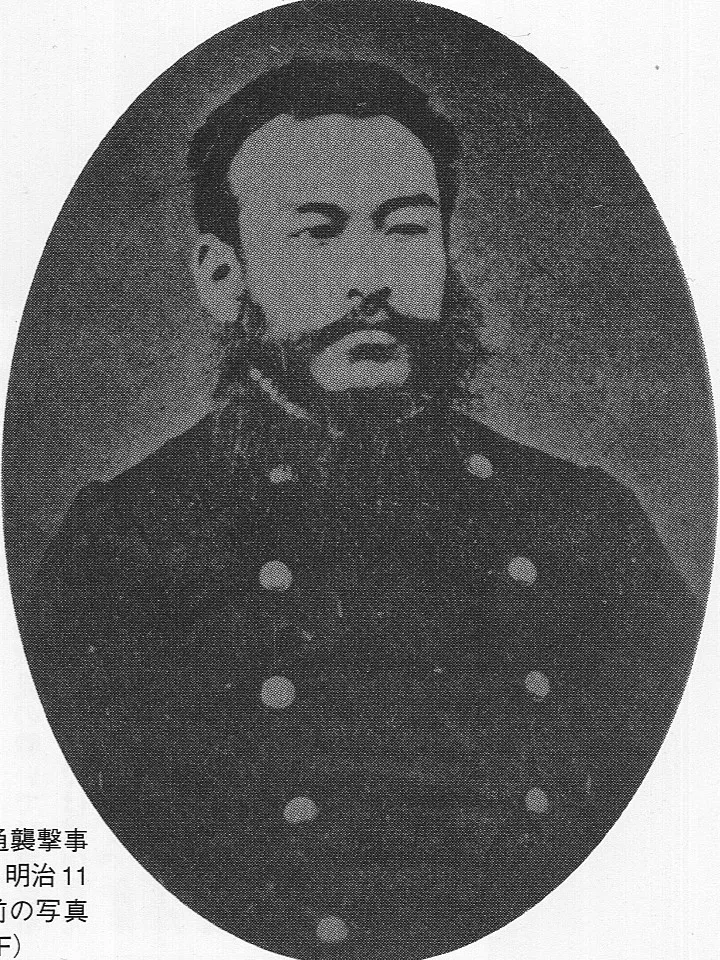
Source: Wikimedia Commons (public domain, converted to WebP)
On the morning of 14 May 1878, Ōkubo Toshimichi was killed at Kioichō in Tokyo on his way to the Akasaka temporary palace5. The assassins were five former samurai of Ishikawa Prefecture, including Shimada Ichirō and Chō Tsurahide, and one from Shimane Prefecture. Beforehand they had asked Kuga Yoshinao, vice-president of the Chūkokusha society, to draft their statement of purpose, the zankanjō, and afterwards they gave themselves up to the police5. The next year an illustrated popular novel centred on Shimada Ichirō, Samidare nikki, was published56.
The people’s rights movement in Etchū
In Etchū the people’s rights movement was led mainly by wealthy farmers7. In 1880 Inagaki Shimesu from Imizu district founded the political society Hokuritsusha in Takaoka, and in 1882 he formed the Hokuritsu Liberal Party, the first political party in the prefecture. On 10 March 1883 nearly 300 activists from the seven provinces of Hokuriku met at Zuiryūji in Takaoka7. The Toyama Prefectural Archives exhibition booklet says that the Hokuritsu Liberal Party and the Etchū Progressive Party had different positions, but in both the members were mostly wealthy farmers and few were former samurai7. In the Osaka Incident of 1885, Inagaki was one of the leaders and was responsible for raising funds7.
3. Foreigners in Hokuriku
Foreigners were teaching in Hokuriku from the first years of Meiji. At the end of 1869 the Englishman Percival Osborn came to Nanao to teach English and French at the Nanao language school set up by Kanazawa Domain8. In 1871 the Dutch doctor Sluys was invited to the medical school that Kanazawa Domain had founded the year before9.
American missionaries came too. Thomas Winn arrived in Kanazawa in 1879 as a teacher at the Ishikawa Prefectural Middle and Normal School, did mission work alongside his teaching, and invited Mary K. Hesser10. Hesser opened a private school in October 1884, and in March 1885 Kanazawa Girls’ School was authorised; this is the forerunner of today’s Hokuriku Gakuin11. In 1888 Winn built a missionary residence, now called Winn-kan, and from 1892 his wife Eliza used it as an orphanage10.
In 1891 the American Percival Lowell published Noto: An Unexplored Corner of Japan, an account of travel to Noto. Of Toyama he wrote that it “does a brisk business, I was told, in patent medicine, which is hawked over Japan generally and cures everything”12.
In July of that year heavy rain broke the banks of the Jōganji River over 6,500 metres. Governor Moriyama Shigeru of Toyama asked the national government for an engineer, and the Dutch engineer Johannes de Rijke arrived in Toyama on 6 August13. He proposed combining the many irrigation intakes along the embankment into a single intake, and the combined Jōsai irrigation channel was completed in June 18931314. By 1895 de Rijke had visited Toyama nine times, for a total of more than 270 days13.
In 1911 the Canadian Margaret Armstrong (Japanese name 亜武巣マーガレット) founded Aoba Kindergarten in Sōgawa, Toyama1516.
4. Schools and People
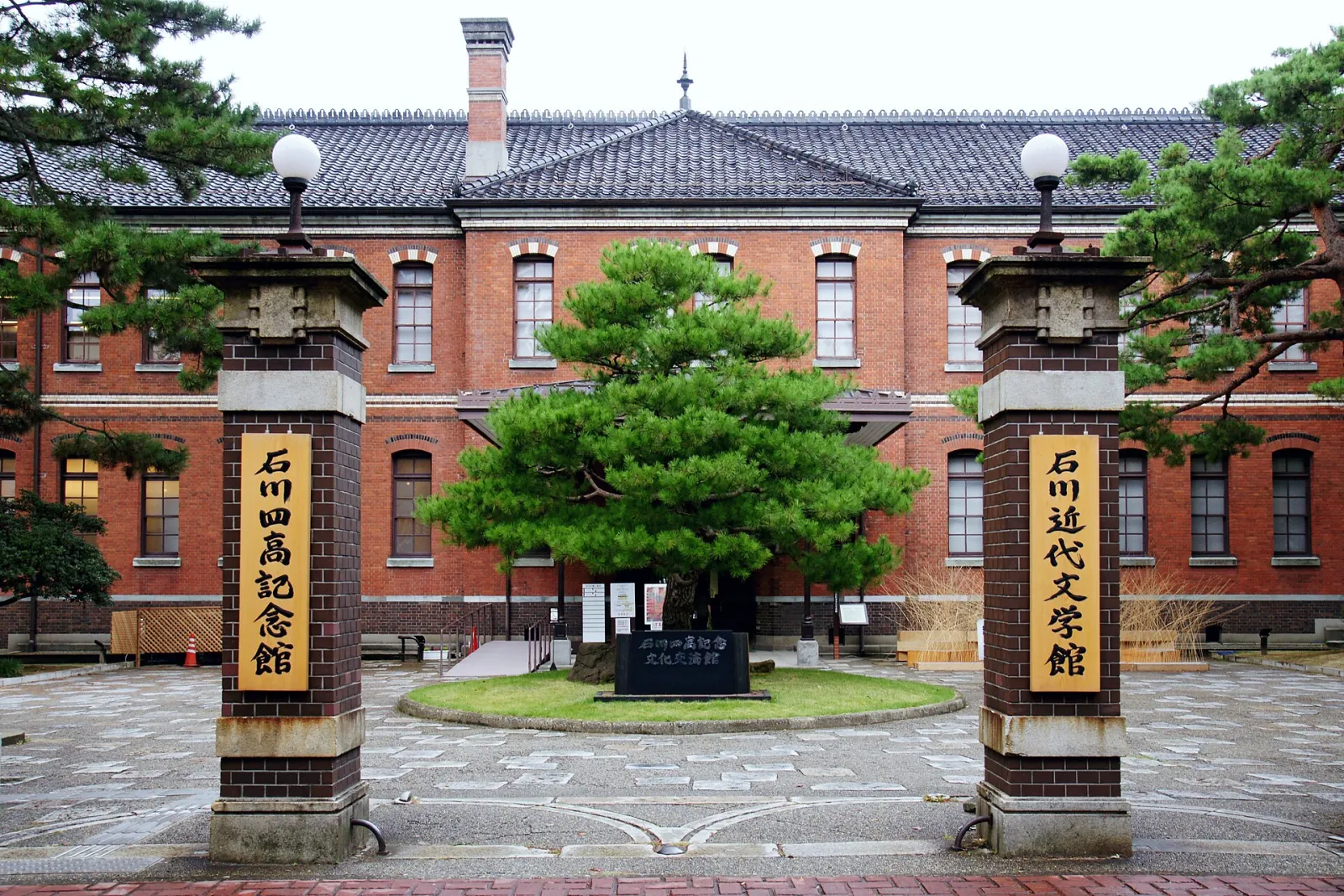
The brick school building completed in 1891, a national Important Cultural Property. Photo: 663highland, licence: CC BY 2.5, resized and converted to WebP. Source: Wikimedia Commons
In April 1887 the Fourth Higher Middle School was founded in Kanazawa, with Ishikawa Prefectural Vocational School as its forerunner; in 1894 it was renamed the Fourth Higher School (Shikō)17. Its main building, designed by the Ministry of Education engineers Yamaguchi Hanroku and Kuru Masamichi, is a two-storey brick building completed in July 1891. It was designated a national Important Cultural Property in 1969 and is now the Ishikawa Shikō Memorial Cultural Exchange Museum18.
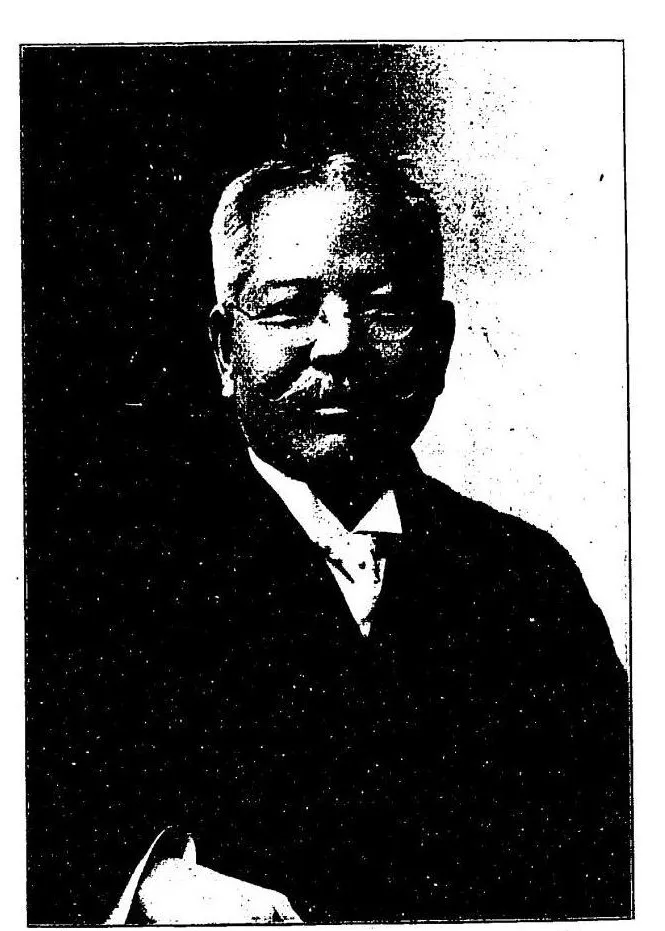
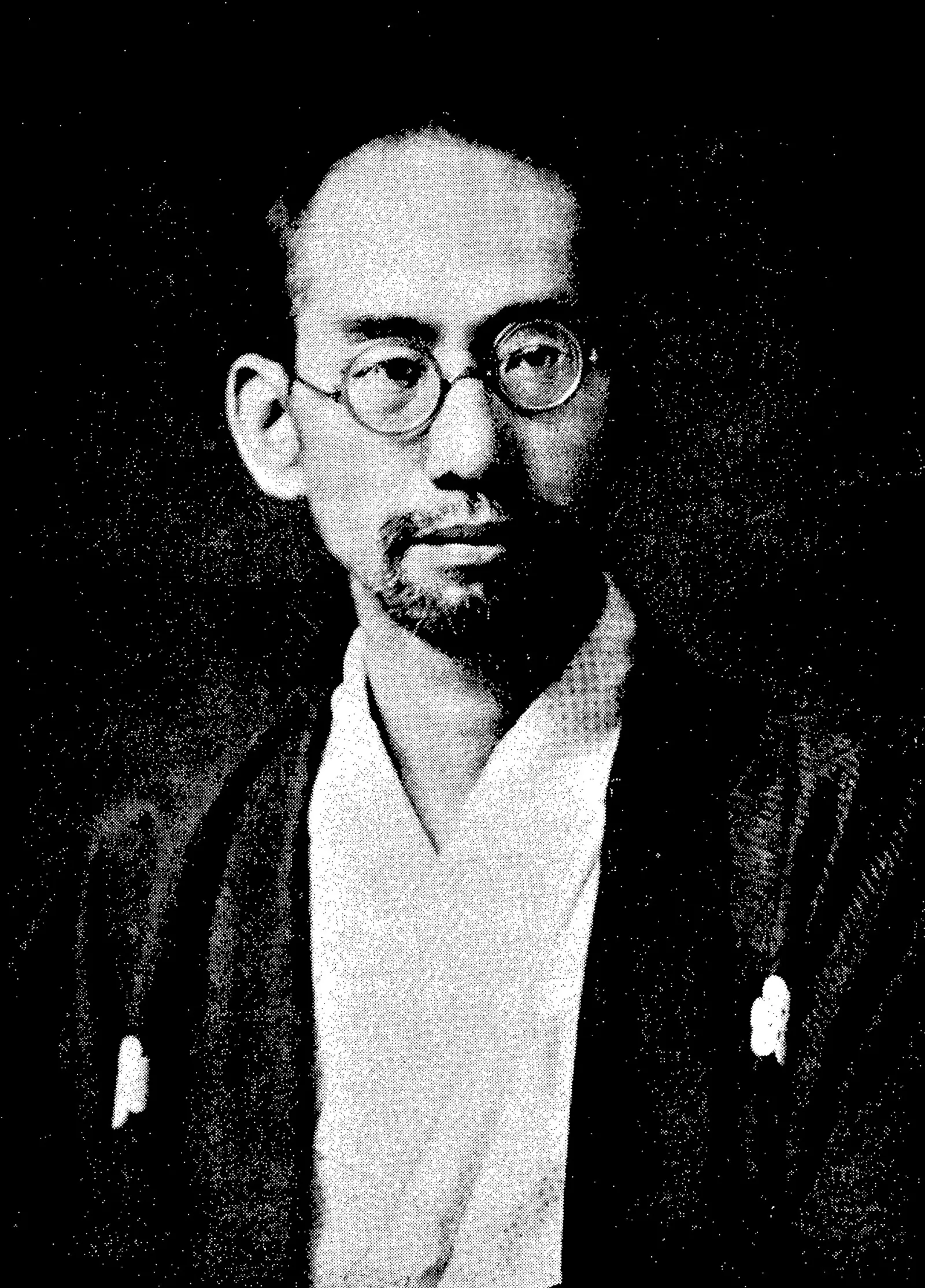
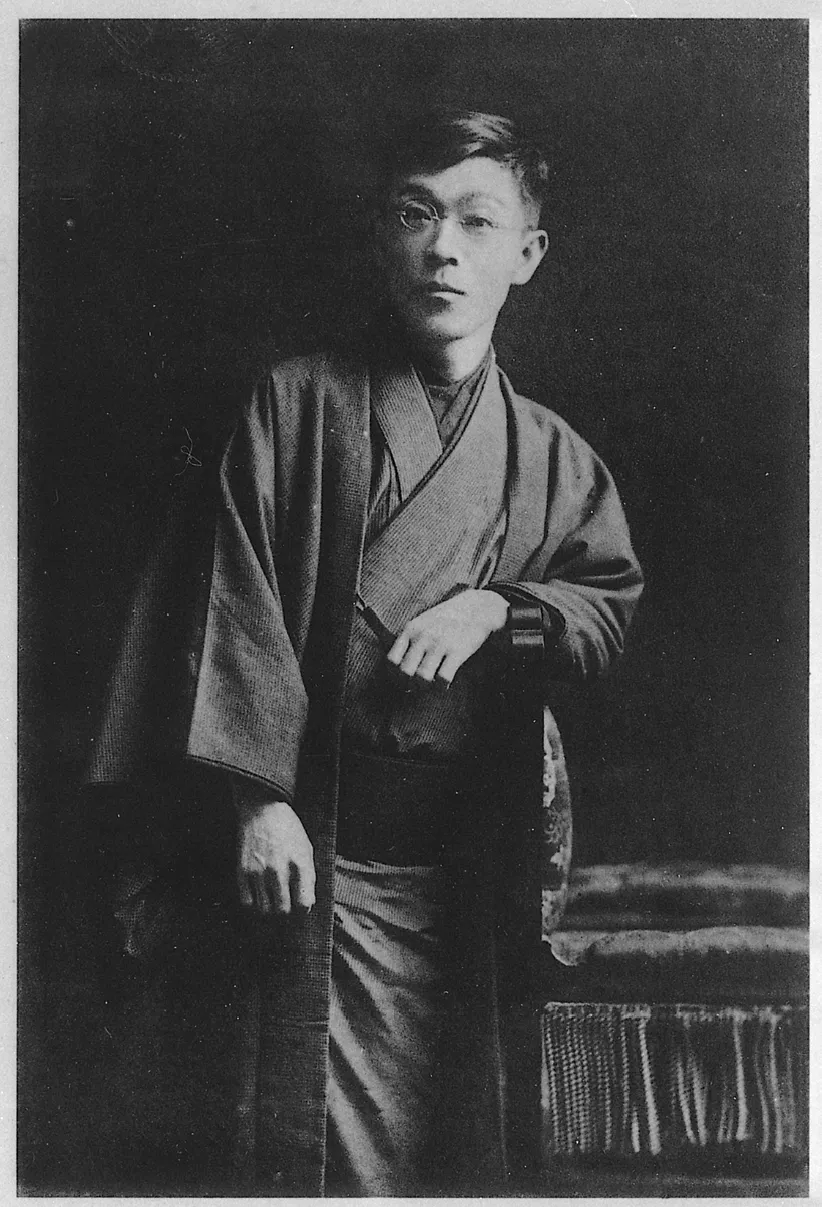
Nishida Kitarō became a professor at the Fourth Higher School in July 1899, teaching ethics, logic, psychology, and German, and also English in 1901 and 1902. An Inquiry into the Good was published in 191119. On Utatsuyama there is the site of Senshin-an, the hermitage of the Zen master Setsumon where Nishida practised Zen2021. D. T. Suzuki, also born in 1870, went to the United States in 1897, worked at the Open Court Publishing Company, and returned to Japan in 190922.
Takamine Jōkichi, born in Takaoka and raised in Kanazawa, invented and patented Taka-Diastase in 1894 and succeeded in isolating and crystallising adrenaline in 190023.
Among writers, Izumi Kyōka was born in Shimoshinchō, Kanazawa, in 1873. He serialised “Giketsu kyōketsu” in the Yomiuri Shimbun in 1894 and published “Yakō junsa” and “Gekashitsu” in 189524. On Utatsuyama there is a stone carved with one of his haiku, “はゝこひし夕山桜峰の松”20. Tokuda Shūsei, born in Kanazawa in 1872, wrote Arajotai, Ashiato, and Kabi between 1908 and 191125. Yokoyama Gennosuke from Uozu published Nihon no kasō shakai (Japan’s Lower Classes) in 1899716.
Source: Wikimedia Commons (public domain, converted to WebP)
Hatta Yoichi and Taiwan
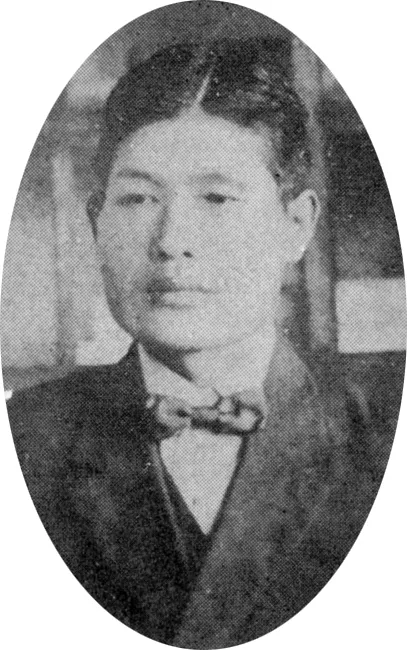
Source: Wikimedia Commons (public domain, converted to WebP)
Hatta Yoichi was born in Imamachi, Kanazawa, in 1886, entered the Fourth Higher School in 1904, and in 1910 became an engineering assistant in the civil engineering department of the Government-General of Taiwan26. Work on the Chianan irrigation system began in 1920 and the Wushantou reservoir was completed in 1930, both in the Taishō and Shōwa periods26. Kanazawa has several memorials to him. A bust was placed in the garden of the Kanazawa Furusato Ijinkan in February 200827. The front garden of his birthplace in Imamachi has a birthplace monument and a commemorative stone, and the surviving house dates from 190527. In the schoolyard of Hanazono Elementary School, opposite the birthplace, is a bust made by the Taiwanese businessman Hsu Wen-lung and given to the city of Kanazawa, and inside the school is the “Hanazono Ijinkan”, with photographs and books27. Around the same time, the architect Umezawa Sutejirō from Tsurugi graduated from the Kōshu Gakkō in 1911, went to Taiwan, and later left many buildings in Tainan28.
5. Industry and Ports
In early Meiji Kanazawa’s population fell sharply with the decline of the samurai, from a peak of over 120,000 to the 80,000s by 189629. To support former samurai, the former retainer Hasegawa Jun’ya founded the Kanazawa Silk Mill in 1874, then the second largest in Japan, and the Kanazawa Silk Twisting Company in 187729.
Tsuda Yonejirō devoted himself to developing power looms for silk and completed one in 19002930. Tsudakoma’s company history says he succeeded in building a trial power loom for cotton in 1880, ahead of Toyoda Sakichi30. Tsuda Komajirō, who learned under Yonejirō, started his own business in 1909; when it moved to Ibarakimachi in 1911 the factory had nearly 40 workers30. The statue of Tsuda Yonejirō on Utatsuyama was erected in 1917 and escaped the metal requisitions at the end of the war20.
The Ogoya mine in Komatsu was opened in 1880 by Yoshida Yasomatsu and others, joined by Yokoyama Takahira and Yokoyama Takaoki of a former Kaga senior retainer family. Takahira became sole owner in 1882, and with the founding of the Yokoyama Mining Department in 1904 it grew into one of Japan’s major copper mines31. The main mine closed in 1962 and all operations ended in 197131.
Kutani ware exported abroad from the Meiji to the Taishō period was called “Japan Kutani” and became popular in Europe and America. According to the city of Komatsu, exports grew from about 1877 to 1887, and at the start of 1887 exports made up 80 percent of production by value32. Shōundō, the kiln run by Matsumoto Sahei, was one of these producers; the present Shōundō building dates from around 193332.
Toyama’s medicine trade came under new tax rules in the Meiji era: the medicine regulations of 1877, the medicine stamp tax rules enacted in 1882, and the Medicine Tax Act of 190533. The old Mitsuda family business (Notoya) also expanded into banking in the Meiji era34.
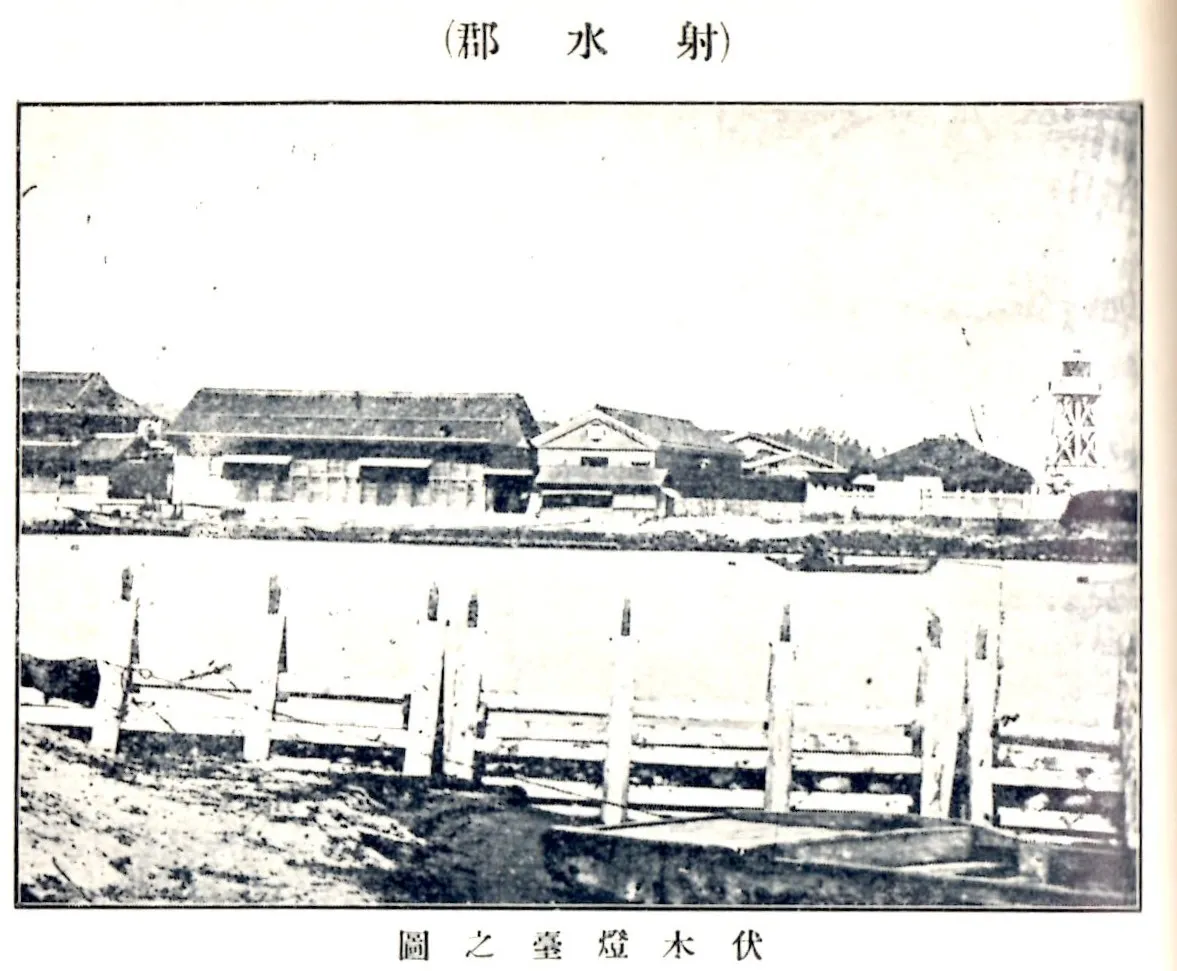
Source: Wikimedia Commons (public domain, converted to WebP)
Fujii Nōzō, eldest son of the Notoya shipping agents of Fushiki, negotiated with Mitsubishi in 1875 to bring in a regular steamship service, and built the first Western-style lighthouse on the Sea of Japan coast and Japan’s first private weather station (now the Fushiki Meteorological Museum)35. After his own shipping company failed, he still put his own money into building the harbour, and Fushiki was designated an open port in 189935. In 1900 a regular service opened between Fushiki and Vladivostok16. In Higashi-Iwase, Toyama, the house of the Mori family, kitamaebune shipping agents, was built around 1878 and is a national Important Cultural Property36.
6. Military Kanazawa and the Russo-Japanese War
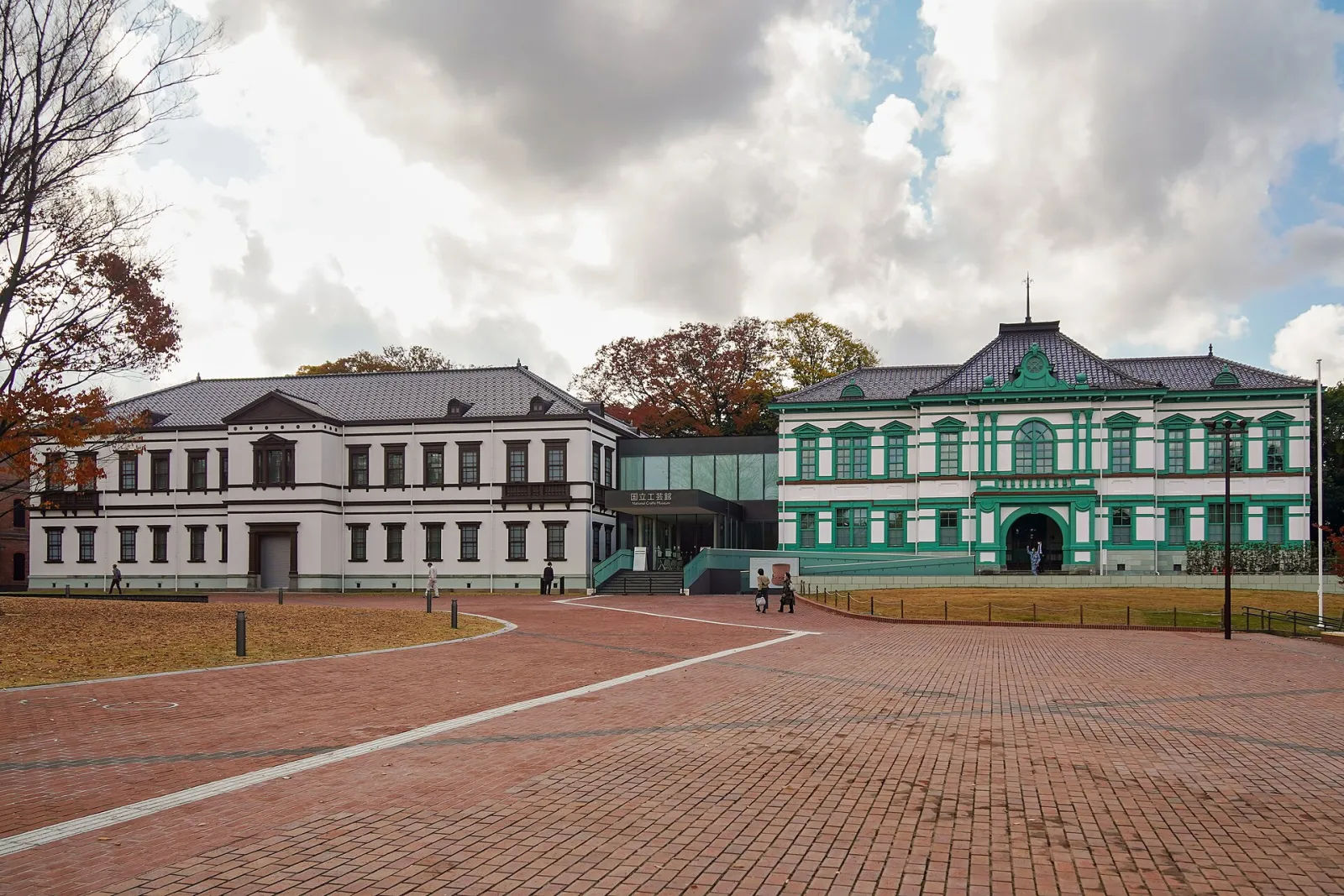
In 1881 an accidental fire caused by the army burned the Hishi turret and other buildings of Kanazawa Castle along with the Ninomaru palace37. In 1898 the 9th Division was newly established in Kanazawa, with Ōshima Hisanao as its first commander38. The division headquarters building was completed the same year, and in 1909 the officers’ club, the Kaikōsha, was built. Ishikawa Prefecture and the city of Kanazawa later moved and restored both buildings, which now house the National Crafts Museum39.
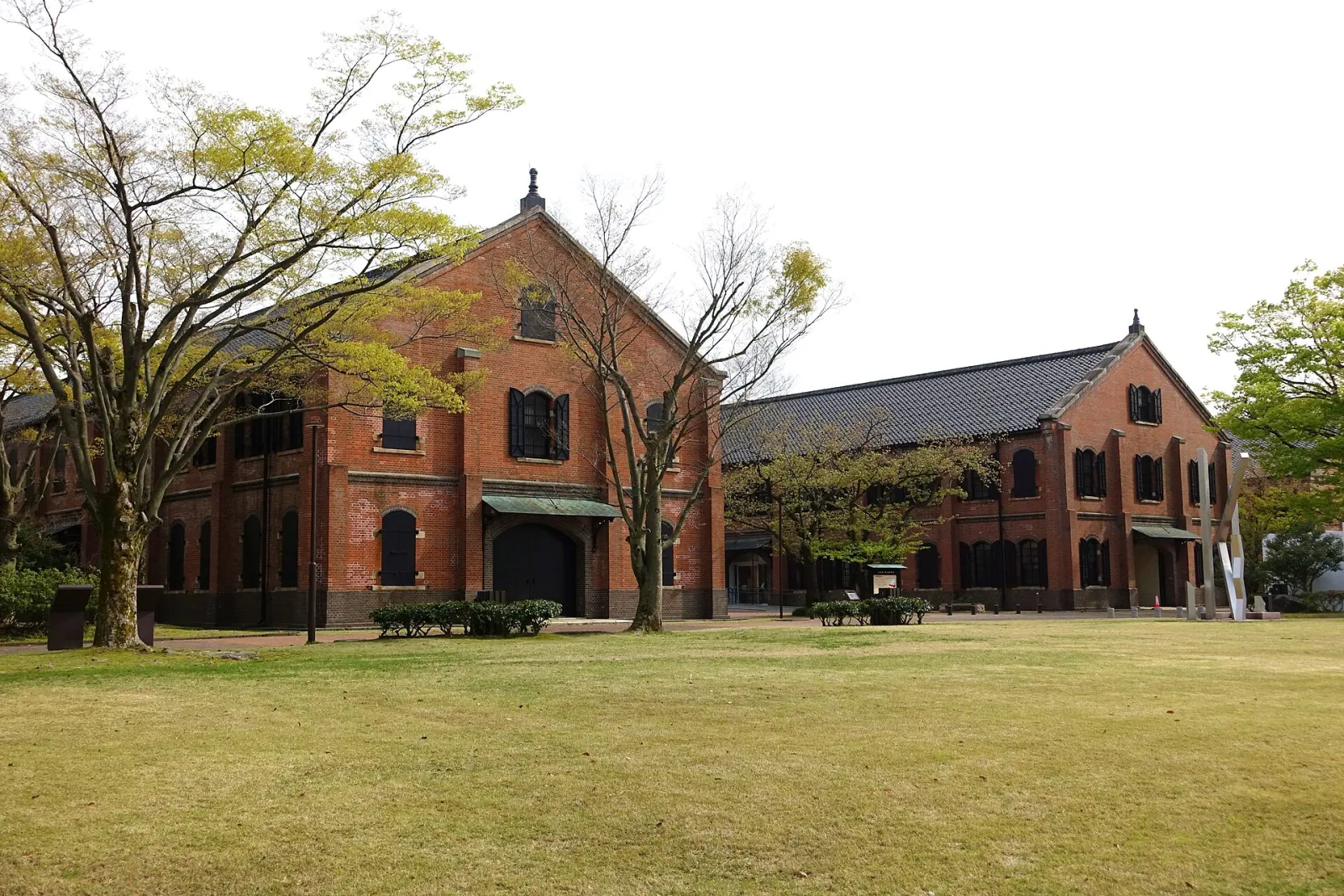
The three red-brick buildings of the neighbouring Ishikawa Prefectural Museum of History were armouries of the Kanazawa army ordnance depot. The third building dates from 1909; the first and second are from the Taishō period40.
When the Russo-Japanese War began in 1904, the 9th Division was placed in Nogi Maresuke’s Third Army and from August took part in the siege of Port Arthur, suffering heavy losses3841. An army reserve hospital was set up within the Kanazawa Castle grounds, and Ōno Yori, a Japanese Red Cross nurse from Toyama, cared for Japanese soldiers and prisoners of war there for a year and three months15.
7. Railways, Fires, and Towns
The Hokuriku Line opened between Komatsu and Kanazawa on 1 April 1898 and between Takaoka and Toyama on 20 March 189921.
The first Toyama station was a temporary stop at Tagariya, west of the Jinzū River42. One reason was the work to cut a new channel for the Jinzū; another was that the station site was still being contested by villages, with Okuda village, a point between Atago and Ushijima, and Horikawa village as candidates42. The new station building was completed in October 1908, and the line reached Uozu on 16 November that year42.
On 12 August 1899 a great fire in Toyama destroyed 4,697 houses in the city centre43. Afterwards, the road at the site of the castle’s Ōte gate, which had turned at right angles, was partly widened and straightened to stop fires spreading and to let fire pumps through; this Ōte street is today’s Ōte Mall44. On 1 September the same year, Toyama Prefecture issued Prefectural Ordinance No. 51, the building restriction rules, requiring buildings on designated streets to use fireproof construction such as dozō-zukuri4345.
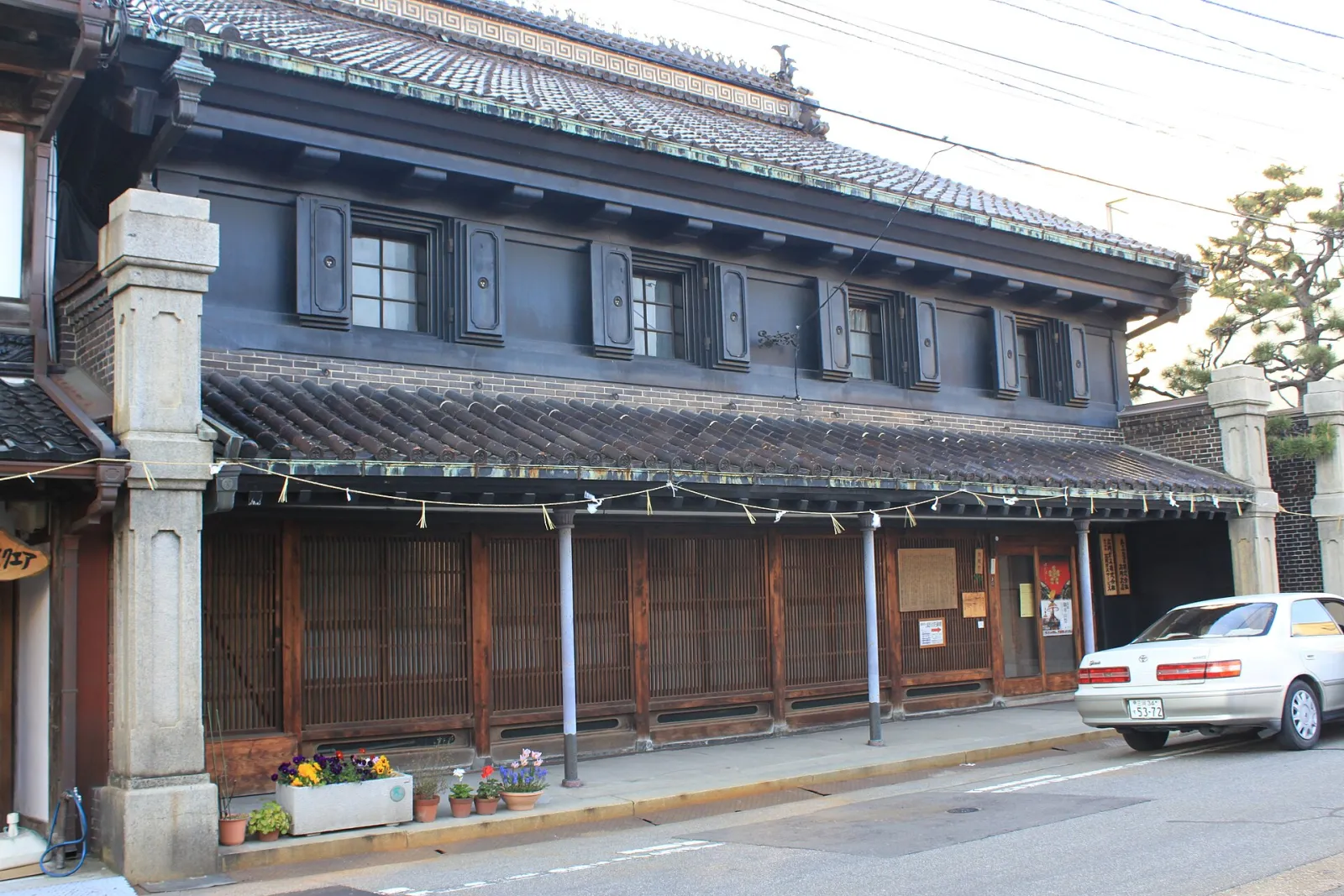
A dozō-zukuri merchant house rebuilt in 1902 after the 1900 fire, a national Important Cultural Property. Photo: くろふね, licence: CC BY 3.0, resized and converted to WebP. Source: Wikimedia Commons
On 27 June 1900 a great fire also struck Takaoka, burning nearly 60 percent of the city4346. Toyama Prefecture promptly added two Takaoka streets to the areas covered by the building restrictions. In August the Takaoka city council sent the governor a statement asking for the area to be reduced, saying that wealthy households there were “extremely few” (富資家極メテ僅少)43. Many fireproof dozō-zukuri houses were built in the Yamachō-suji area during rebuilding. The Sugano main house was rebuilt in 1902; the Sano main house was rebuilt in 1900, soon after the fire, with black plaster on the upper storey and copper-clad fire doors454746.
The Shinjō sediment sluice gate (the “red gate of Shinjō”) in Tokiwamachi, Toyama, is a brick sluice completed in 1900 and was still in use as of 202248.
8. The 1907 Survey of Mount Tsurugi
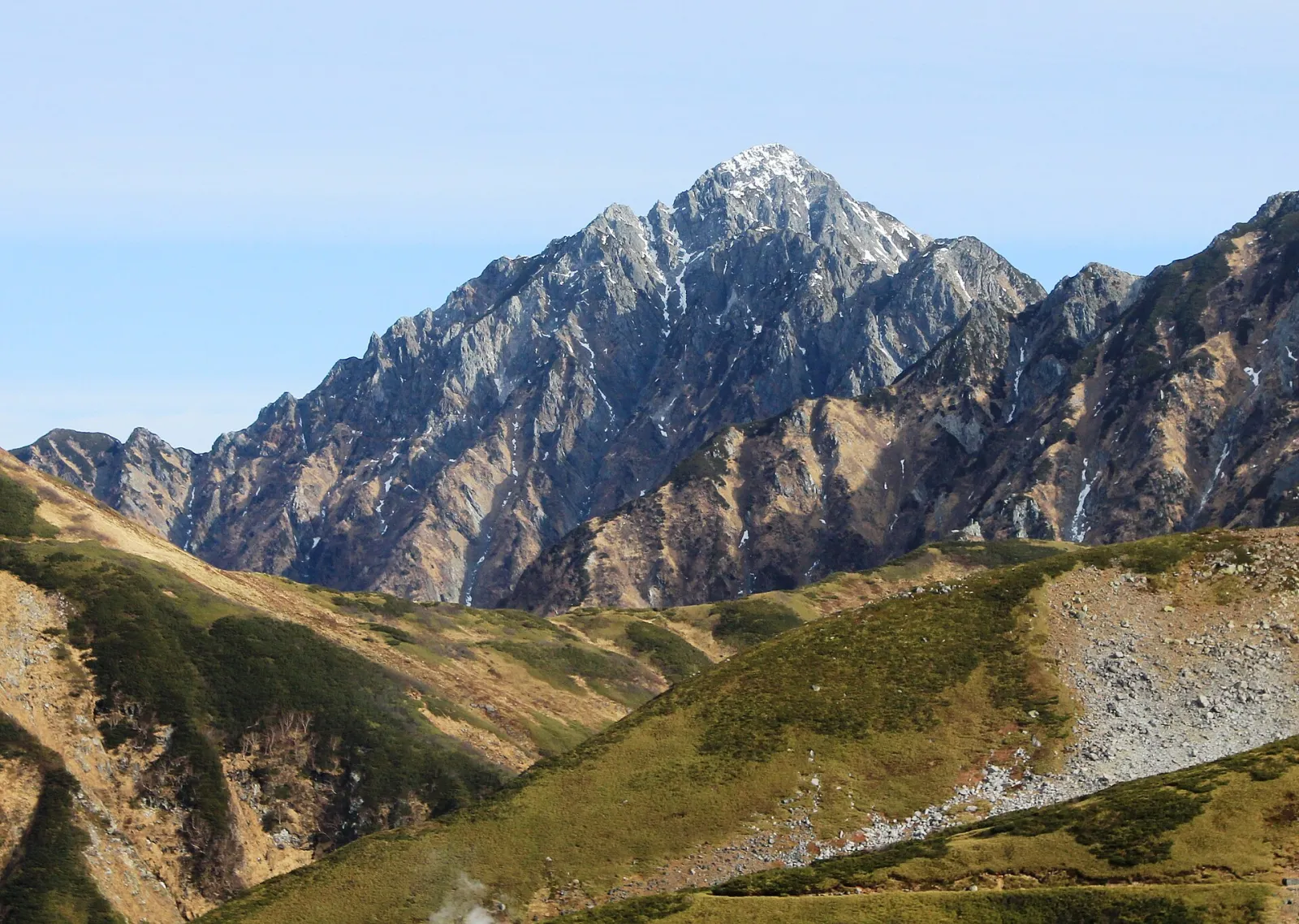
Photo: Alpsdake, licence: CC BY-SA 4.0, resized and converted to WebP. Source: Wikimedia Commons
In July 1907 a survey party of the Land Survey Department led by Shibasaki Yoshitarō attempted Mount Tsurugi to place a triangulation point on the summit49. The point was never placed, so no ten no ki (survey point record) was made for Tsurugi; the Geospatial Information Authority of Japan publishes the records for the nearby points of Makawa and Sabudani50.
9. Later Works
This list covers only what publishers, producers, or institutions state in their own descriptions. Plots are not treated as history.
- Samidare nikki (1879): an illustrated popular novel in five parts centred on Shimada Ichirō, leader of the Kioichō Incident, published the year after the incident6.
- Nitta Jirō, Tsurugidake: Ten no ki: the Geospatial Information Authority’s commemorative page says that Nitta Jirō turned the Shibasaki party’s survey and the survey record that was never made into a full-length mountain novel49; the Bunshun Bunko edition appeared in 200651. It was filmed in 2009, directed by Kimura Daisaku, with Asano Tadanobu as Shibasaki Yoshitarō52.
- The film Sakura sakura: Samurai kagakusha Takamine Jōkichi no shōgai: Kanazawa Institute of Technology held a screening in academic year 201753.
The Meiji Emperor died in July 1912, and the era name changed to Taishō.
10. Places to Visit Today
| Area | Place | Type | Notes |
|---|---|---|---|
| Kanazawa | Ishikawa Shikō Memorial Cultural Exchange Museum | Building / Important Cultural Property | The 1891 main building of the Fourth Higher Middle School18 |
| Kanazawa | National Crafts Museum | Building / Museum | The relocated 9th Division headquarters (1898) and Kaikōsha (1909)39 |
| Kanazawa | Ishikawa Prefectural Museum of History | Building / Museum | Red-brick former army armouries; the third building dates from 190940 |
| Kanazawa | Utatsuyama (Tsuda Yonejirō statue, Nishida Kitarō site) | Park / Statue | The 1917 statue of Tsuda Yonejirō; the site of Senshin-an where Nishida practised Zen20 |
| Kanazawa | Kanazawa Furusato Ijinkan | Museum | Hatta Yoichi bust and exhibits; 9:30–17:00 (last entry 16:30), free; closed Mondays (the next weekday if Monday is a holiday), over the New Year, and between exhibitions27 |
| Kanazawa | Hatta family house and birthplace monument | Monument / Building | House built in 1905; ask in advance about visiting27 |
| Kanazawa | Izumi Kyōka Memorial Museum | Museum | In Shimoshinchō, where Kyōka was born24 |
| Kanazawa | Hokuriku Gakuin Winn-kan | Building | The 1888 missionary residence; currently closed10 |
| Komatsu | Ogoya Mine Museum and Ogoya Mine Road | Museum / Mine tunnel | 9:00–17:00 (last entry 16:30), adults 500 yen; closed Wednesdays (open if a holiday) and the day after a holiday (open if that day is a weekend or holiday), and for winter from 1 December to 24 March; part of the tunnel route is closed31 |
| Komatsu | Japan Kutani no Furusato “Shōundō” | Building | Building dates from around 193332 |
| Takaoka | Sugano house | Building / Important Cultural Property | A 1902 dozō-zukuri merchant house; 9:30–16:00, adults 300 yen; closed Tuesdays, 13–17 August, 28–31 December, and January–February45 |
| Takaoka | Takaoka Dozō-zukuri no Machi Museum | Museum | A dozō-zukuri merchant house on Yamachō-suji46 |
| Toyama | Mori family house (kitamaebune shipping agents) | Building / Important Cultural Property | Built around 1878; closed for earthquake reinforcement, reopening planned for fiscal 2027 or later36 |
| Toyama | Shinjō sediment sluice gate (“red gate of Shinjō”) | Civil engineering | A brick sluice completed in 1900; exterior only48 |
References
Footnotes
-
Meiji (from 23 October 1868, Meiji 1.9.8, to the Meiji Emperor’s death on 30 July 1912): https://ja.wikipedia.org/wiki/%E6%98%8E%E6%B2%BB%E6%99%82%E4%BB%A3 ↩
-
Toyama Prefectural Assembly, “History of the assembly” (the name Kanazawa Domain from 1869; abolition of the domains in the seventh month of 1871; Niikawa Prefecture in the eleventh month of 1871; merger into Ishikawa in April 1876; Yonezawa Monzaburō’s campaign and two months of daily petitions; Dajōkan Proclamation No. 15 of 9 May 1883; office opened 1 July): https://www.pref.toyama.jp/0100/gikai/structure/enkaku.html ↩ ↩2 ↩3
-
Funahashi village, “Village history” (cold summer and poor harvest of 1869; Miyazaki Chūjirō; bandori; 50,000 people; Namerikawa; Chūjirō executed): https://www.vill.funahashi.toyama.jp/welcome_new/history.html ↩ ↩2 ↩3
-
Collaborative Reference Database (Ishikawa Prefectural Library), “On the assassination of Honda Masachika” (quoting Kanō kyōdo jii: killed in the Ninomaru palace on 1869.8.7; sentence of 1872.11.4 and twelve ordered to take their own lives; graves beside his at Daijōji; Proclamation No. 37 of 7 February 1873 “is said to” have followed; 310 Honda Masachika documents): https://crd.ndl.go.jp/reference/entry/index.php?id=1000184677&page=ref_view ↩ ↩2 ↩3 ↩4
-
Ishikawa Prefectural Library SHOSHO, “Shimada Ichirō and the Kioichō Incident” (14 May 1878; Kioichō about 200 m before Kioizaka; five Ishikawa and one Shimane former samurai; zankanjō drafted by Kuga Yoshinao; surrender; Samidare nikki part 1 June 1879, part 5 October 1879): https://www.library.pref.ishikawa.lg.jp/shosho/furucolle/curation/HURUSATO01 ↩ ↩2 ↩3
-
Ishikawa Prefectural Museum of History, “Samidare nikki” (published by Ōkawa Jōkichi, 12 October 1879; five parts; edited by Yoshikawa Shuntō, written by Okamoto Kisen, illustrated by Ōsai Fusatane): https://www.ishikawa-rekihaku.jp/collection/detail.php?cd=GI00354 ↩ ↩2
-
Toyama Prefectural Archives, exhibition booklet Meiji no Toyama: Ishizue o kizuita hitobito (2018) (Inagaki Shimesu’s Hokuritsusha of 1880 and Hokuritsu Liberal Party of 1882; the Hokuriku seven-province meeting at Zuiryūji, Takaoka, 10 March 1883; both parties mostly wealthy farmers; the Osaka Incident of 1885; Yokoyama Gennosuke’s Nihon no kasō shakai of 1899, born in Uozu): https://www.pref.toyama.jp/documents/13519/h30kikaku.pdf ↩ ↩2 ↩3 ↩4 ↩5
-
Imai Kazuyoshi, “Percival Osborn and his pupils at the Nanao language school”, Eigakushi kenkyū 16 (1984), pp. 51–62, English abstract (end of 1869; Nanao language school; English and French; a branch of Kanazawa Domain’s English school): https://doi.org/10.5024/jeigakushi.1984.51 ↩
-
Kanazawa University Museum, “The Fourth Higher School” (Kanazawa Domain founded a medical school in Meiji 3 and invited the Dutch doctor Sluys in Meiji 4): https://museum.w3.kanazawa-u.ac.jp/2-2l/ ↩
-
Hokuriku Gakuin, “Hokuriku Gakuin Winn-kan (closed)” (Thomas Winn came to Kanazawa in 1879; invited Mary Hesser; built Winn-kan in 1888; used by his wife Eliza as an orphanage from 1892; moved to Osaka in 1898): https://www.hokurikugakuin.ac.jp/top/introduction/winn/ ↩ ↩2 ↩3
-
Hokuriku Gakuin, “History” (Hesser’s private school opened October 1884; Kanazawa Girls’ School authorised March 1885; renamed Hokuriku Girls’ School in 1900): https://www.hokurikugakuin.ac.jp/top/introduction/history/ ↩
-
Percival Lowell, Noto: An Unexplored Corner of Japan, 1891 (Project Gutenberg eBook No. 2605, chapter XIII): https://www.gutenberg.org/cache/epub/2605/pg2605-images.html ↩
-
Ministry of Agriculture, Forestry and Fisheries, “Johannes de Rijke, technical adviser to the Home Ministry”, work in Toyama (July 1891 rain and 6,500 m of broken embankment; Governor Moriyama Shigeru; arrival 6 August; combining the intakes; nine visits and over 270 days up to August 1895): https://www.maff.go.jp/j/nousin/sekkei/museum/m_izin/toyama_02/index.html ↩ ↩2 ↩3
-
Federation of Jōganji River irrigation land improvement districts, “History of the irrigation channels” (de Rijke proposed combining the intakes in 1891; the Jōsai combined channel completed in June 1893): https://www.tym-midori.net/jyouganji-rengou/%E7%94%A8%E6%B0%B4%E3%81%AE%E6%AD%B4%E5%8F%B2/ ↩
-
Toyama Prefecture, biographical materials pp. 78–79 (Margaret Elizabeth Armstrong, from Canada; Ōno Yori nursed Japanese soldiers and prisoners at the army reserve hospital in the Kanazawa Castle grounds for a year and three months during the Russo-Japanese War): https://www.pref.toyama.jp/documents/13878/p74-85.pdf ↩ ↩2
-
Toyama Prefecture, “Naruhodo! Toyama chronology: Meiji” (1899 Yokoyama Gennosuke’s Nihon no kasō shakai; 1900 regular route between Fushiki and Vladivostok; 1911 Aoba Kindergarten founded in Sōgawa by Margaret Armstrong): https://www.pref.toyama.jp/1021/kensei/kouhou/naruhodo/person-1.html ↩ ↩2 ↩3
-
Kanazawa University Library, “Chronology of the Fourth Higher School” (Fourth Higher Middle School founded on 18 April 1887 from Ishikawa Prefectural Vocational School): https://library.kanazawa-u.ac.jp/files/event/shiko120/history.htm ↩
-
Ishikawa Shikō Memorial Cultural Exchange Museum, “About the building” (designed by Yamaguchi Hanroku and Kuru Masamichi; begun June 1889, completed July 1891; renamed Fourth Higher School September 1894; two-storey brick; Important Cultural Property 1969): https://www.pref.ishikawa.jp/shiko-kinbun/information/structure/ ↩ ↩2
-
Kanazawa University Museum, “Commemorative photograph (Nishida Kitarō, the principal, Yoshimura Toratarō, students)” (professor at the Fourth Higher School from July 1899; ethics, logic, psychology, German; English 1901–1902; Zen no kenkyū 1911): https://museum.w3.kanazawa-u.ac.jp/8l/ ↩
-
City of Kanazawa, “Utatsuyama Park” leaflet (Tsuda Yonejirō statue erected in Taishō 6 and spared from wartime metal requisition; Izumi Kyōka haiku stone; site of Senshin-an where Nishida Kitarō practised Zen “for about nine years”): https://www4.city.kanazawa.lg.jp/material/files/group/72/utatsuyama.pdf ↩ ↩2 ↩3 ↩4
-
Kanazawa City Library, “City history chronology: a hundred years of Kanazawa” (trains between Komatsu and Kanazawa from 1 April 1898; between Toyama and Takaoka from 20 March 1899; the entry for 15 January 1899 notes that Nishida Kitarō practised Zen at Senshin-an “for more than eleven years” from that year, which differs from the Utatsuyama leaflet’s “about nine years”): https://www2.lib.kanazawa.ishikawa.jp/reference/shishinenpyou.htm ↩ ↩2
-
D.T. Suzuki Museum, Biography (born in Kanazawa in 1870; went to the US in 1897 and worked for the Open Court Publishing Company; returned in 1909): https://www.kanazawa-museum.jp/daisetz/english/about.html ↩
-
City of Kanazawa, “Brief chronology of Dr Takamine Jōkichi” (born in Takaoka in 1854; Taka-Diastase patent 1894; adrenaline isolated and crystallised 1900): https://www4.city.kanazawa.lg.jp/shiseijoho/kensho_hyoshoseido/12458.html ↩
-
Izumi Kyōka Memorial Museum, “Chronology” (born in Shimoshinchō in 1873; “Giketsu kyōketsu” serialised in the Yomiuri Shimbun 1894; “Yakō junsa” and “Gekashitsu” 1895): https://www.kanazawa-museum.jp/kyoka/kyoka/ ↩ ↩2
-
National Diet Library, “Portraits of Modern Japanese Historical Figures: Tokuda Shūsei” (born 1 February 1872; Arajotai 1908, Ashiato 1910, Kabi 1911): https://www.ndl.go.jp/portrait/datas/6065 ↩
-
Kanazawa Furusato Ijinkan, “Hatta Yoichi chronology” (born in Imamachi 1886; Fourth Higher School 1904; Government-General of Taiwan civil engineering assistant 1910; Chianan irrigation begun 1920; Wushantou reservoir completed 1930): https://www.kanazawa-museum.jp/ijin/exhibit/05hatta_history.html ↩ ↩2
-
Kanazawa Furusato Ijinkan, “Hatta Yoichi” related places (birthplace monument and commemorative stone in the front garden; bust by Hsu Wen-lung in the Hanazono Elementary School yard; Hanazono Ijinkan): https://www.kanazawa-museum.jp/ijin/exhibit/05hatta.html ; same museum, “History” (Hatta Yoichi bust placed in the garden in February 2008): https://www.kanazawa-museum.jp/ijin/about/index.html ; City of Kanazawa, “Hatta family house” (built 1905; designated preserved building): https://www4.city.kanazawa.lg.jp/soshikikarasagasu/bunkazaihogoka/gyomuannai/3/1/1/hozontaisyoubutu/hozontaisyoubutu/5978.html ; Kanazawa Tabi Monogatari, “Kanazawa Furusato Ijinkan” (hours, closing days, free admission): https://www.kanazawa-kankoukyoukai.or.jp/everyone/spot/detail_10070.html ↩ ↩2 ↩3 ↩4 ↩5
-
Ishikawa Association of Architectural Firms, “Call for participants in an architecture tour of Tainan” (Umezawa Sutejirō, born in Tsurugi 1890; went to Taiwan after graduating from the Kōshu Gakkō in 1911; his buildings in Tainan; 2019 notice): https://www.ishi-kjk.com/general/1038 ↩
-
Ishikawa Prefecture, History and Industrial Heritage of Manufacturing in Ishikawa, pp. 8–9 (Kanazawa’s population from over 120,000 to the 80,000s in 1896; Hasegawa Jun’ya’s Kanazawa Silk Mill of 1874, second largest in Japan; Kanazawa Silk Twisting Company 1877; Tsuda Yonejirō’s power loom): https://www.pref.ishikawa.lg.jp/syoko/sangyouisan/documents/00toshi.pdf ↩ ↩2 ↩3
-
Tsudakoma, “Tsuda Komajirō and loom making” (from the centenary booklet: Tsuda Yonejirō’s trial cotton power loom of 1880 and silk power loom of 1900; Komajirō’s founding in 1909 and about 40 workers at the 1911 move to Ibarakimachi): https://www.tsudakoma.co.jp/about/tsudakoma/index.html ↩ ↩2 ↩3
-
City of Komatsu, “Ogoya Mine Museum: outline and history” (mining begun 1880 by Yoshida Yasomatsu and others; Yokoyama Takahira and Takaoki; sole ownership 1882; Yokoyama Mining Department 1904; main mine closed 1962; all operations ended 1971; hours, closing days, winter closure, admission, partial closure of the Mine Road): https://www.city.komatsu.lg.jp/soshiki/1053/10174.html ↩ ↩2 ↩3
-
City of Komatsu, “Japan Kutani no Furusato ‘Shōundō’” (exports grew from about Meiji 10 to Meiji 20; 80 percent of production value exported at the start of Meiji 20; Matsumoto Sahei; present building from about Shōwa 8): https://www.city.komatsu.lg.jp/soshiki/1015/kankou_shoku/5/17984.html ↩ ↩2 ↩3
-
National Tax Agency, National Tax College, “Taxes on medicine: the era of medicine stamps” (medicine regulations 1877; medicine stamp tax rules enacted 1882, in force the following year; Medicine Tax Act 1905): https://www.nta.go.jp/about/organization/ntc/sozei/network/288.htm ↩
-
Toyama City Medicine Museum, exhibition “The Mitsuda family’s medicine business” (Notoya; banking and other business in the Meiji era; 2021 exhibition): https://www.city.toyama.toyama.jp/etc/minzokumingei/tenji_baiyaku030714.html ↩
-
City of Takaoka, “Full text of Takaoka’s kitamaebune Japan Heritage story”, Story 4 (Fujii Nōzō; negotiations with Mitsubishi in 1875; first Western-style lighthouse on the Sea of Japan coast; private weather station; Fushiki open port 1899): https://www.city.takaoka.toyama.jp/soshiki/kyoikuiinkai_bunkazaihogokatsuyoka/1/2/2/5148.html ↩ ↩2
-
City of Toyama, “Mori family house, kitamaebune shipping agents” (built around Meiji 11; Important Cultural Property 1994; closed for earthquake reinforcement after the Noto Peninsula earthquake; reopening planned for Reiwa 9 or later): https://www.city.toyama.lg.jp/shisei/shisetsu/1011038/1011039/1008102.html ↩ ↩2
-
Ishikawa Prefecture Kanazawa Castle and Kenroku-en Management Office, “Hishi turret, Gojikken nagaya, Hashizumemon tsuzuki turret” (burned with the Ninomaru palace in an army fire in 1881): https://shiro-niwa.pref.ishikawa.lg.jp/kanazawa-castle/explore/hiyashigura.php ↩
-
Japan Center for Asian Historical Records, “9th Division” (established in Kanazawa 1898; first commander Ōshima Hisanao; Third Army in the Russo-Japanese War in 1904; heavy losses in the siege of Port Arthur from August): https://www.jacar.go.jp/exhibition/glossary/term4/0010-0080-0100.html ↩ ↩2
-
National Crafts Museum, “The new Crafts Museum”, Gendai no me 635 (former 9th Division headquarters built 1898; former Kanazawa Kaikōsha built 1909; moved and restored by Ishikawa Prefecture and the city of Kanazawa): https://www.momat.go.jp/craft-museum/magazine/635-20201216 ↩ ↩2
-
Ishikawa Prefecture, “Museum of History: former Kanazawa army ordnance depot armouries” (first building 1914, second 1913, third 1909): https://www.pref.ishikawa.lg.jp/eizen/kanazawa/rekihaku/rekihaku.html ↩ ↩2
-
Japan Center for Asian Historical Records, “Third Army (Russo-Japanese War)” (commander Nogi Maresuke; 1st, 9th, and 11th Divisions; Third Army battle reports such as reference code C13110501600, originals not read for this note): https://www.jacar.go.jp/exhibition/glossary/term4/0010-0060-0130.html ↩
-
Toyama Municipal Folkcraft and Local History Museum newsletter no. 27 (temporary Toyama station at Tagariya from 20 March 1899; the Jinzū channel works and station campaigns; Okuda, between Atago and Ushijima, Horikawa; new station building October 1908; opening to Uozu 16 November): https://www.city.toyama.toyama.jp/etc/muse/tayori/tayori27/tayori27.htm ↩ ↩2 ↩3
-
Hatsuda Tōru and Nakamori Tsutomu, “Fire prevention and building restrictions in Toyama Prefecture in the Meiji era”, Journal of Architecture, Planning and Environmental Engineering (AIJ) 379 (1987), pp. 102–111 (Toyama fire of 12 August 1899, 4,697 houses; Ordinance No. 51 of 1 September; Takaoka fire of 27 June 1900, 3,586 houses; Notice No. 140 of 6 July; Takaoka city council statement of 21 August, “富資家極メテ僅少”; the paper notes that the sources differ on the number of houses burned): https://doi.org/10.3130/aijax.379.0_102 ↩ ↩2 ↩3 ↩4
-
Toyama Municipal Folkcraft and Local History Museum, “Changes at the Toyama Castle site” 5 (the Ōte street widened and straightened after the 1899 fire to stop fires spreading and let fire pumps through): https://www.city.toyama.toyama.jp/etc/muse/sassi/jyousi/jyousi-05.html ↩
-
City of Takaoka, “Sugano house” (Toyama Prefectural Ordinance No. 51 of 1899; main house lost in the 1900 fire; rebuilt as dozō-zukuri in 1902; hours, closing days, admission): https://www.city.takaoka.toyama.jp/soshiki/kyoikuiinkai_bunkazaihogokatsuyoka/1/4/8/10410.html ↩ ↩2 ↩3
-
Takaoka Dozō-zukuri no Machi Museum, “About the facility” (nearly 60 percent of the city burned in the fire of June 1900; dozō-zukuri houses built after the fire): https://takaoka-dozo.com/about/ ↩ ↩2 ↩3
-
Agency for Cultural Affairs, Cultural Heritage Online database, “Sano family house, main house” (1900; rebuilt soon after the Takaoka fire; dozō-zukuri; black plaster; copper-clad fire doors): https://kunishitei.bunka.go.jp/heritage/detail/101/00000401 ↩
-
Toyama City Archaeological Center, “A-MEIZI-ng Toyama bricks” (the Shinjō sediment sluice gate completed in 1900 still in use; 2022 article): https://www.city.toyama.toyama.jp/etc/maibun/center/now/brick/brick.htm ↩ ↩2
-
Geospatial Information Authority of Japan, Hokuriku Regional Survey Department, “Mount Tsurugi survey centenary” (the Shibasaki party of July 1907; the triangulation point; Nitta Jirō’s novel): https://web1.gsi.go.jp/hokuriku/100syuunen-index.html ↩ ↩2
-
Geospatial Information Authority of Japan, “Survey point records made by surveyor Shibasaki around Mount Tsurugi” (records for Makawa and Sabudani; none for Tsurugi, where no triangulation point was placed): https://www.gsi.go.jp/common/000023043.pdf ↩
-
Bungeishunjū, Tsurugidake: Ten no ki, Bunshun Bunko (released January 2006): https://books.bunshun.jp/ud/book/num/9784167112349 ↩
-
Fuji Television, “Tsurugidake: Ten no ki” (2009; directed by Kimura Daisaku; Asano Tadanobu as Shibasaki Yoshitarō): https://www.fujitv.co.jp/movie/01movie/20090000_03_M00.html ↩
-
Kanazawa Institute of Technology, “Screening of the film Sakura sakura: Samurai kagakusha Takamine Jōkichi no shōgai” (academic year 2017): https://www.kanazawa-it.ac.jp/prj/coc/activity/h29/takamine.html ↩