This note follows the one on early Shōwa and covers the period from the surrender in 1945 to the end of the Shōwa era in January 1989. Kanazawa University’s move from the castle to Kakuma began in 1989 and gets one sentence. The focus is Kanazawa, Toyama, and Komatsu, with Uchinada, Kurobe, Takaoka, Yatsuo, Toga, and Noto as well.
In late Shōwa Hokuriku, US occupation and military government came first, then reconstruction: the grounds of Kanazawa Castle became a university campus, and Toyama held an industrial exposition in its burned-out centre. From 1952 the dunes of Uchinada were chosen as a US firing range, setting off Japan’s first postwar campaign against a base. Komatsu Air Base, Toyama Airport, Kanazawa port, Toyama Shinkō port, Kurobe Dam, and the Hokuriku Expressway followed, and in 1971 the itai-itai disease suit in Toyama won the first victory in a Japanese pollution lawsuit. Hokuriku Broadcasting went on air in 1952, and Fujiko Fujio from Takaoka and Itsuki Hiroyuki, living in Kanazawa, made their names in these years.
1. Occupation and Military Government
As the early Shōwa note described, units of the US 33rd Division arrived in Kanazawa and Komatsu in October 1945. The numbers differ by source: the Kanazawa city chronology has a main body of more than 350 arriving on 27 October, while the History of Ishikawa Prefecture, Modern Volume 1 has 750 occupation troops reaching the former 7th Infantry Regiment barracks on 22 October, 90 of them going on to Komatsu and Nanao12. Thirteen men of the advance party lodged in the former 7th Regiment officers’ club inside Kanazawa Castle, and the Hakuunrō Hotel was converted into a rest facility for occupation troops2.
In the US local military government records catalogued by the National Diet Library, the 30th Military Government unit in Nagoya became the Tōkai–Hokuriku military government regional headquarters, and the 90th unit in Kanazawa became the Ishikawa military government team. From July 1949 “military government” was renamed “civil affairs”, and the prefectural civil affairs teams were abolished by the end of November 19493. In Kanazawa the Ishikawa military government team was set up on 3 January 1946 in the former naval district personnel office in Honda-machi and was released on 26 July 19522. The US Counter Intelligence Corps office opened at the end of 1945 in the former foreigners’ residence beside the courthouse, the CIE, and the SCAP library all appear on Kanazawa street maps of 1951 and 19522.
The Toyama Denki Building was requisitioned by the occupation forces and housed a headquarters until 19524. Komatsu airfield, taken over by the US as an auxiliary radar base in August 1945, was released in February 1958 (fully in August that year)5.
2. The Shōwa Emperor’s Tour of Hokuriku
From 23 October to 2 November 1947 the Shōwa emperor toured Fukui, Ishikawa, and Toyama on his own, attending the National Sports Festival for the first time, the second festival, held in Ishikawa; in Fukui and Toyama the tour doubled as an inspection of war-damage reconstruction6. In Ishikawa he entered Daishōji from Fukui on 26 October and stayed at Yamanaka hot spring; on the 28th he came into Kanazawa via Komatsu, visited the Heiwa housing in Heiwa-machi, then took the train from Kanazawa station to Wakura and stayed at the Ginsuikaku inn at Wakura hot spring; on the 29th he returned to Kanazawa via Nanao, Hakui, and Tsubata and visited the Daiichi Zenrinkan settlement house in Nomachi, the city office, and other places, staying at the Seisonkaku in Kenrokuen; on the 30th he attended the opening of the sports festival at the city stadium and left Kanazawa station for Toyama at noon7.
Later imperial visits included the 13th National Sports Festival in Toyama in October 19586; the 20th National Tree-Planting Festival at Yonari in Tonami (now the Yonari Forest prefectural park) on 26 May 1969, where the emperor and empress planted Tateyama cedar and other saplings and sowed Tateyama cedar seed at the prefectural forestry station in Yoshimine, Tateyama8; and the 34th National Tree-Planting Festival at the Ishikawa Prefectural Forest Park in Tsubata on 22 May 1983, with about 7,700 participants9.
3. Repatriates and Taiwan
Heiwa-machi in southern Kanazawa grew up after the war when about 100 repatriates from the 9th Division moved in; the name dates from the 1963 address reform10. Prime Minister Yoshida Shigeru also inspected the repatriates’ hostel in Heiwa-machi on a visit to Kanazawa in November 194611.
The Daiichi Zenrinkan in Nomachi opened a day nursery in 1934, which was licensed as a nursery school in 1948 with a capacity of 16512.
Hayashi Torahiko (born 1926) was born in Xizhou, Taiwan, where his father was chief engineer at the Taiwan Sugar Xizhou mill. He graduated from Kaohsiung First Middle School in 1944, came to Japan on a repatriation ship in 1946, drifted from Kyushu to Kanazawa, and in March 1950 founded the confectioner Torahiko in Kanazawa13. He moved the business to Tochigi in 1954 and in 1963 founded Rheon Automatic Machinery, which developed automatic filling machines for sweets13.
In 1966 YKK set up its Taiwan subsidiary14. At the 80th anniversary of the Kinjō school group in 1984, Kinjō Junior College became a sister school of the National Taiwan Academy of Arts15. The Kanazawa city chronology for April 1985 records that farmers in Taiwan were still holding memorial services for Hatta Yoichi, who appeared in the Meiji and Taishō notes; his nephew Hatta Kazunari was to attend one, and the mayor sent with him a letter of thanks and a Kaga doll for the Chianan Irrigation Association15.
4. A University in the Castle and an Art School
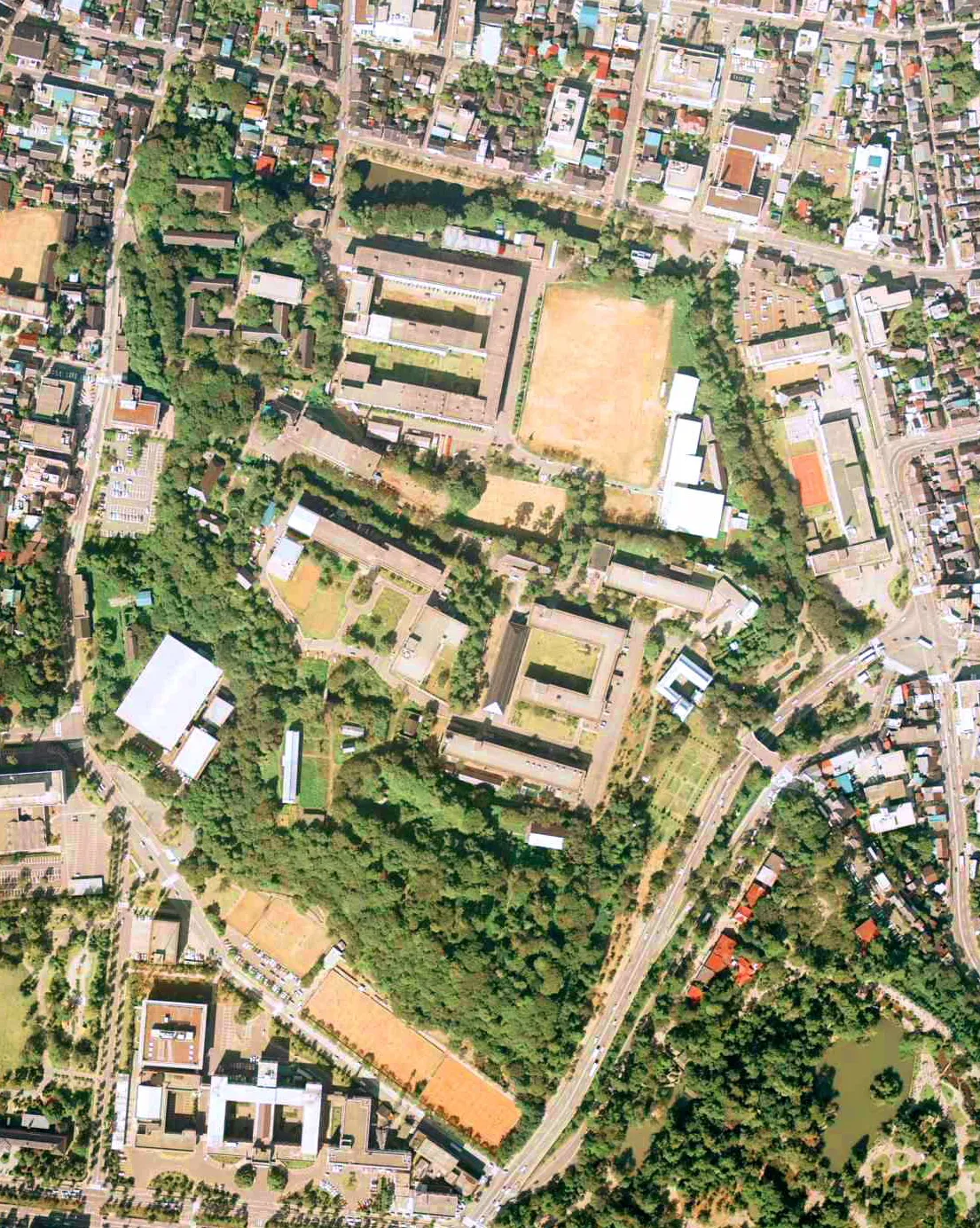
Photo: Ministry of Land, Infrastructure, Transport and Tourism; licence: attribution; converted to WebP. Source: Wikimedia Commons
In 1949 Kanazawa Medical University, the Fourth Higher School, Ishikawa Normal School, Kanazawa Higher Normal School, Ishikawa Youth Normal School, Kanazawa Technical College, and others were merged into the new Kanazawa University, with six faculties: law and letters, education, science, medicine, pharmacy, and engineering. The law and letters, education, and science faculties had their campus inside Kanazawa Castle, known as “the university in the castle”16. When classes began in September 1949, general education was taught in a converted barracks of the former 7th Infantry Regiment11. In 1955 the city council asked for the castle grounds to be opened to the public; the university refused, saying it “cannot let the campus become a promenade for tourists”11. The move to the Kakuma campus began in 1989 (Heisei 1)16.
In 1946 the city’s Kanazawa College of Arts and Crafts opened in the former army arsenal in Dewa-machi, with ceramics, lacquer, metalwork, and fine art departments11. It became the four-year Kanazawa College of Art in 195511. According to the Ishikawa Prefectural Museum of History, the three red-brick arsenal buildings described in the Taishō note were used by the art college after the war and became the history museum in 198617. Miyamoto Saburō, who appeared in the early Shōwa note, became a professor at the art college in 194818.
5. The Uchinada Struggle
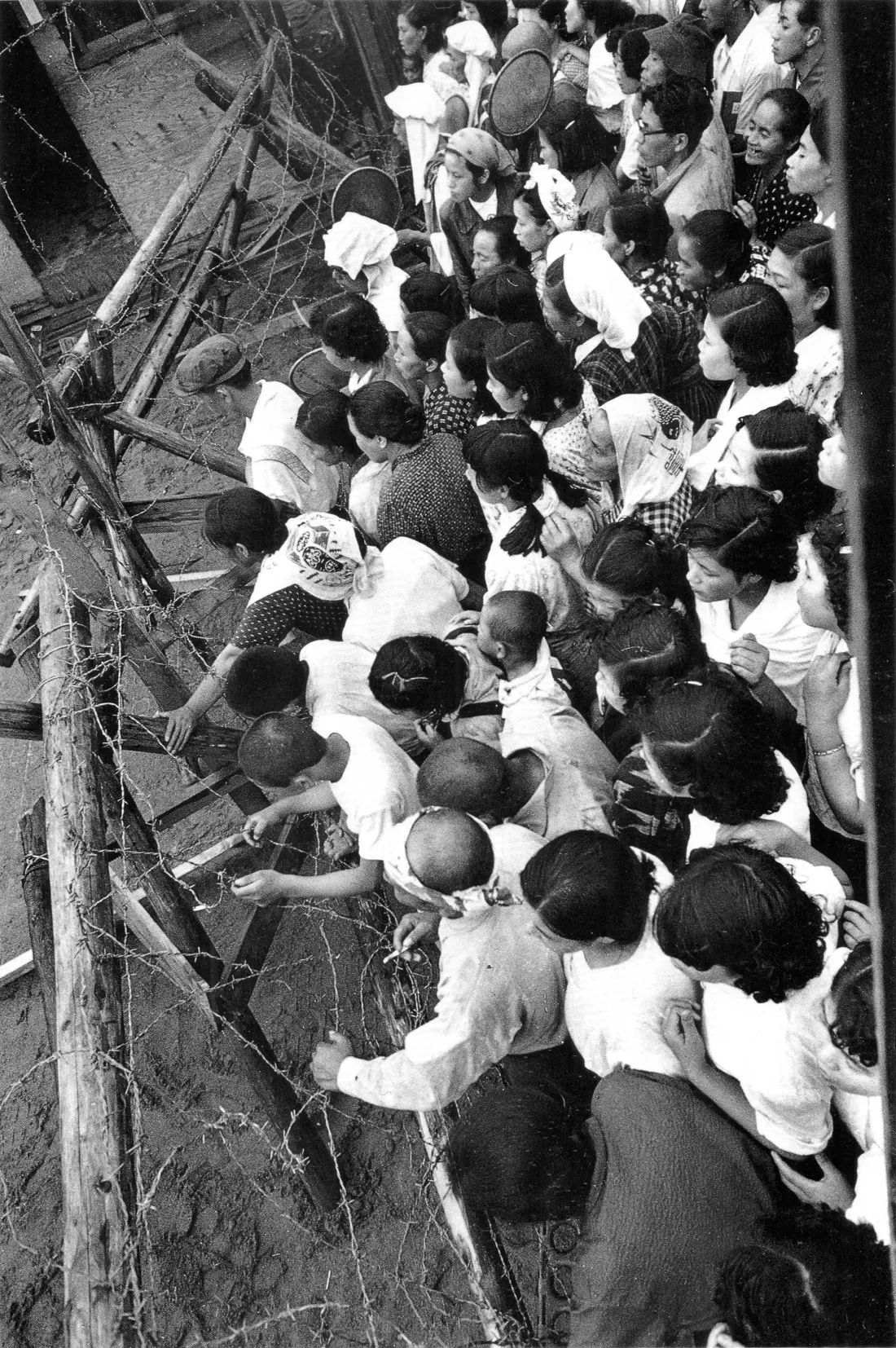
Photo: Domon Ken. Source: Wikimedia Commons (public domain, resized and converted to WebP)
In 1952, against the background of the Korean War, US forces in Japan asked for a range to test artillery shells, and the government named Uchinada as a candidate19. That September the Uchinada village assembly resolved “to oppose with all our might” the requisition of the dunes, and Awagasaki in Kanazawa held its own protest meeting11. On 2 December the cabinet decided to lend the Uchinada area to the US as a firing range for four months, January to April 1953, covering 625 chōbu of land and 400 of sea11.
Test firing began in March 1953 and the government decided on permanent use; villagers petitioned and staged sit-ins again and again. Splits within the village and the forced continuation of firing weakened the movement, and in September 1953 Uchinada village accepted the range19. In December 1956 the US range commander told the governor that firing would end that month11, and the town records the complete withdrawal of US forces in 195720. The town’s history museum describes the Uchinada struggle as Japan’s first postwar anti-base campaign, one that strongly influenced anti-base movements across the country and is regarded as “the starting point of grassroots democracy”19.
Hokuriku Broadcasting’s 1988 documentary on the struggle notes that the government secretly inspected Uchinada in September 1952, and that in the upper-house election after the 1953 “Bakayarō dissolution” a sitting cabinet minister lost in Ishikawa21.
6. Komatsu Air Base and Toyama Airport
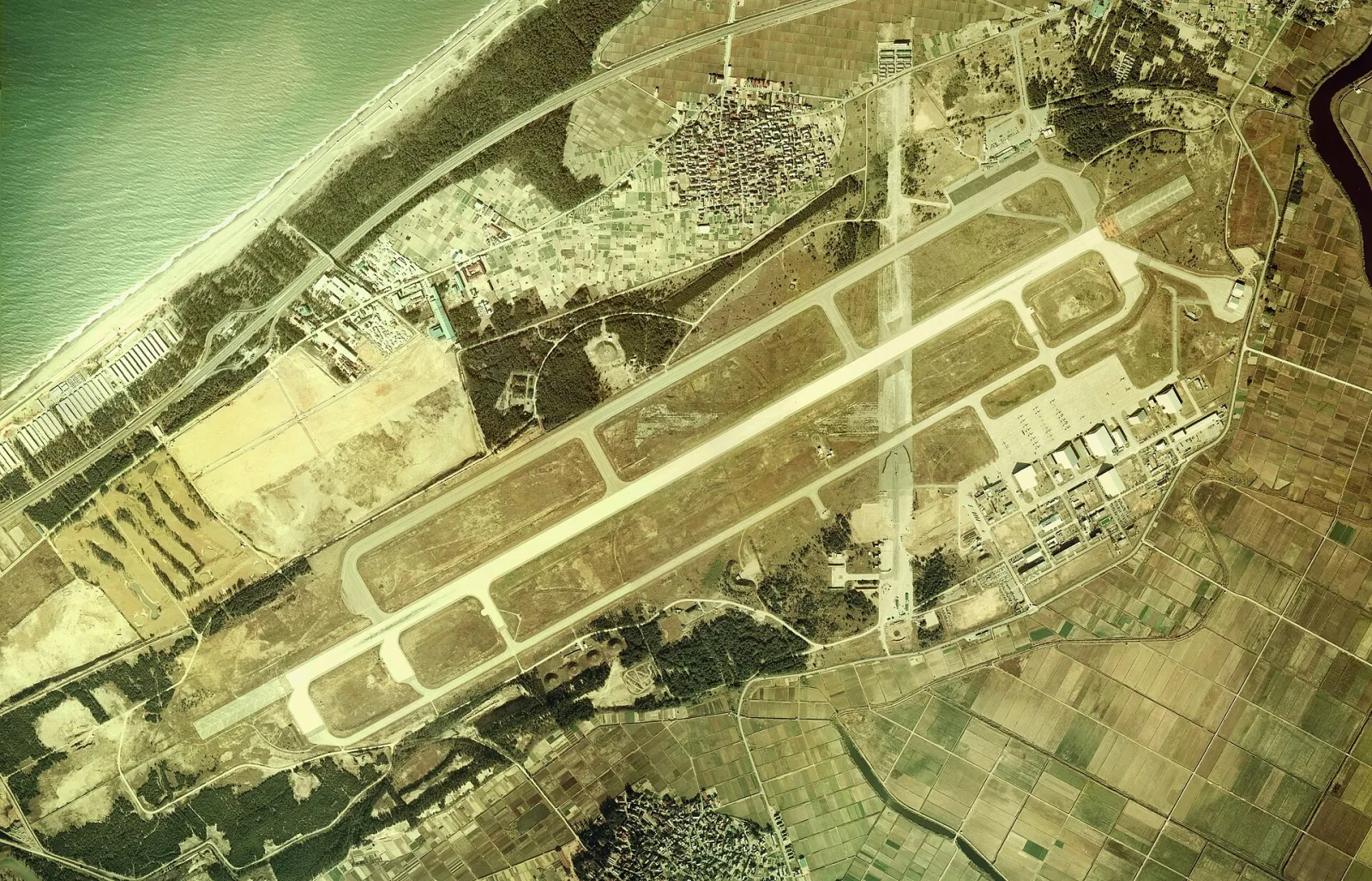
Photo: Ministry of Land, Infrastructure, Transport and Tourism; licence: attribution; resized and converted to WebP. Source: Wikimedia Commons
Komatsu airfield had irregular flights to Osaka from 1955. The Air Self-Defense Force’s Komatsu base opened in June 1961, and in December that year the airfield formally became a shared military and civil airport5. Scheduled services to Osaka and Nagoya began in April 1962 and to Tokyo in July 1963, and in September 1964 the runway was lengthened to 2,700 m for the F-104J5. The first international charter flew to Hong Kong in November 1973, and a scheduled Niigata–Komatsu–Seoul service began in December 19795. Hokuriku Broadcasting’s 1988 documentary says that at the time of the 1960 security-treaty revision Ishikawa was in the middle of a campaign against a Self-Defense Force jet base22.
Toyama Airport opened on 20 August 1963 on the riverbed of the Jinzū with a 1,200 m runway; in March 1984 the runway was extended to 2,000 m and jets began to fly23. Kuragaki airfield, described in the early Shōwa note, went back to farmland after the war and was not on the same site24.
7. Ports and Roads
Kanazawa port was formed in July 1954 by merging the old Ōno and Kanaiwa harbours25; at its opening ceremony on 1 November 1970 Governor Nakanishi declared the port open26. Toyama Shinkō in Imizu is a dug-in harbour cut out of the Hōjōzu lagoon and opened in April 196827.
Kanazawa’s city trams were abolished on 10 February 1967, 48 years after they started in 191926. The Hokuriku Expressway first opened between Komatsu and Kanazawa-nishi interchanges on 18 October 197228; with the Asahi–Nadachi-Tanihama section on 20 July 1988 the expressway was joined up29.
In the “Sanpachi heavy snowfall” of January 1963, snow in Kanazawa lay 181 cm deep22.
8. Kurobe Dam and Tateyama Kurobe
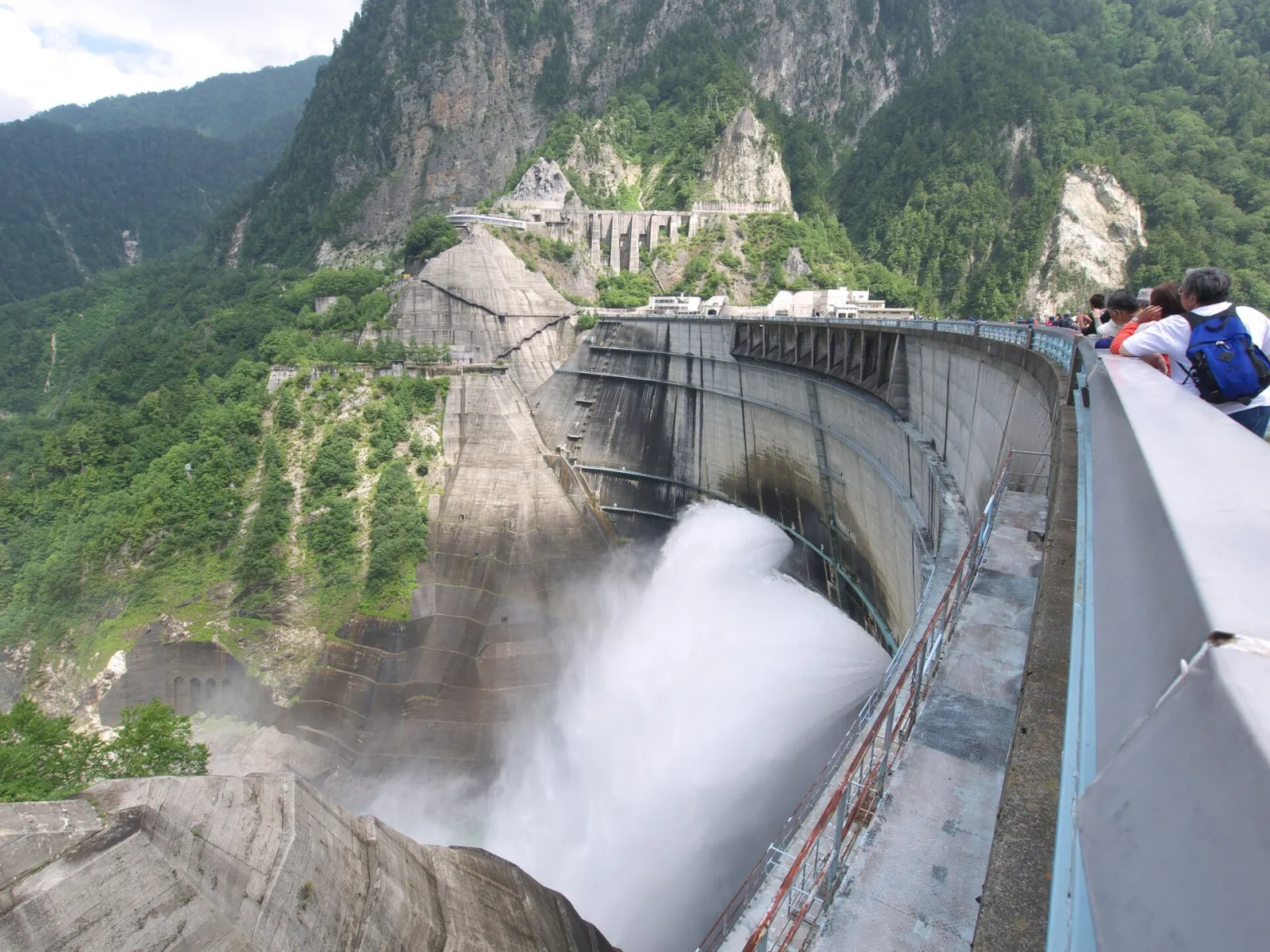
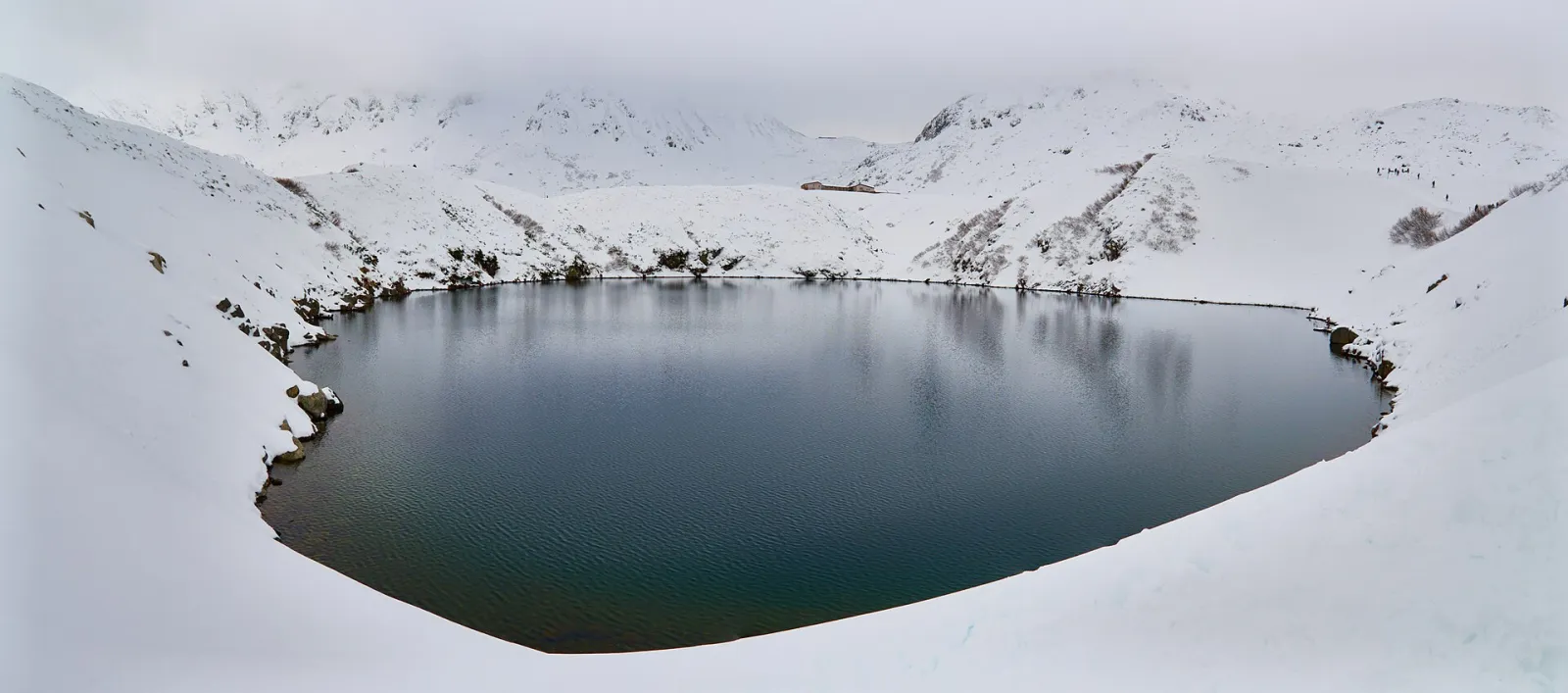
Photo: elminium, licence: CC BY 2.0, resized and converted to WebP. Source: Wikimedia Commons
Kansai Electric Power’s Kurobe Dam and the Kurobe River No. 4 power station, about 10 km downstream, are together known as “Kuroyon”. Work began in July 1956 with the Ōmachi tunnel (now the Kanden tunnel), dug to bring in materials30. In May 1957 the tunnel hit a fracture zone that released large amounts of groundwater and debris, and it took seven months to get through the roughly 80 m zone30. During construction 171 people died. The reservoir began filling in October 1960, units 1 and 2 of the power station began generating in January 1961, and the project, with a dam 186 m high, was completed on 5 June 196330.
The film The Sands of Kurobe (Kurobe no taiyō), released in February 1968, is about this project; it was directed by Kumai Kei and starred Mifune Toshirō and Ishihara Yūjirō31. On 1 June 1971 the Tateyama Kurobe Alpine Route opened throughout, joining Toyama and Nagano prefectures in a single route32.
9. Industry and Pollution
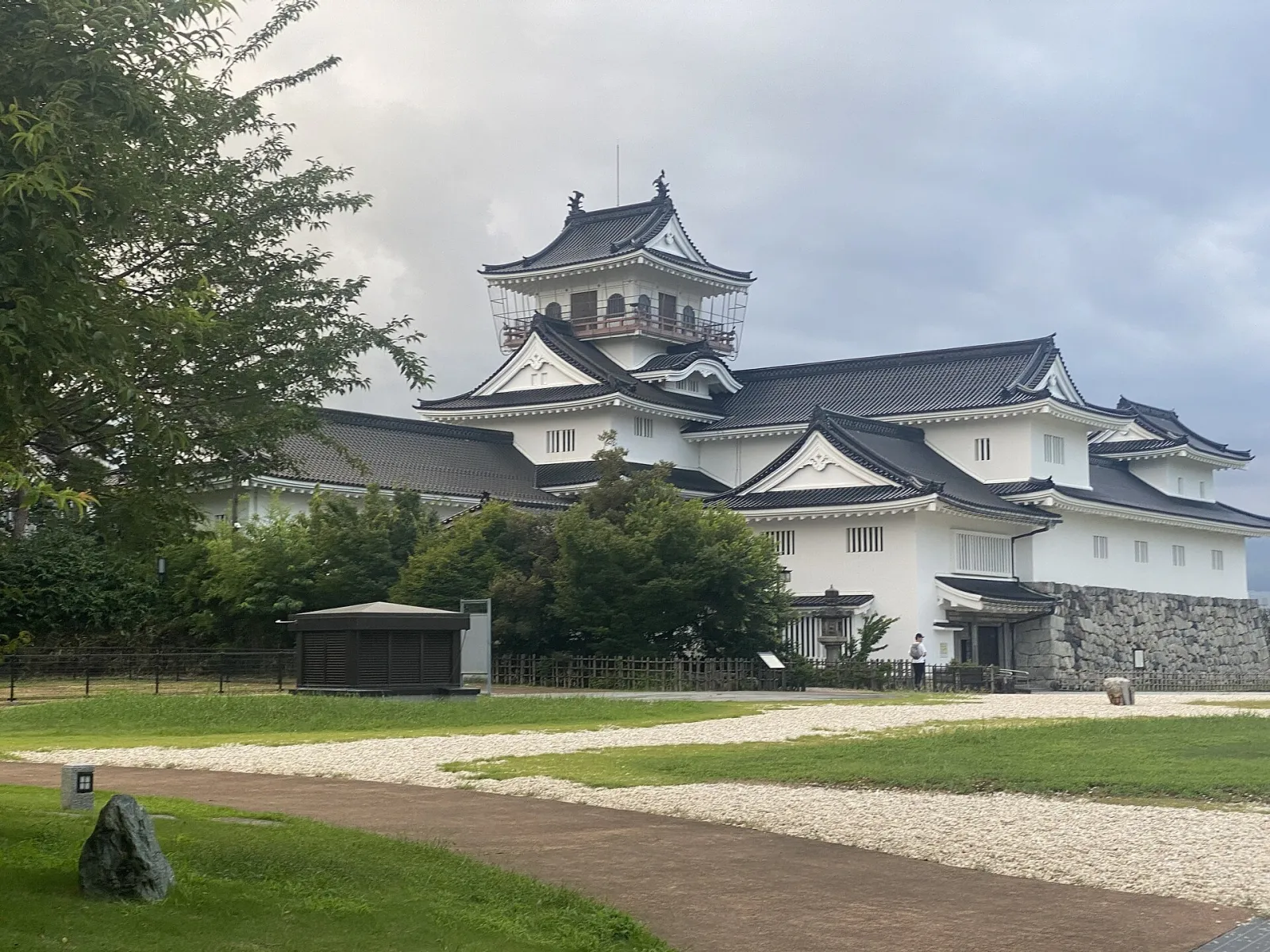
Photo: Immanuelle, licence: CC BY 4.0, resized and converted to WebP. Source: Wikimedia Commons
From 11 April to 4 June 1954 Toyama Prefecture and Toyama City held the Toyama Industrial Exposition in Toyama Castle Park and on the Uozu seafront, to show the reconstruction of war-damaged Toyama and to promote the prefecture as a leading power and industrial region; 740,000 people came. A guide map of the grounds in the Takaoka City Museum carries a photograph of Toyama Castle33. The castle was built that year to mark the war-damage reconstruction34.
YKK’s predecessor, Yoshida Kōgyōsho, lost its Komatsugawa factory in Tokyo in the air raid of March 1945. In August that year it bought the Uozu Iron Works and became Yoshida Kōgyō, adopted the YKK trademark in January 1946, and opened its Kurobe factory in May 195535.
Komatsu Seisakusho, whose founding appeared in the Taishō note, completed its first D50 bulldozer in December 1947, moved its head office from Komatsu to Tokyo in August 1951, signed its first construction machinery export contract (motor graders for Argentina) in January 1955, and won the Deming Prize in 196436.
For itai-itai disease along the Jinzū in Toyama, a countermeasures council was formed at the Kumano community hall in Fuchū on 14 November 196637. On 9 March 1968, 14 plaintiffs sued in the Toyama District Court, and on 8 May the Ministry of Health declared the disease to be chronic cadmium poisoning caused by discharges from the Kamioka mine upstream, the first officially recognized pollution disease37. The first-instance victory on 30 June 1971 was the first win in a Japanese pollution lawsuit, and the Kanazawa branch of the Nagoya High Court ruled fully in the plaintiffs’ favour on 9 August 1972. The next day residents negotiated for eleven hours at Mitsui Mining and Smelting’s head office and came away with three written commitments: compensation, restoration of contaminated soil, and a pollution prevention agreement37. The residents’ Seiryū Kaikan hall was completed in May 197637.
10. Broadcasting, Department Stores, and Entertainers
Hokuriku Broadcasting (MRO) began radio broadcasts on 10 May 1952 as the first commercial broadcaster on the Sea of Japan coast, and on 1 December 1958 launched the coast’s first commercial television station38. Before that, at the end of 1954, the Kanazawa chronology notes that the only places in the prefecture where Nagoya television could just about be received were the outskirts of Kanaiwa and Daishōji11.
The Miyaichi department store of the Taishō note became Daiwa after the war. Daiwa’s main store in Katamachi closed on 16 September 1986 after 64 years, and on the 19th the Kōrinbō Atrio redevelopment was completed with Daiwa as its anchor26.
Shibata Rie grew up in Yatsuo; as a student she joined a workers’ theatre-going society on her own to see the touring shingeki companies that came to Toyama every two or three months, and in 1984 she founded the Wahaha Honpo company with Hisamoto Masami and others3940.
Suzuki Tadashi’s company moved to Toga village in Nanto in 1976 and opened Toga Sanbō, a theatre in a converted farmhouse; in 1982 it launched the Toga Festival, Japan’s first international theatre festival41.
11. Manga and Literature
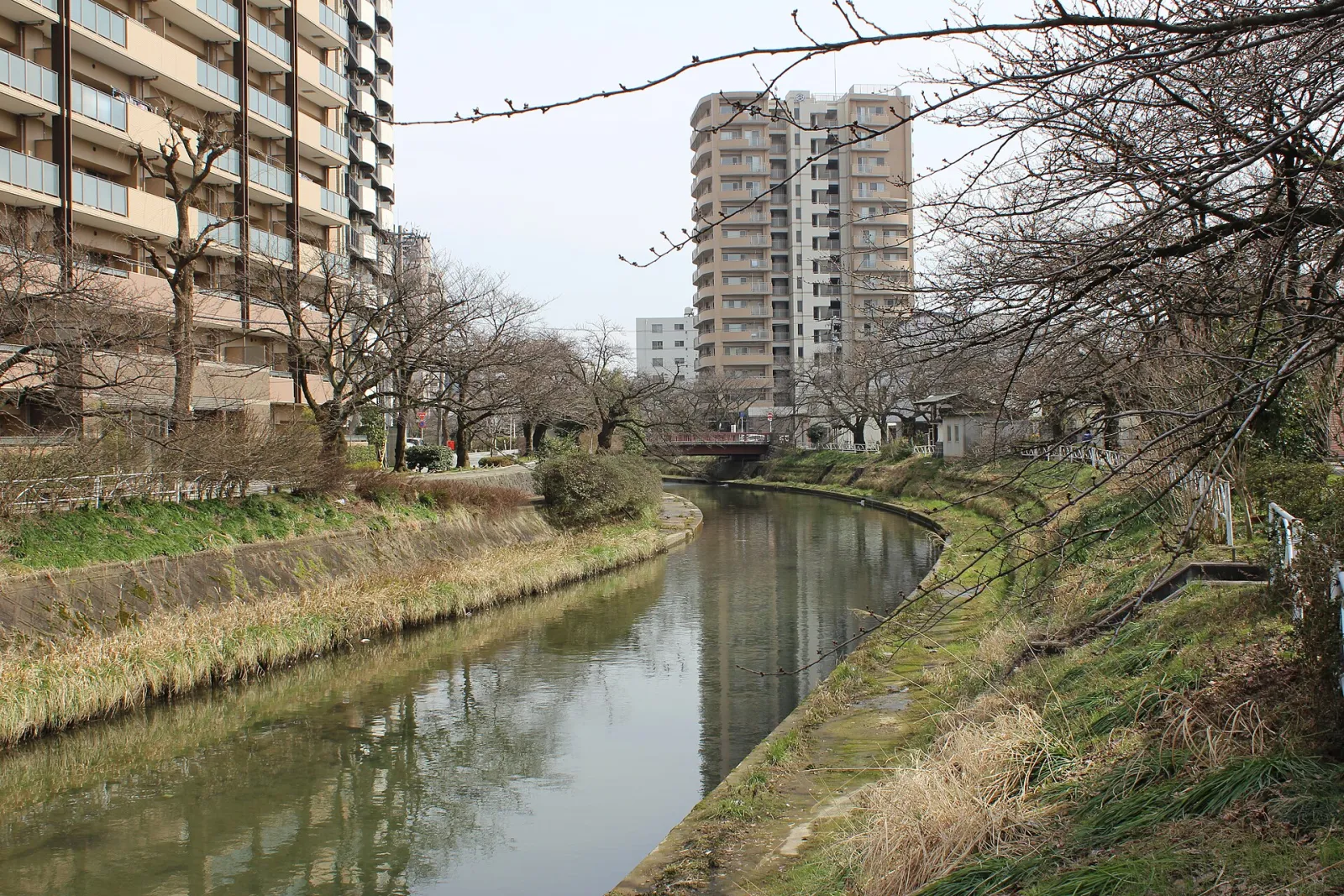
Photo: Triglav, licence: CC BY-SA 4.0, resized and converted to WebP. Source: Wikimedia Commons
Fujiko F. Fujio (Fujimoto Hiroshi) was born in Takaoka in 1933 and in 1944 met a new pupil at his primary school, Abiko Motoo (Fujiko Fujio Ⓐ). The two debuted in 1951 in the Mainichi Shōgakusei Shinbun and moved to Tokyo and the Tokiwa-sō apartments in 195442. The first Doraemon story, “All the way from the land of the future”, appeared in the January 1970 issue of Shōgaku Yonensei43. Fujiko Fujio Ⓐ‘s Ninja Hattori-kun ran in Shōnen from November 1964 to February 196844.
Itsuki Hiroyuki wound up his work in Tokyo in 1965 and moved to Kanazawa, his wife’s home town, living in Kodatsuno45. In January 1967 he won the Naoki Prize for Aozameta uma o miyo; the Kanazawa chronology calls him “a writer living in Kanazawa”2646.
Hotta Yoshie from Fushiki won the Akutagawa Prize in 1952 for Hiroba no kodoku and other works47. Miyamoto Teru’s Akutagawa Prize story Hotarugawa is set on the Itachi River in Toyama, and in 1978 Kitanihon Broadcasting made a TV programme on it in which Miyamoto himself appeared48.
12. Film and Television
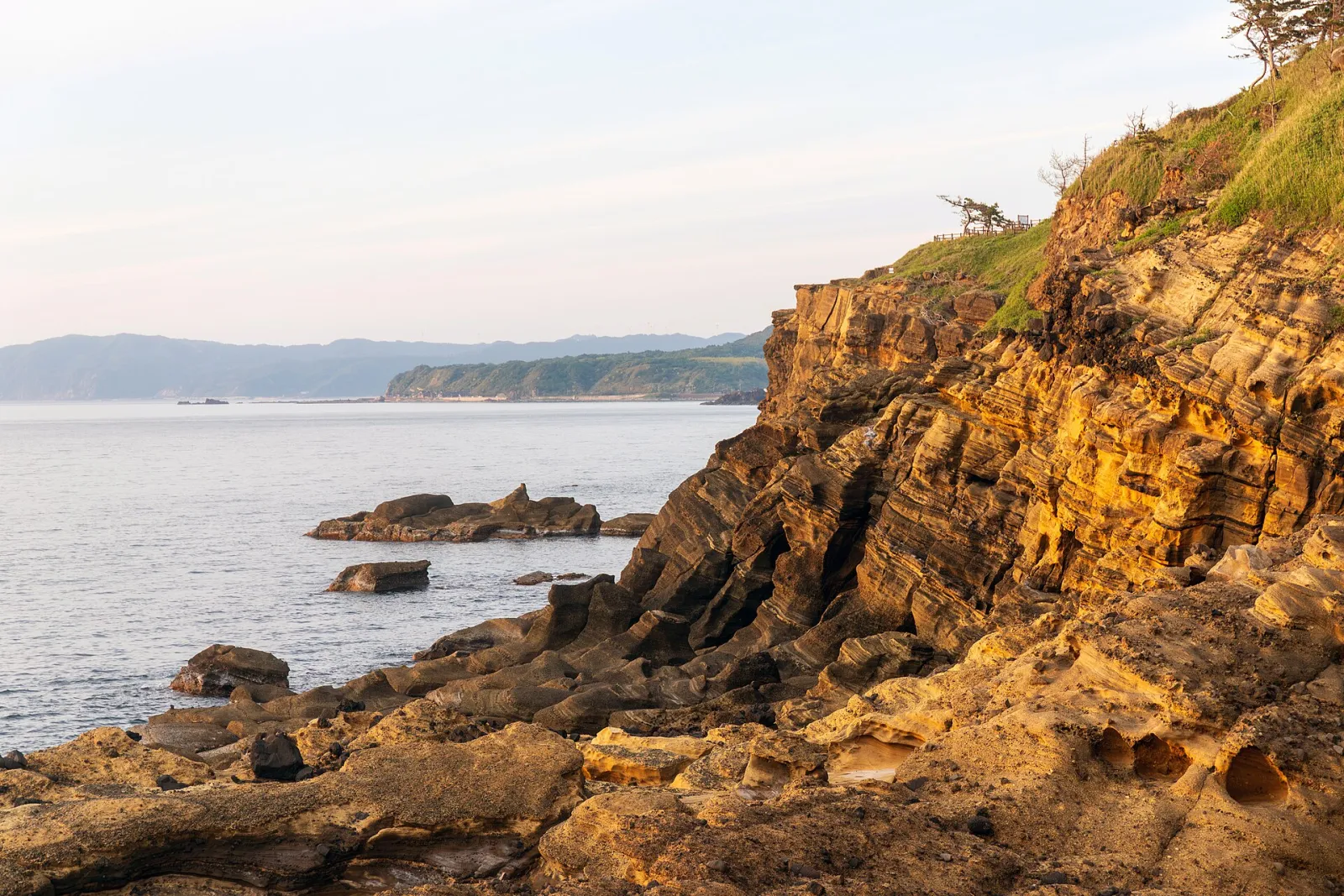
Photo: Yasu, licence: CC BY-SA 3.0, resized and converted to WebP. Source: Wikimedia Commons
The film Zero Focus (Zero no shōten), released in March 1961, was directed by Nomura Yoshitarō from Matsumoto Seichō’s novel, adapted by Hashimoto Shinobu and Yamada Yōji, and set in Kanazawa and Noto. Location shooting was plagued by bad weather, and the climax filmed on the cliffs of Noto Kongō influenced many later TV dramas49.
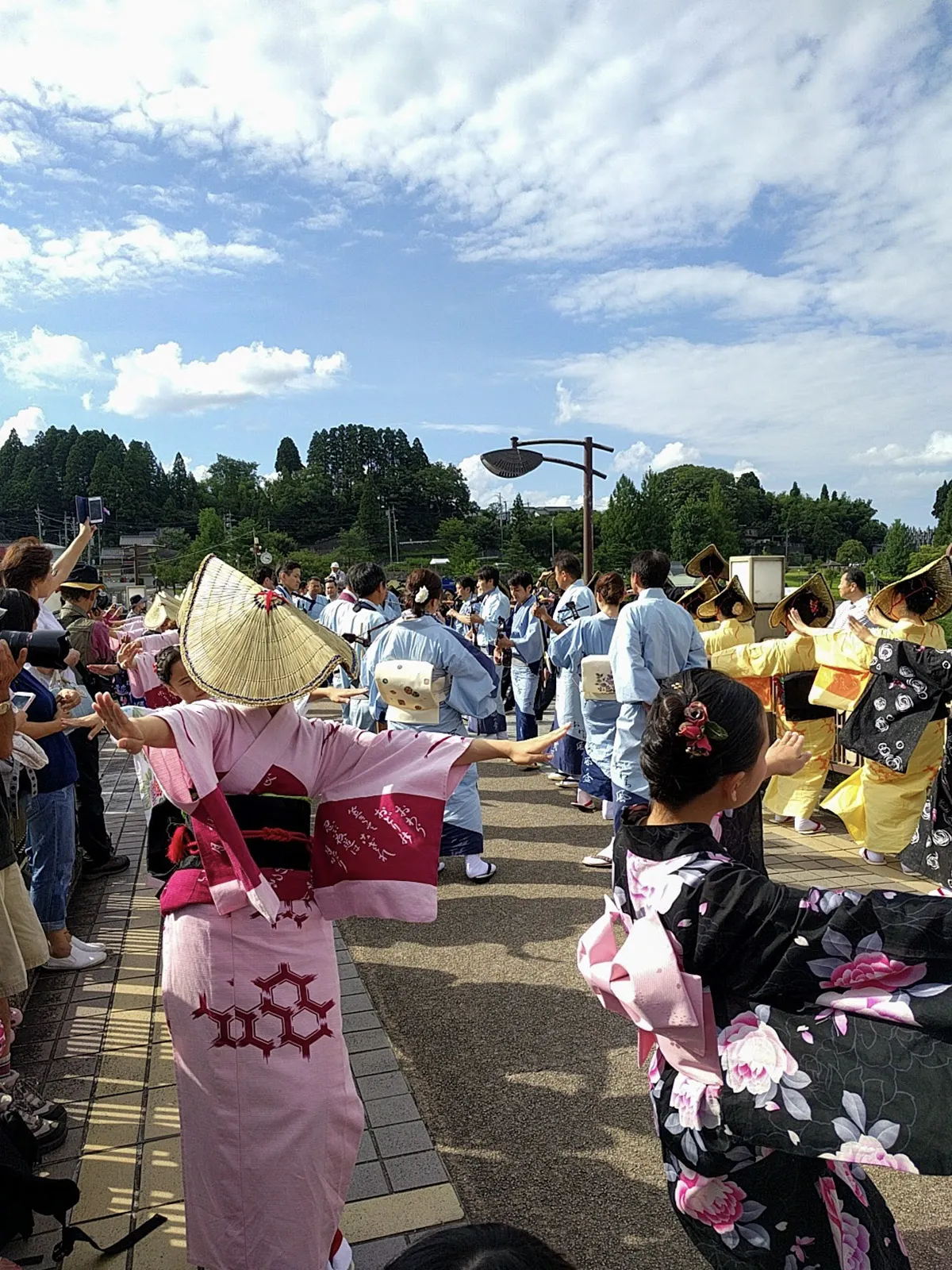
Photo: KQuhen, licence: CC BY-SA 4.0, resized and converted to WebP. Source: Wikimedia Commons
Among regional programmes held by the Broadcast Library, the TV drama Kaze no Bon Koiuta, broadcast on 29 August 1986, was based on Takahashi Osamu’s novel and starred Sakuma Yoshiko and Takahashi Kōji: former lovers meet again by the Seine, and the man rents a house in Etchū-Yatsuo to wait for her to come and see the Kaze no Bon festival50.
The Shōwa emperor died on 7 January 1989, and the era name changed to Heisei the next day26.
13. Places to Visit Today
| Area | Place | Type | Notes |
|---|---|---|---|
| Uchinada | Uchinada Town History and Folklore Museum | Museum | Exhibits on the Uchinada struggle19 |
| Kanazawa | Ishikawa Prefectural Museum of History | Museum / Building | Red-brick arsenals used by the art college after the war17 |
| Kanazawa | Kanazawa Castle Park | Historic site | Site of part of Kanazawa University’s campus from 194916 |
| Kanazawa | Kōrinbō Daiwa | Department store | Moved from Katamachi to Kōrinbō in 198626 |
| Komatsu | Komatsu Airport | Airport | Shared by the Self-Defense Force and civil aviation5 |
| Toyama | Toyama Castle (local history museum) | Museum | Keep built in 1954 to mark the reconstruction34 |
| Toyama | Toyama Prefectural Itai-itai Disease Museum | Museum | 151 Tomosugi, Toyama; closed 30 Nov – 2 Dec 2026 for inspection51 |
| Toyama | Itachi River | River | Setting of Miyamoto Teru’s Hotarugawa48 |
| Tateyama | Kurobe Dam and Tateyama Kurobe Alpine Route | Dam / Mountain transport | Dam completed 1963; route opened throughout in 19713032 |
| Nanto | Toga Art Park | Theatre | Home of SCOT41 |
| Takaoka | Fujiko F. Fujio Furusato Gallery | Museum | Early work and original drawings42 |
| Shika | Yase cliffs | Scenery | Location of Zero Focus49 |
References
Footnotes
-
Kanazawa City Library, “City history chronology: A Hundred Years of Kanazawa, Taishō–Shōwa” (US main body of over 350 arrives in Kanazawa, 27 October 1945): https://www2.lib.kanazawa.ishikawa.jp/reference/shishinenpyou_t.htm ↩
-
Collaborative Reference Database (Kanazawa City Library), “Buildings in Ishikawa requisitioned by GHQ” (History of Ishikawa Prefecture, Modern 1, pp. 821–823: 750 troops on 22 October 1945, 90 to Komatsu and Nanao, 90th Military Government Company, released 26 July 1952; Fifty Postwar Years of Ishikawa, pp. 365–366: officers’ club, Hakuunrō; Kanazawa City History, General 3: Ishikawa military government team in Honda-machi, 3 January 1946; maps showing CIC, CIE, and SCAP library): https://crd.ndl.go.jp/reference/detail?page=ref_view&id=1000212095 ↩ ↩2 ↩3 ↩4
-
National Diet Library Research Navi, “World War II Operations Reports, Military Government” (30th MG unit, Nagoya → Tōkai–Hokuriku regional HQ; 90th MG unit, Kanazawa → Ishikawa team; renamed civil affairs from 1 July 1949): https://ndlsearch.ndl.go.jp/rnavi/occupation/WORmg ↩
-
Denki Shimbun, “Toyama Denki Building, which survived the Toyama air raid, to become a registered cultural property” (2018; requisitioned by the occupation forces, headquarters until 1952): https://www.denkishimbun.com/sp/30928 ↩
-
Komatsu Airport, “History” (US takeover August 1945; irregular Osaka flights July 1955; release February 1958; Komatsu base June 1961; shared airfield December 1961; scheduled flights April 1962 and July 1963; runway 2,700 m September 1964; Hong Kong charter November 1973; Seoul service December 1979): https://www.komatsuairport.jp/about/history.html ↩ ↩2 ↩3 ↩4 ↩5
-
Imperial Household Agency, “Activities of the Shōwa Emperor and Empress Kōjun in the postwar Shōwa era” (1947 solo tour of Fukui, Ishikawa, and Toyama, first attendance at the National Sports Festival in Ishikawa): https://www.kunaicho.go.jp/kunaicho/koho/taio/taio-h25-0403.html ; table of autumn sports festivals (23 October – 2 November 1947; 13th festival in Toyama, 18–27 October 1958): https://www.kunaicho.go.jp/kunaicho/koho/taio/pdf/syukikokutai.pdf ↩ ↩2
-
Kanazawa City Library, “City history chronology” (26–30 October 1947 tour: Daishōji, Yamanaka, Heiwa housing, Daiichi Zenrinkan, Seisonkaku, opening ceremony): https://www2.lib.kanazawa.ishikawa.jp/reference/shishinenpyou_t.htm ↩
-
Toyama Prefecture, “68th National Tree-Planting Festival: outline” (20th festival at Yonari, Tonami, 26 May 1969; planting of Tateyama cedar and other trees; sowing at the Yoshimine forestry station): https://www.pref.toyama.jp/1603/kendodukuri/shinrinkasen/shinrin/1603/outline.html ↩
-
Ishikawa Prefecture, “About the National Tree-Planting Festival” (34th festival at the Prefectural Forest Park, Tsubata, 22 May 1983, 7,700 participants): https://www.pref.ishikawa.jp/shinrin/syokuzyu/about/index.html ↩
-
Collaborative Reference Database (Kanazawa City Library), “Origin of the name Heiwa-machi” (about 100 repatriates from the 9th Division; name from the 1963 address reform): https://crd.ndl.go.jp/reference/entry/index.php?id=1000356249&page=ref_view ↩
-
Kanazawa City Library, “City history chronology” (Kanazawa College of Arts and Crafts, 8 July and 7 November 1946; Prime Minister Yoshida at the Heiwa-machi repatriates’ hostel, 10 November 1946; Kanazawa University classes from 1 September 1949; Uchinada, 25 and 27 September and 2 December 1952; television reception, December 1954; four-year art college, 16 April 1955; castle grounds, 6 and 12 October 1955; end of firing announced 5 December 1956): https://www2.lib.kanazawa.ishikawa.jp/reference/shishinenpyou_t.htm ↩ ↩2 ↩3 ↩4 ↩5 ↩6 ↩7 ↩8 ↩9
-
Daiichi Zenrinkan, “History” (day nursery 1934, licensed nursery school 1948, capacity 165): https://1-zenrinkan.or.jp/hojinenkaku.html ↩
-
Hayashi Rheology Memorial Foundation, “Profile of founder Hayashi Torahiko” (born 1926 in Xizhou, Taiwan; Taiwan Sugar Xizhou mill; Kaohsiung First Middle School 1944; repatriated 1946; Torahiko founded in Kanazawa March 1950; Tochigi December 1954; Rheon Automatic Machinery March 1963): https://hayashi-rheology.or.jp/profile/ ↩ ↩2
-
YKK Taiwan, “Company profile” (founded 1966, subsidiary of the YKK group): https://www.ykktaiwan.com.tw/profile.html ↩
-
Kanazawa City Library, “City history chronology: A Hundred Years of Kanazawa, Shōwa sequel” (sister-school agreement with the National Taiwan Academy of Arts, 4 November 1984; Hatta Yoichi memorial, 30 April 1985; Daiwa, 16 and 19 September 1986; 7 and 8 January 1989): https://www2.lib.kanazawa.ishikawa.jp/reference/shishinenpyou_s.htm ↩ ↩2
-
Kanazawa University, “History” (new university 1949, six faculties, three faculties inside Kanazawa Castle, “the university in the castle”; move to Kakuma from Heisei 1): https://www.kanazawa-u.ac.jp/university/management/history ↩ ↩2 ↩3
-
Ishikawa Prefectural Museum of History, “About the museum” (the three red-brick buildings were army arsenals, used by the Kanazawa College of Art after the war, opened as the history museum in 1986): https://ishikawa-rekihaku.jp/about/ ↩ ↩2
-
Kokugakuin University, “Miyamoto Saburō | Yasukuni no emaki” (professor at the Kanazawa College of Arts and Crafts, 1948): https://www2.kokugakuin.ac.jp/kaihatsu/maa/yasukuni/artist_miyamoto.html ↩
-
Uchinada Town History and Folklore Museum, “Outline of the Uchinada struggle” (1952 request for a range; firing from March 1953; permanent use; village consent September 1953; first postwar anti-base campaign; “starting point of grassroots democracy”): https://www.town.uchinada.lg.jp/site/uchinada-history/11477.html ↩ ↩2 ↩3 ↩4
-
Uchinada Town, “History of the town” (complete US withdrawal in 1957): https://www.town.uchinada.lg.jp/soshiki/soumu/2355.html ↩
-
Broadcast Library, Gekidō no chihōshi 11: Uchinada tōsō (Hokuriku Broadcasting, 26 March 1988): https://www.bpcj.or.jp/program/detail/003123/ ↩
-
Broadcast Library, Gekidō no chihōshi 12: Anpo, Sanpachi gōsetsu, keizai seichō (Hokuriku Broadcasting, 16 May 1988; campaign against a jet base, Komatsu base 1961, 181 cm of snow in Kanazawa in 1963): https://www.bpcj.or.jp/program/detail/004161/ ↩ ↩2
-
Toyama Airport, “About Toyama Airport” (opened 20 August 1963 on the Jinzū riverbed with 1,200 m runway; 2,000 m and jets from 18 March 1984): https://www.toyama-airport.jp/other/about ↩
-
Toyama Prefecture, Kenkōhō Toyama no. 368 (October 1999), “Dawn of the air age: Toyama airfield opens” (Kuragaki, returned to farmland, Toyama Airport opened 1963): https://www.pref.toyama.jp/documents/14615/19631_368-h1110.pdf ↩
-
Ishikawa Prefecture, “History of Kanazawa port” (old Ōno and Kanaiwa harbours merged on 10 July 1954; designated open port November 1970): https://www.pref.ishikawa.lg.jp/kanazawakouwan/p01a.html ↩
-
Kanazawa City Library, “City history chronology: Shōwa sequel” (Itsuki’s Naoki Prize, 24 January 1967; trams abolished, 10 February 1967; Kanazawa port opening ceremony, 1 November 1970; Daiwa main store closes 16 September and Kōrinbō Atrio completed 19 September 1986; emperor’s death 7 January and Heisei 8 January 1989): https://www2.lib.kanazawa.ishikawa.jp/reference/shishinenpyou_s.htm ↩ ↩2 ↩3 ↩4 ↩5 ↩6
-
MLIT Fushiki-Toyama Port Office, “Shinminato district” (cut from the Hōjōzu lagoon, opened April 1968): https://www.toyama.pa.hrr.mlit.go.jp/about_harbor/shinminato/ ↩
-
Central Nippon Expressway, “40 years of the Hokuriku Expressway” (Komatsu–Kanazawa-nishi opened 18 October 1972): https://www.c-nexco.co.jp/corporate/pressroom/news_old/index.php?id=2873 ↩
-
East Nippon Expressway, Hokuriku Expressway opening chronology (Asahi–Nadachi-Tanihama, 20 July 1988, “Hokuriku Expressway open!”): https://www.e-nexco.co.jp/activity/agreeable/hokuriku30/image/graph.pdf ↩
-
Kansai Electric Power, “Kuroyon history, part 1, for the 60th anniversary” (“Kuroyon” as the name for Kurobe Dam and the Kurobe River No. 4 power station about 10 km downstream; Ōmachi tunnel begun 1956; fracture zone May 1957, about 80 m, overcome in seven months; reservoir filling October 1960, units 1 and 2 generating January 1961; completed 5 June 1963; 171 deaths; 186 m high): https://media.kepco.co.jp/project/17649696 ; Wikipedia (Japanese), “Kurobe Dam” (construction from July 1956): https://ja.wikipedia.org/wiki/%E9%BB%92%E9%83%A8%E3%83%80%E3%83%A0 ↩ ↩2 ↩3 ↩4
-
Pony Canyon International Licensing, “The Sands of Kurobe” (released 17 February 1968, dir. Kumai Kei, starring Mifune Toshirō and Ishihara Yūjirō): https://intl.ponycanyon.co.jp/227 ↩
-
Tateyama Kurobe Alpine Route, “55th anniversary of the full opening” (opened throughout on 1 June 1971): https://www.alpen-route.com/55th/ ↩ ↩2
-
Cultural Heritage Online, “Guide map of the Toyama Industrial Exposition” (Takaoka City Museum; 11 April – 4 June 1954, Toyama Castle Park and Uozu seafront, 740,000 visitors): https://online.bunka.go.jp/heritages/detail/567878 ↩
-
Toyama City, “Buildings, trees and more” (Toyama Castle built in Shōwa 29 [1954] to mark the war-damage reconstruction): https://www.city.toyama.lg.jp/shisei/machizukuri/1010805/1012703/1012714.html ↩ ↩2
-
YKK, “History” (Komatsugawa factory destroyed March 1945; Uozu Iron Works bought and renamed Yoshida Kōgyō August 1945; YKK trademark January 1946; Kurobe factory May 1955): https://www.ykk.com/corporate/group/outline.html ↩
-
Komatsu, “History” (first D50 bulldozer December 1947; head office to Tokyo August 1951; Argentine motor grader export contract January 1955; Deming Prize November 1964): https://www.komatsu.jp/ja/aboutus/history ↩
-
Itai-itai Disease Countermeasures Council, Seiryū Kaikan, “History of itai-itai disease” (council formed 14 November 1966; suit filed 9 March 1968 by 14 plaintiffs; Ministry of Health view 8 May 1968; first-instance win 30 June 1971; appeal ruling 9 August 1972; three agreements 10 August 1972; Seiryū Kaikan completed May 1976): https://ibyou-seiryukaikan.org/history/ ↩ ↩2 ↩3 ↩4
-
Hokuriku Broadcasting, “Establishing a new company for radio” (radio from 10 May 1952, first commercial broadcaster on the Sea of Japan coast): https://www.mro.co.jp/info/mroradio/ ; “MRO TV 60th anniversary” (television from 1 December 1958): https://www.mro.co.jp/tv/60tv/ ↩
-
Meiji University, Meijin, “Shibata Rie” (born 1959, from Toyama; Tokyo Vaudeville Show, then Wahaha Honpo in 1984): https://www.meiji.ac.jp/koho/meijin/special/shibata.html ↩
-
TV Asahi POST, “Shibata Rie” (grew up in Yatsuo; workers’ theatre society; Mingei, Haiyūza, Zenshinza, Bungakuza): https://post.tv-asahi.co.jp/post-115424/ ↩
-
Suzuki Company of Toga, “Profile” (move to Toga and Toga Sanbō in 1976; Japan’s first international theatre festival, the Toga Festival, in 1982): https://www.scot-suzukicompany.com/en/profile.php ↩ ↩2
-
Takaoka City Fujiko F. Fujio Furusato Gallery, “Inside the gallery” (born in Takaoka 1 December 1933; Abiko Motoo 1944; Tenshi no Tama-chan 1951; pen name 1953; Tokiwa-sō 1954; Obake no Q-tarō 1964; partnership ended 1987): https://fujiko-artgallery.jp/room_information.html ↩ ↩2
-
Shogakukan, “Fujiko F. Fujio Complete Works: Doraemon” (“All the way from the land of the future”, Shōgaku Yonensei, January 1970): https://www.shogakukan.co.jp/pr/fzenshu/lineup/doraemon/ ↩
-
Fujiko Studio, “Works” (Ninja Hattori-kun in Shōnen, November 1964 – February 1968; Pro Golfer Saru in Weekly Shōnen Sunday, 24 March 1974 – 5 November 1978): https://fujikostudio.jp/works.html ↩
-
Fujin Kōron, Itsuki Hiroyuki on choosing between the Naoki Prize and a quiet life in Kanazawa (moved to Kanazawa in 1965, Kodatsuno, his wife’s home town): https://fujinkoron.jp/articles/-/4836?page=2 ↩
-
Kanazawa Bungeikan, “Kanazawa Itsuki Hiroyuki Collection” (born 1932 in Fukuoka; Shōsetsu Gendai new writer’s prize 1966; Naoki Prize the next year): https://www.kanazawa-museum.jp/bungei/bunko/index.html ↩
-
Takaoka City, “Honorary citizens” (Hotta Yoshie, from Fushiki, Akutagawa Prize 1952 for Hiroba no kodoku and other works): https://www.city.takaoka.toyama.jp/soshiki/hishoka/1/1/1/4556.html ↩
-
Broadcast Library, Terebi shōgekijō: Miyamoto Teru to Hotarugawa (Kitanihon Broadcasting, 30 June 1978, 45 min): https://www.bpcj.or.jp/program/detail/001393/ ↩ ↩2
-
Shochiku Cinema Classics, Zero no shōten (released 19 March 1961, 95 min; Kanazawa and Noto; cliffs of Noto Kongō): https://www.cinemaclassics.jp/nomura/movie/144/ ↩ ↩2
-
Broadcast Library, Kaze no Bon Koiuta (29 August 1986; original novel Takahashi Osamu; Sakuma Yoshiko and Takahashi Kōji; Etchū-Yatsuo): https://www.bpcj.or.jp/program/detail/013522/ ↩
-
Toyama Prefecture, “Itai-itai Disease Museum” (151 Tomosugi, Toyama; closed 30 November – 2 December for facility inspection in fiscal 2026): https://www.pref.toyama.jp/1291/kurashi/kenkou/iryou/1291/index.html ↩