This note follows eleven earlier ones on Hokuriku, from prehistory to the Taishō era, and covers the early Shōwa era (1926–1945). The 1924 visit to Hokuriku by the future emperor, before his accession, gets one sentence. The postwar part stops at the arrival of US troops in Kanazawa at the end of 1945; the later stories of the 9th Division and several people run to 1946, and buildings and memorials are followed to their postwar rebuilding, relocation, or opening. The focus is Kanazawa, Toyama, and Komatsu, with Takaoka, Shinminato, Namerikawa, and Fukui as well.
In the early Shōwa years Kanazawa got a broadcasting station, kafē, and talking pictures, and Toyama got its first full reinforced-concrete multi-tenant office building. Once the war began, Kanazawa’s 9th Division was sent to Shanghai, Manchuria, and Okinawa, and at the end of 1944 it moved to Taiwan. Komatsu became a city in 1940, and a naval airfield was built on its outskirts. Ishikawa Prefecture was hardly touched by air raids, while the raid of 2 August 1945 burned 99.5 percent of urban Toyama.
1. Early Shōwa and Hokuriku
The Taishō emperor died on 25 December 1926, and the era name changed to Shōwa1. Before his accession, in 1924, the Prince Regent Hirohito (later the Shōwa emperor) visited Hokuriku for the army’s special grand manoeuvres; Toyama Prefecture’s chronology of imperial visits lists this visit separately from the Shōwa emperor’s 1947 tour of Hokuriku2.
The Shōwa emperor’s prewar visit to Hokuriku after his accession came in October 1933. That year’s special grand manoeuvres were held in Fukui Prefecture and part of Ishikawa, with the 9th Division and the 11th Division from Zentsūji taking part, and the imperial headquarters was set up in the Fukui prefectural office3. After the visit was decided at the end of the previous year, Fukui spent about ten months preparing gifts, items for imperial viewing, and children’s work4.
Source: Wikimedia Commons (public domain, converted to WebP)
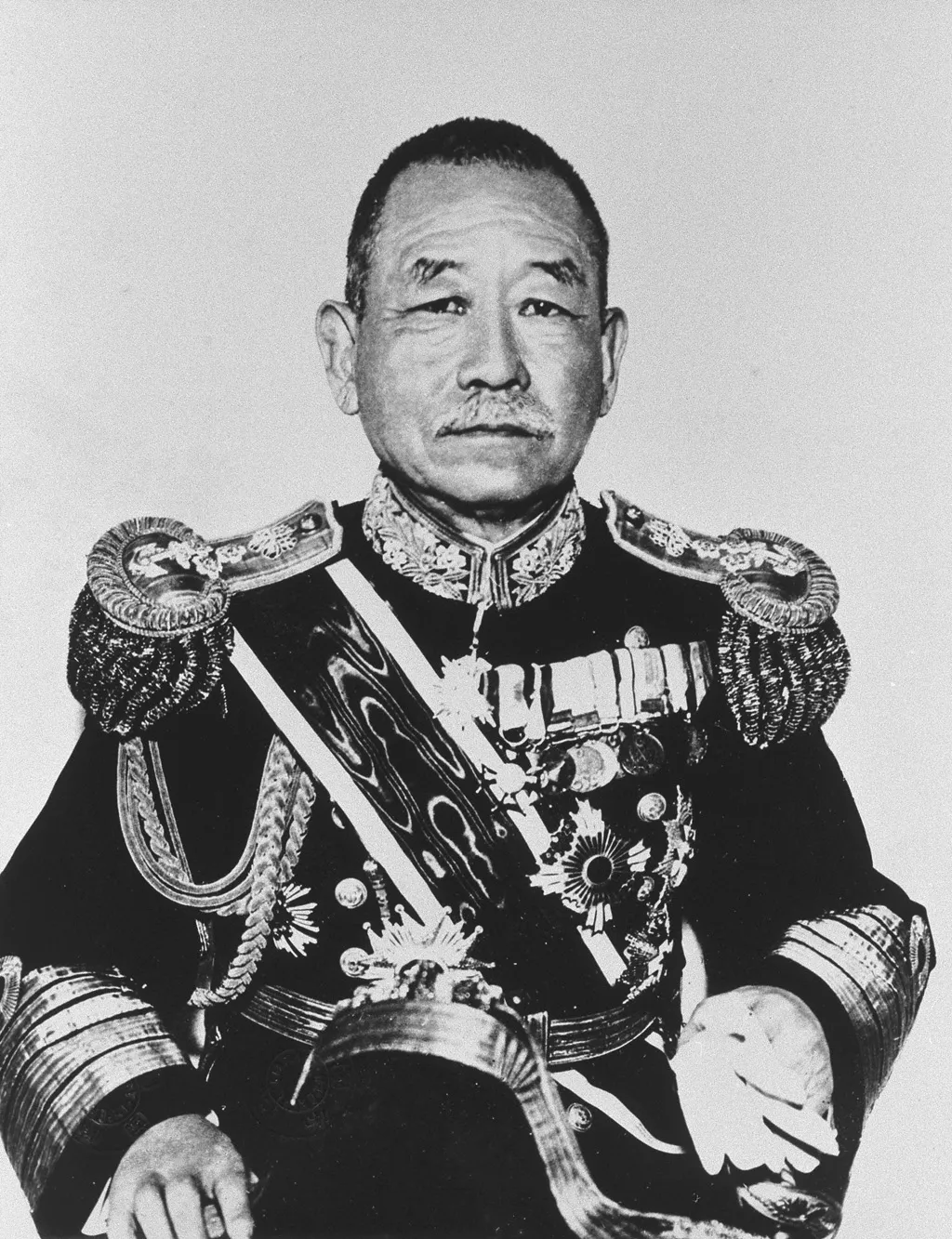
Okada Keisuke (1868–1952), a naval officer from Fukui, was prime minister from July 1934 to March 19365. In the February 26 Incident of 1936 he was attacked by the rebel troops; his brother-in-law and secretary Matsuo Denzō was killed in his place, and Okada survived6.
2. Modern Kanazawa
The broadcasting station
In September 1928 the transmitter site of the Kanazawa broadcasting station was fixed at Nonoichi in Ishikawa District, with the studio and offices in Tonomachi7. The same year, the Nonoichi jonkara folk song was relayed nationwide from the Tokyo station8. The Kanazawa station (JOJK) opened on 15 April 1930. By the end of October that year it had 10,000 listeners across the three Hokuriku prefectures; 9.3 percent of Kanazawa households were listeners, and the licence fee was 1 yen a month7.
Kafē and cinema
Source: Wikimedia Commons (public domain, resized and converted to WebP)
In September 1931 two Osaka-style kafē, Bijinza and Akadama, opened in Kōrinbō. The Hirosaka police used the occasion to tighten control, banning waitresses from handing out flyers in the street and banning jazz and jazz dancing9. That December, Kanazawa’s first kafē, the Brazil mentioned in the Taishō note, was rebuilt as a three-storey restaurant called Senpōkaku Brazil9. In November 1932, when the prefecture planned a tax on waitresses and other serving staff, kafē waitresses in the city formed a league against the tax and petitioned the prefectural office; the tax was imposed from April 19339.
In June 1935, with talkies spreading, the Kanazawa Shōchikuza dismissed three film narrators (benshi) and four musicians, who demanded notice pay and went into dispute10. In November 1936 the Kanazawa Gekijō cinema opened in Katamachi10.
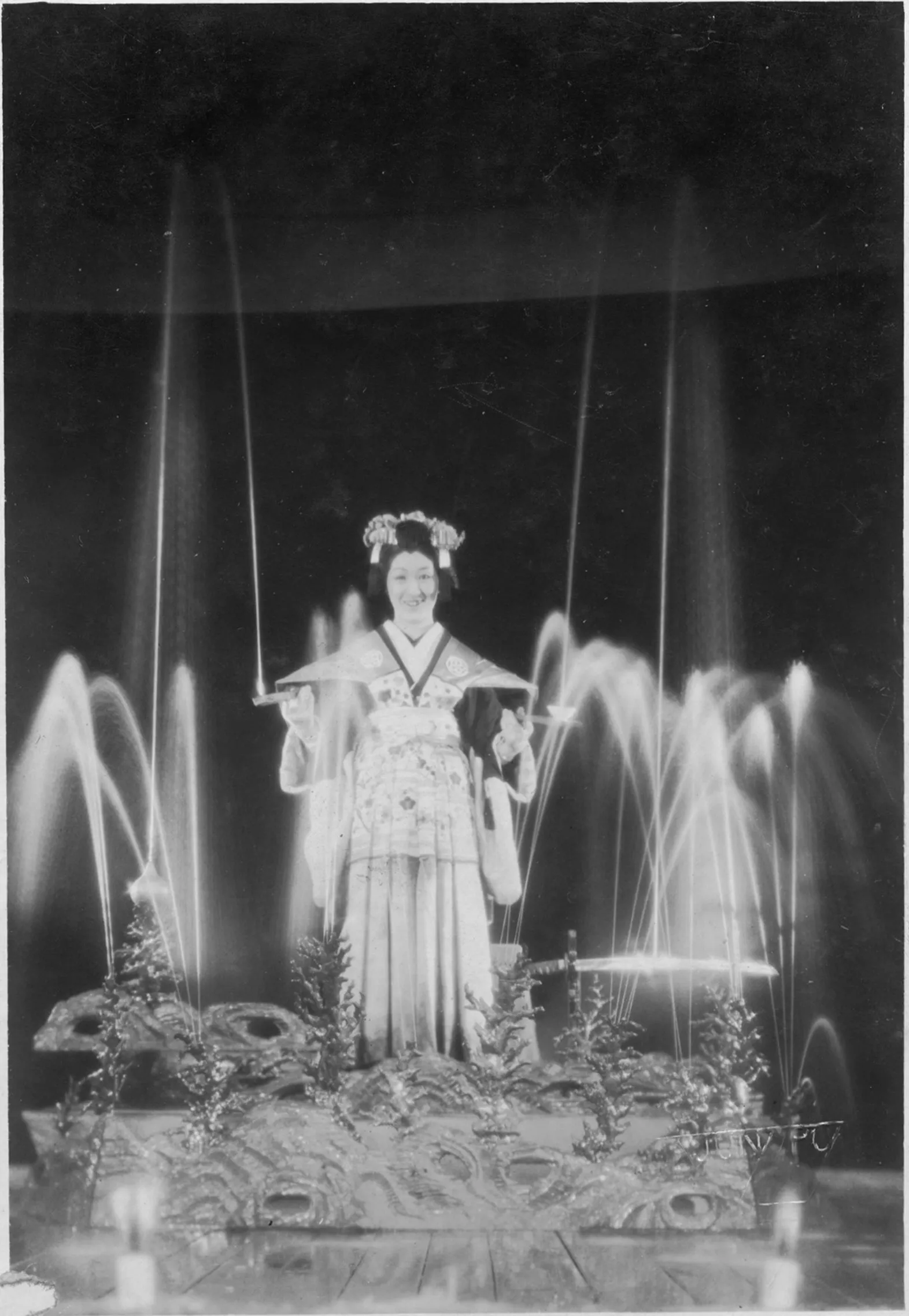
The 1933 silent film Taki no shiraito was directed by Mizoguchi Kenji from a story by the Kanazawa-born writer Izumi Kyōka, and starred Irie Takako and Okada Tokihiko11.
Kura Shin’ichi and Modern Kanazawa
The Kanazawa Phonograph Museum director’s blog, quoting a piece by Koya Tadao, says that before the war Kura Shin’ichi published his own magazine, Modan Kanazawa (Modern Kanazawa); in his lifetime he ran the classical-music café Mon Ami and presented a classical music programme on NHK. His phonographs and SP records are now the Kura Shin’ichi Collection at the Ishikawa Prefectural Museum of History12. The museum’s winter exhibition “Modern Kanazawa and Popular Culture” in 2016 showed copies of the magazine, a 1932 poster for the naming ceremony of the aircraft Aikoku Ishikawa-gō, and a hand-cranked projector from around 192413.
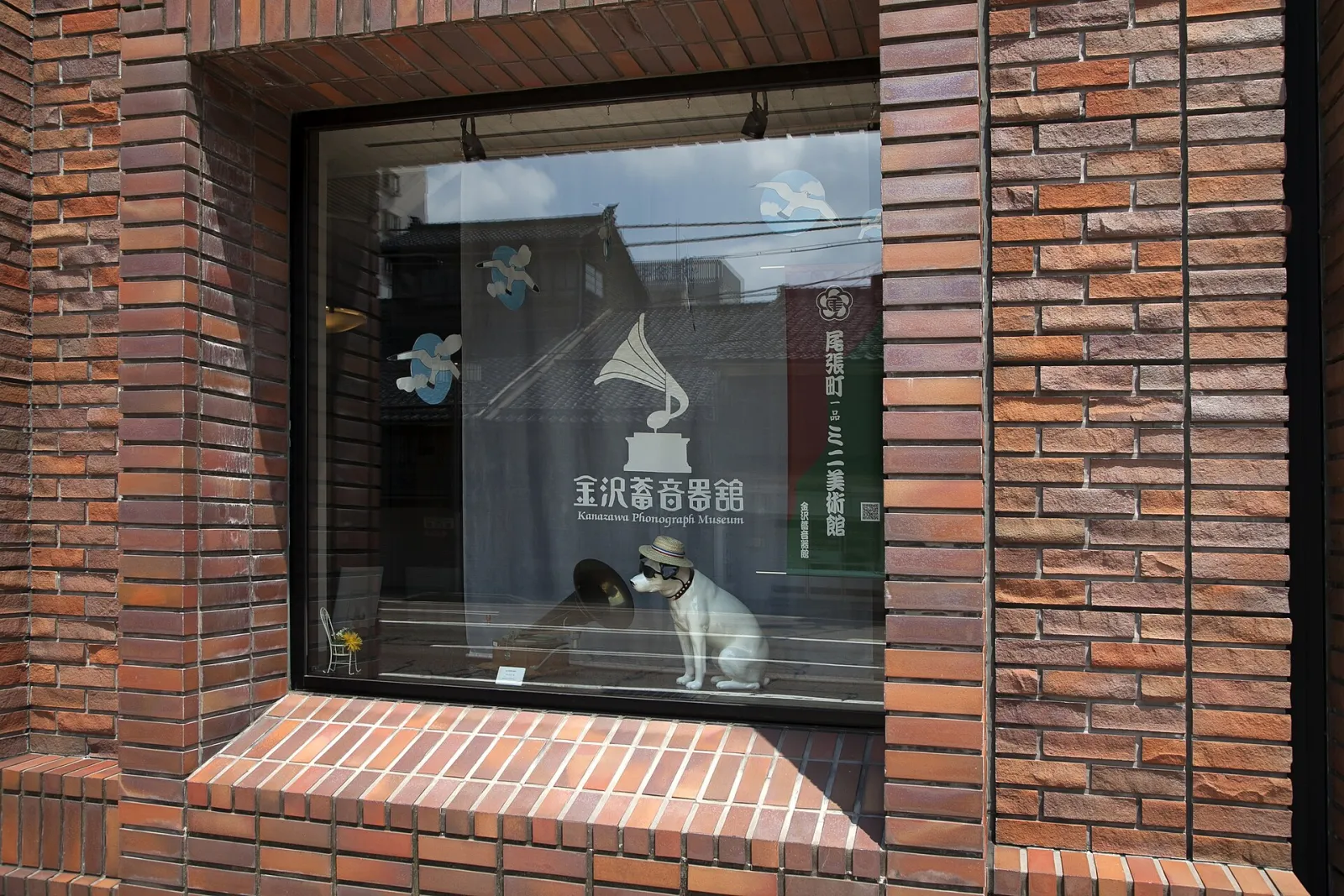
Photo: Kanazawa City, licence: CC BY 2.1 JP, resized and converted to WebP. Source: Wikimedia Commons
Department stores
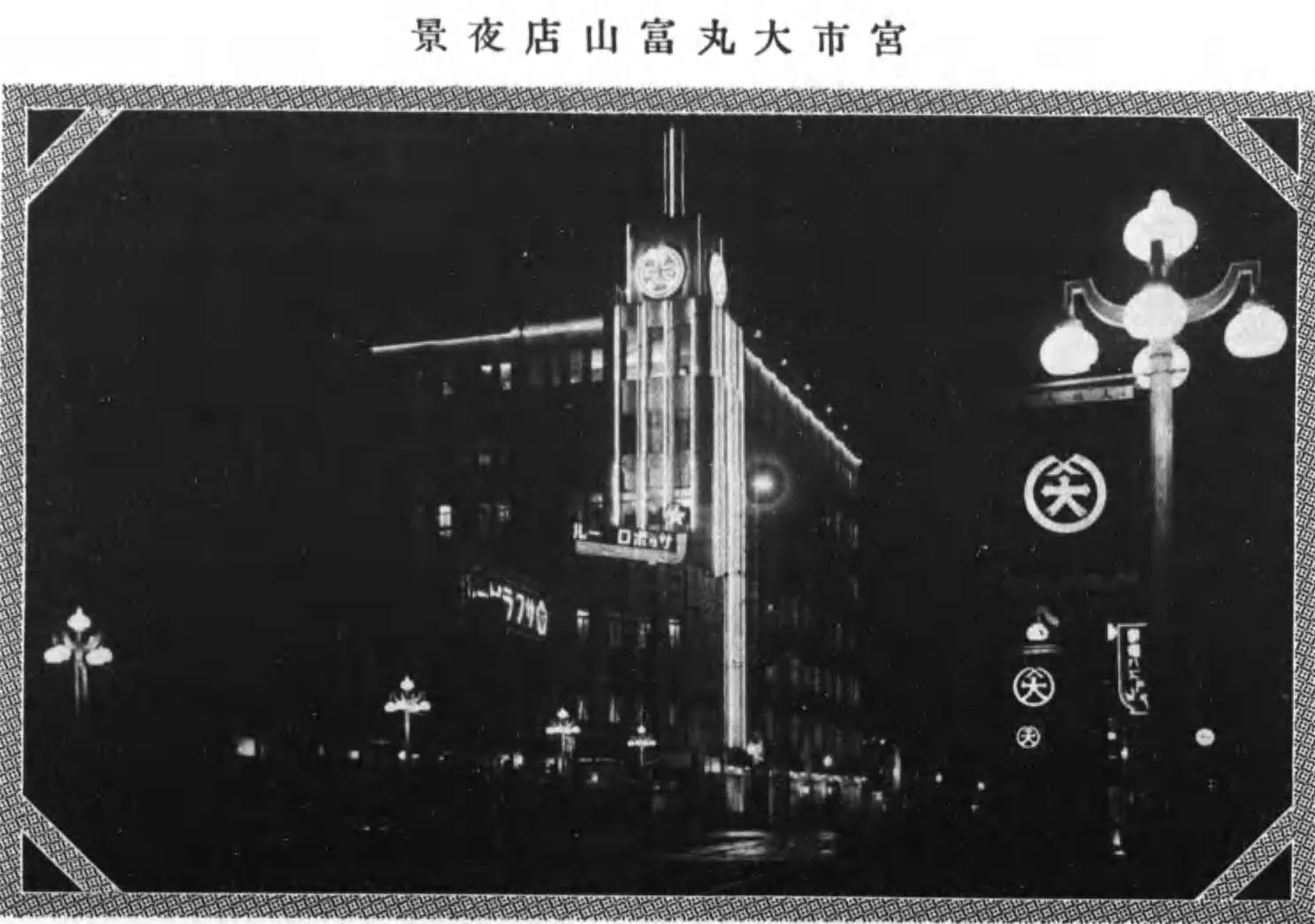
The Miyaichi department store in Katamachi, described in the Taishō note, was called Miyaichi Daimaru by the early Shōwa years14. When the Kanazawa Chamber of Commerce surveyed shops with 50 or more sales staff in 1937, only three qualified: Marukoshi (297 staff), Miyaichi Daimaru (184), and the Utsunomiya bookshop (69)14. In November 1942 both department stores cut their sales floors under Ministry of Commerce policy, Miyaichi Daimaru giving up 604 tsubo and Marukoshi 20914. Miyaichi Daimaru and Marukoshi merged at the end of 1943, and in March 1944 the former Marukoshi store, now the Daiwa Musashi branch, closed to become a war-production workshop14.
Source: Wikimedia Commons (public domain, converted to WebP)
3. Early Shōwa Buildings
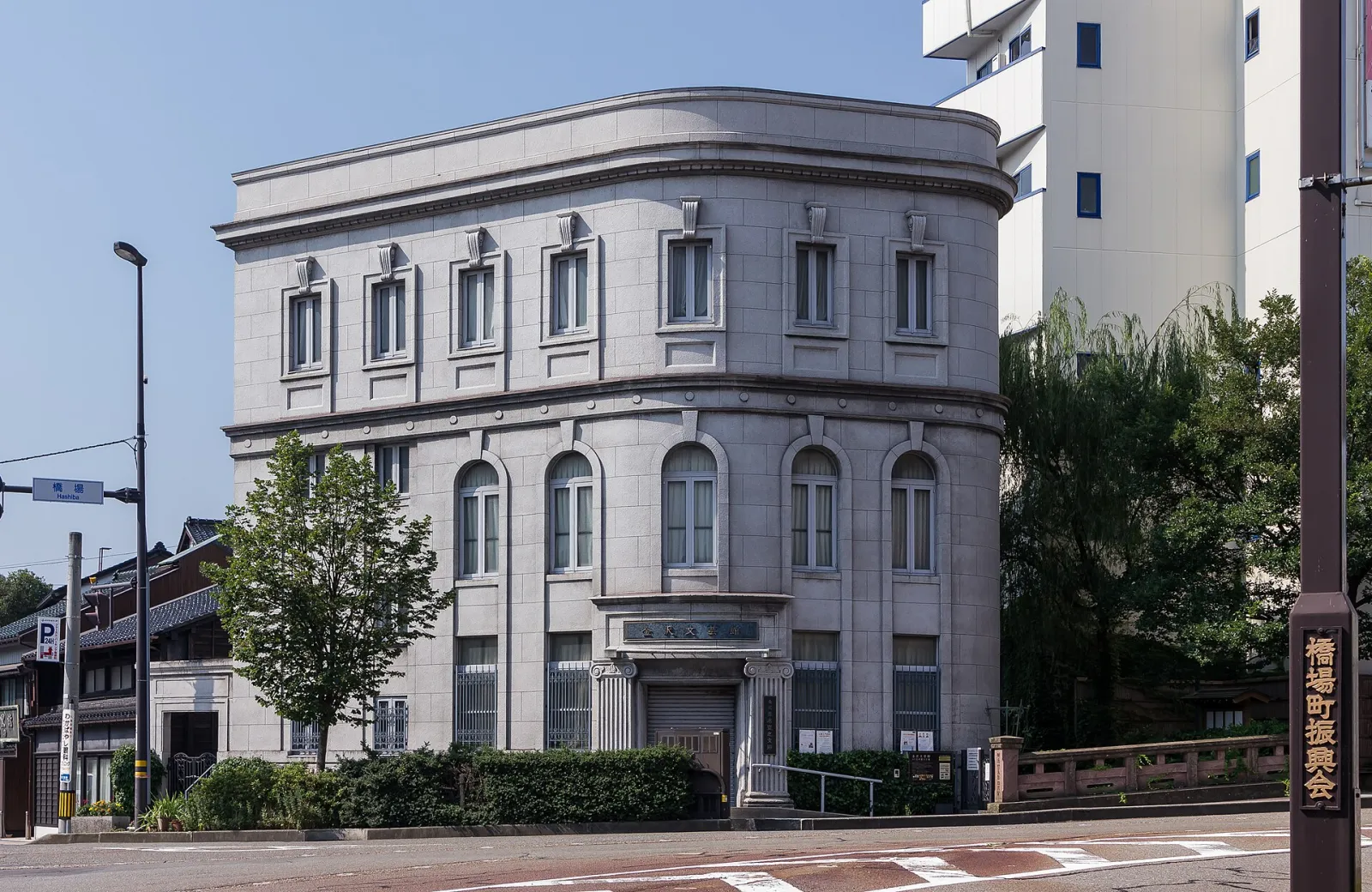
Photo: Kakidai, licence: CC BY-SA 4.0, resized and converted to WebP. Source: Wikimedia Commons
The former Ishikawa Bank Hashiba branch, facing the Hashiba crossing south of Asanogawa Bridge, was designed and built by Shimizu-gumi in 1929 as the Hashiba branch of the Takaoka Bank. It is a four-storey reinforced-concrete building, registered as a tangible cultural property in 2004, and now houses the Kanazawa Bungeikan literary museum15.
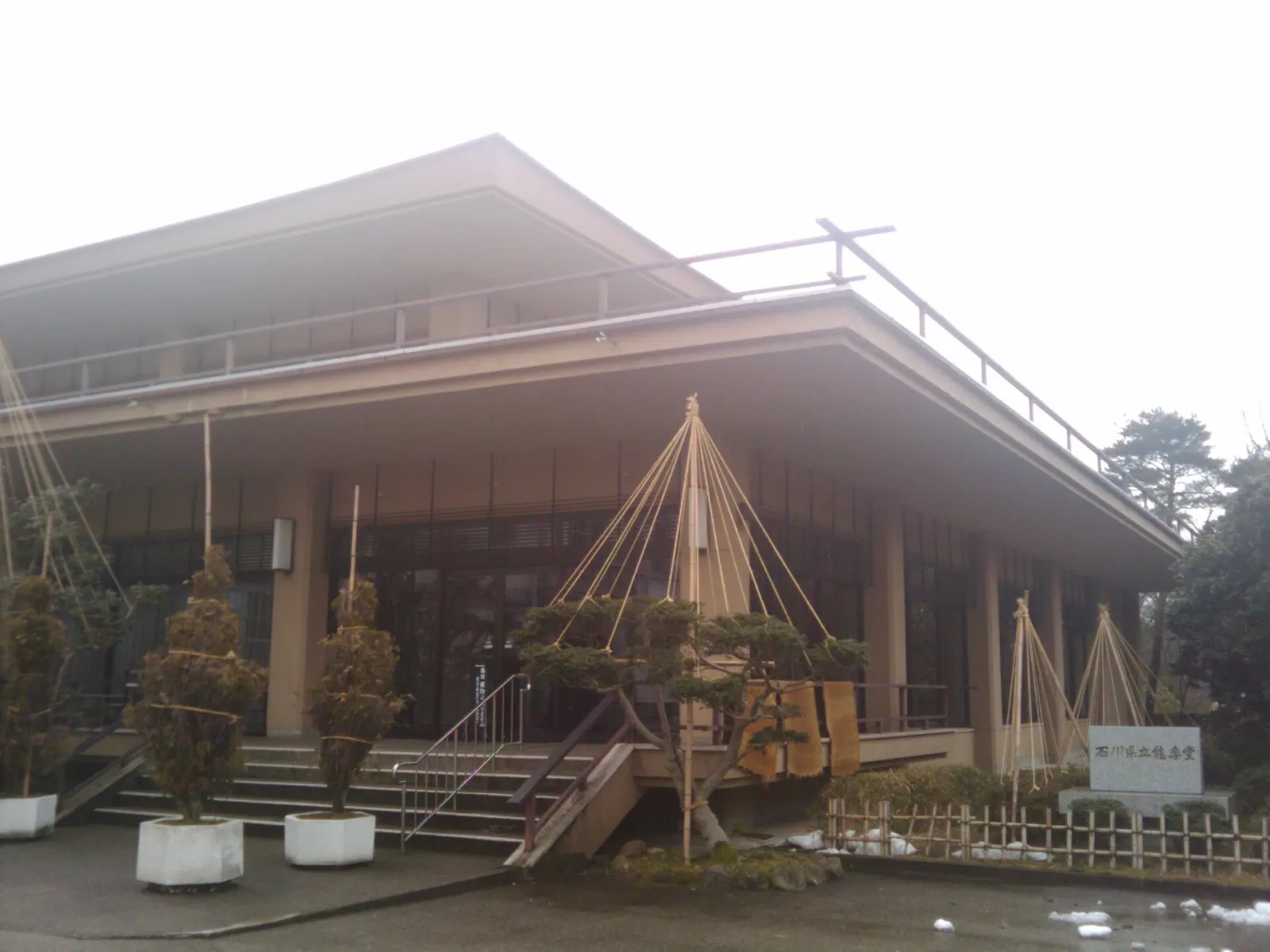
Photo: Saigawasakurabashi, licence: CC BY-SA 3.0, resized and converted to WebP. Source: Wikimedia Commons
The Kanazawa Noh theatre on Hirosaka-dōri was completed in January 1932, with a stage made of cypress from Alishan in Taiwan16. The stage was modelled on the National Treasure north Noh stage at Nishi Honganji in Kyoto; the prefecture later acquired it and moved it to the Ishikawa Prefectural Noh Theater, which opened in 197217.
The Ishikawa Prefectural Museum of History has the Bird’s-eye View of Ishikawa Prefecture that Yoshida Hatsusaburō (1884–1955) painted for the prefecture in 1933; visitors can enlarge 21 annotated spots on a screen18.
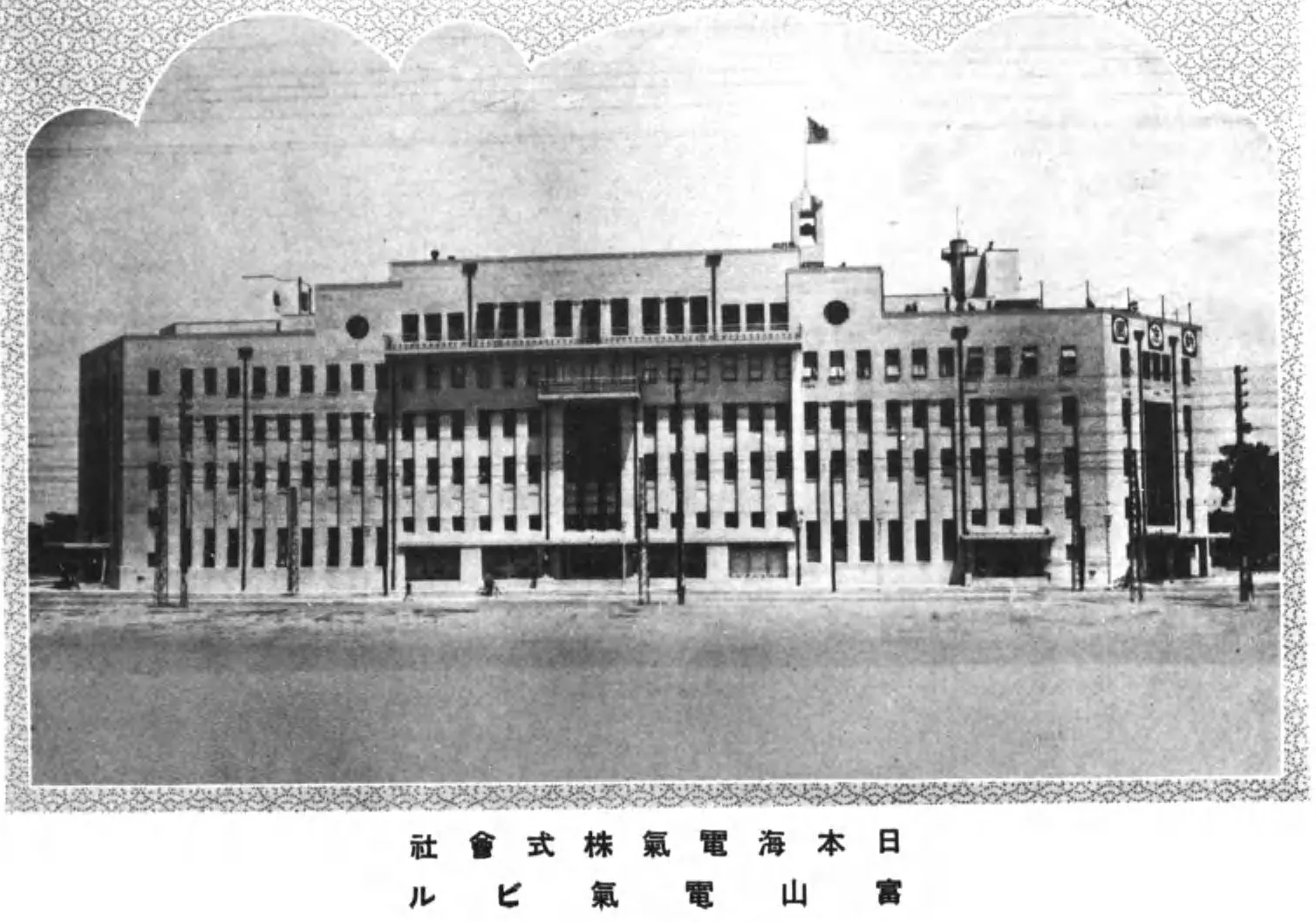
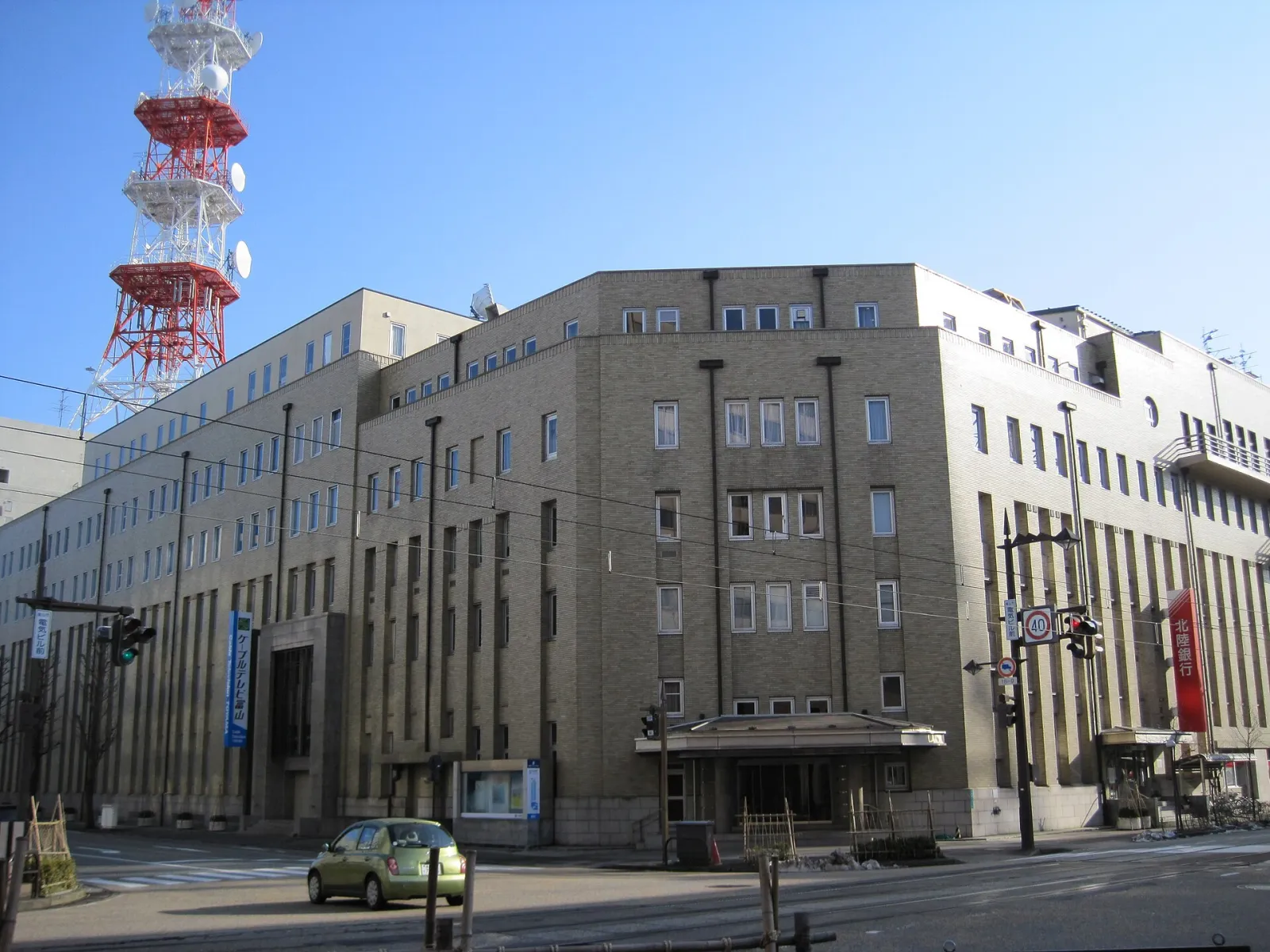
The Toyama Denki Building on Sakurabashi-dōri in Toyama has a main block completed in 1936, with five floors above ground and one below; it was the prefecture’s first full reinforced-concrete multi-tenant office building. The annex was completed in 1956, and both were registered as tangible cultural properties in 201819. When it opened, Nihonkai Denki, the predecessor of Hokuriku Electric Power, had its head office there20.
The café Kissa Cheerio in Sōgawa, Toyama, says it was founded in 193521.
4. The 9th Division
In 1928 three companies of the 9th Division stationed in Tianjin joined the Shandong expedition and suffered casualties in the Jinan Incident22. In the Shanghai Incident of February 1932 the division was mobilized; led by the 7th Infantry Regiment it left Kanazawa and landed at Wusong near Shanghai, and the memorial service in June counted 452 dead in the division22. On 29 April that year, at the Emperor’s Birthday celebration in Shanghai, the Korean Yun Bong-gil threw a bomb that badly wounded the divisional commander Ueda Kenkichi and others; Yun was sentenced to death and shot on 19 December at the army’s Mitsukoji work ground outside Kanazawa23.
The 9th Division was sent to Manchuria in June 1935 and returned to Kanazawa in May 193722. Mobilized again that September, it fought in the Shanghai, Nanjing, Xuzhou, and Wuhan operations and returned in July 1939; the separately raised 109th Division was sent to north China in 193722. In October 1940 the 9th Division left from Nanao and took up border guard duties facing the Soviet Union in Mudanjiang Province, Manchuria22.
In June 1944 the division was ordered to Okinawa, landing there in July. In November it was ordered on to Taiwan, landing on 30 December and setting up its headquarters in Hsinchu to prepare for an American landing. It was in Taiwan at the surrender on 15 August 1945 and returned to Japan in January 194622. The history of Yomitan village in Okinawa says that Imperial General Headquarters took the 9th Division from the 32nd Army for the decisive battle on Leyte and moved it to Taiwan between December 1944 and February 194524. A Kanazawa City Library reference answer lists the pages on Taiwan in unit histories such as the War History of the 9th Division25.
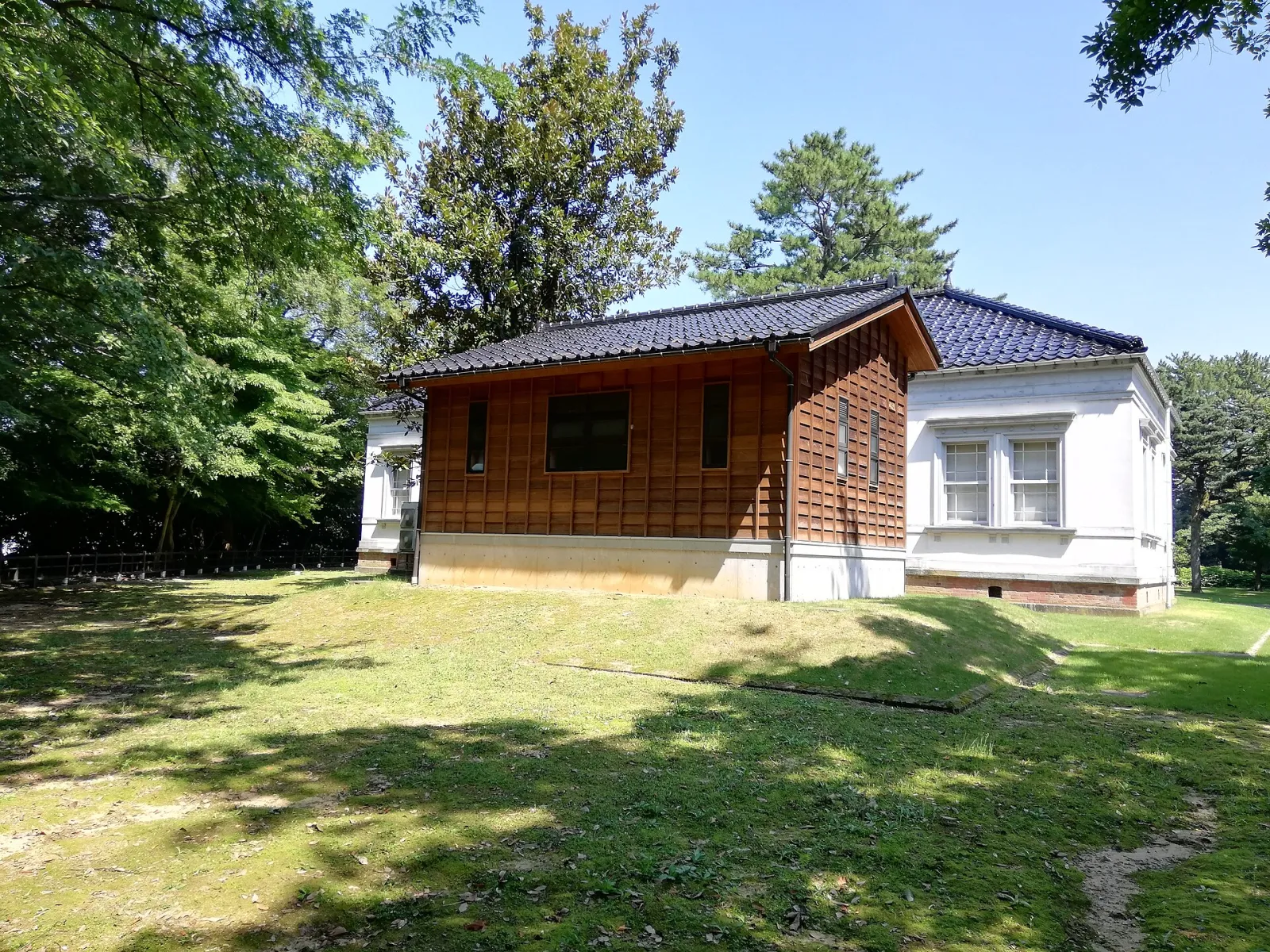
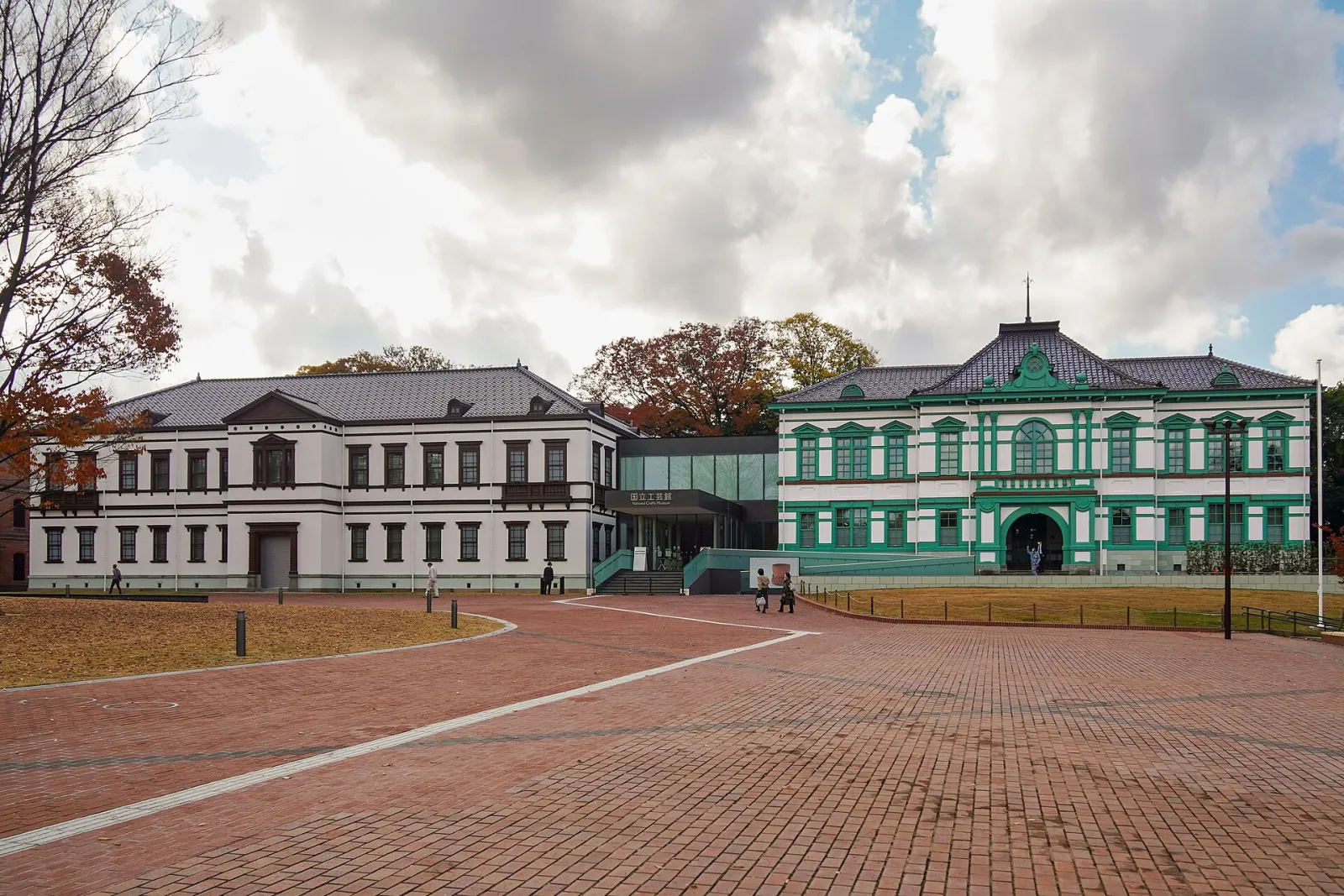
Kanazawa Castle still has the former 6th Brigade headquarters built by the army in 1898, a single-storey timber building with a tiled roof. It is the only military building in the castle that has never been moved, and it is now used as meeting rooms and storage by the park office; the interior is not open26. A brick tunnel in the stone walls of the Honmaru was cut by the army as a passage to its ammunition depot there26. The former 9th Division headquarters in the Ninomaru was moved after the war and is now a building of the National Crafts Museum in the Honda-no-mori area26.
5. Komatsu: City Charter and Naval Airfield
On 1 December 1940 Komatsu town merged with Ataka town and the villages of Maki, Itazu, Shirae, Nawashiro, Miyuki, and Awazu to form Komatsu City27. The Komatsu city history says it was the 176th city in Japan and the first in southern Kaga28.
After the Pacific War began in December 1941, pine woods in Atakashin, Hisue, and Ukiyanagi were felled in the name of “increasing food production”, as cover for building a naval airfield28. Mayor Yamaguchi Matahachi and council chairman Wada Denshirō, setting themselves against “military Kanazawa” with its army division, submitted to the Maizuru naval district a plan for a “military city of the air” with a target population of 500,000; a secret document on “the expansion of Komatsu City” went to the Navy Ministry in April 194428. According to Komatsu Airport’s history, runways of 1,500 m east–west and 1,700 m north–south (each 100 m wide) were completed in November 1944, and two squadrons of naval attack aircraft were stationed there29. The city history includes a June 1945 photograph of the Jinrai unit receiving instructions before a sortie28.
Komatsu Seisakusho, whose founding appeared in the Taishō note, added the Awazu works in March 1938, became the prefecture’s only “first designated munitions factory” in January 1944, and expanded the Komatsu works that October30. Its workforce then numbered more than 11,000, including about 800 called-up men, 900 conscripted workers, and 600 mobilized students30.
In 1944 Komatsu took in 1,200 evacuated schoolchildren, housing them in temples such as Shōzenji and using the youth hall as a school. In July 1945 the prefecture designated clearance zones in Komatsu and elsewhere, and 137 houses were ordered demolished30.
6. Wartime Life in Kanazawa
Kanazawa’s first air-raid blackout drill was held in September 1932, with the defence command on the roof of the Mitsukoshi store at Musashigatsuji31. From February 1942 clothing was rationed with points-based coupons, and from March miso and soy sauce were rationed by passbook31. Emergency metal collection began in September 1943, and most bronze statues, including those of Zeniya Gohei and Nagai Ryūtarō, were handed over. The statue of Maeda Yoshiyasu, the last lord mentioned in the Taishō note, erected in Kenrokuen in 1930, was given up in January 1944; by July 1944, 129 of the prefecture’s 133 bronze statues had gone31.
In March 1944 high-class restaurants and geisha houses across Japan were closed. Kanazawa then had 47 geisha houses with 124 geisha in the Higashi quarter and Kazuemachi, and 46 houses with 158 geisha in the Nishi quarter; many of the geisha went to work in factories31.
In July 1944 it was decided that 15,000 schoolchildren from Osaka, Kobe, and Amagasaki would be evacuated to Ishikawa, about 10,000 of them to inns at eight hot springs including Yamanaka, Yamashiro, Katayamazu, Awazu, Wakura, and Yuwaku. The first group, 2,740 children from eight schools in Miyakojima, Osaka, arrived by special train on 16 September; those who came to Kanazawa were placed in temples such as Nishi Betsuin and Daijōji31. In August that year 680 final-year pupils from ten middle schools in the prefecture went as a student labour corps to Toyota factories in Kariya, Aichi31.
From July 1945 buildings in Kanazawa were cleared around important buildings and along main roads as a firebreak; the work stopped at noon on 15 August31. The modern-history gallery of the Ishikawa Prefectural Museum of History notes that forced clearance took place in Kanazawa, Komatsu, and Nanao, but that the prefecture came through to the end of the war with almost no air-raid damage32.
7. The Toyama Air Raid
Kuragaki airfield
On 8 October 1933 the prefectural Toyama airfield opened at Kuragaki village in Nei District (now Nunome, Toyama City), and a Tokyo service began the following May. It was taken over for military use during the war and returned to farmland after the defeat33. Today’s Toyama Airport opened at a different site in 196333.
In an air-raid memoir published by Toyama City, Yoshino Kimi recalls being in the third year of primary school: there were more evacuation drills than lessons, the woods behind Kamo Shrine in front of her house were cleared to hide seven special-attack aircraft from Kuragaki airfield, and there were two triangular barracks beside the shrine34.
Before 2 August
Toyama City’s air-raid chronology records that mines were dropped in Fushiki harbour eight times between 25 May and 25 July 1945, and that Shinminato was bombed on 16 June and 16 July, killing 26 and 20 people35. “Mock atomic bombs” were dropped on three places in Toyama City on 20 July and on the Toyoda district on 26 July, and warning leaflets were scattered on 31 July35. These were bombs made by the US to train for and collect data on the atomic attacks; their shape and weight were matched to “Fat Man”, the Nagasaki bomb, and they were filled with high explosive or concrete, not nuclear material36.
2 August
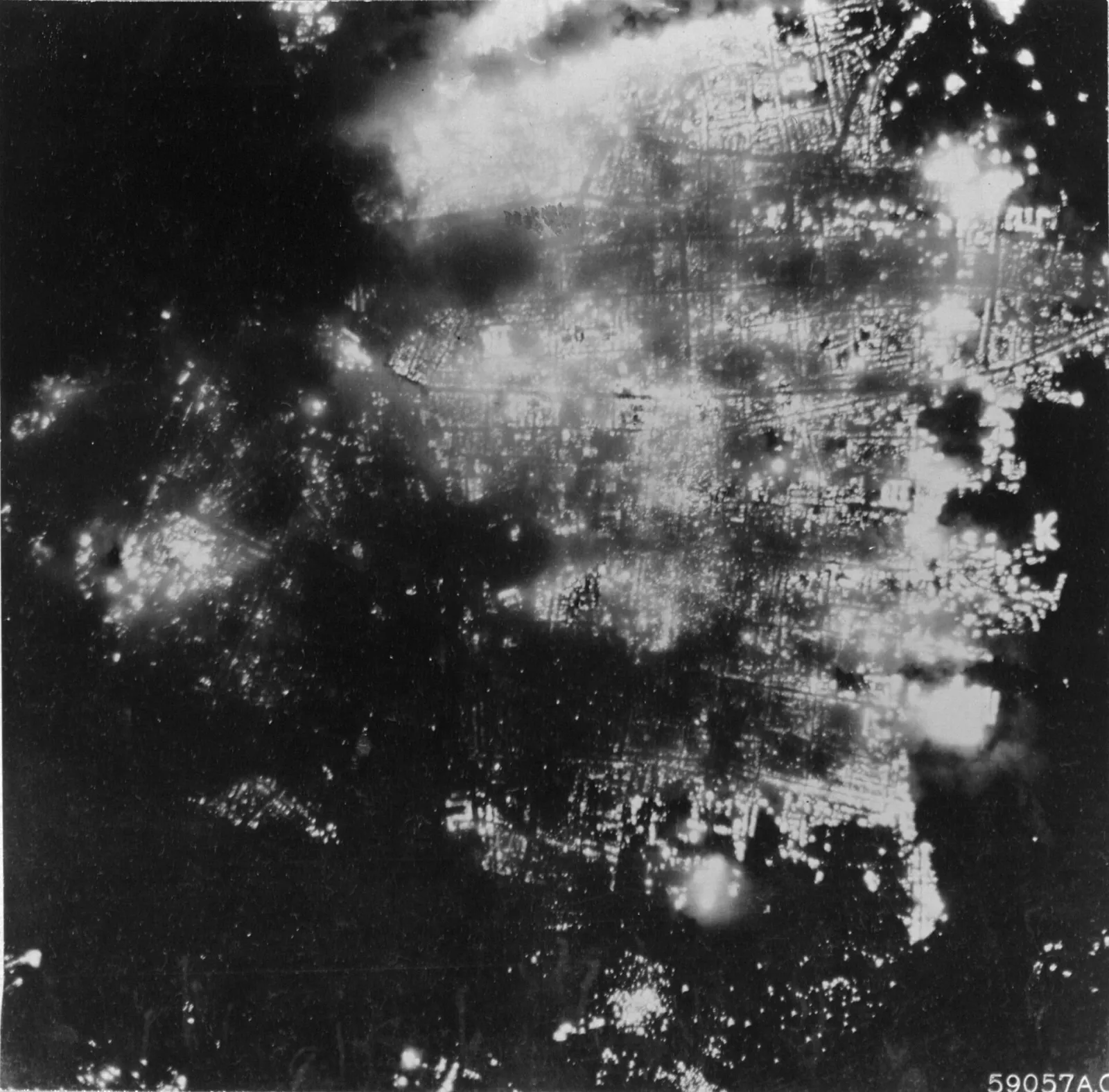
Photo: USAAF. Source: Wikimedia Commons (public domain, resized and converted to WebP)
At 0:36 a.m. on 2 August 1945, 174 American B-29 bombers dropped more than 500,000 incendiaries on central Toyama. 99.5 percent of the urban area burned, about 110,000 people were affected, and more than 2,700 died37. Toyama City’s register of the war dead is said to have been compiled school district by school district from June 1946, using the Toyama police “survey of war dead” of September 1945; as of August 2020 it lists 2,722 names38.
In the raid an incendiary hit the fifth-floor hall of the Toyama Denki Building and started a fire, but Kanai Kyūbei (later the second president of Hokuriku Electric Power) and others put it out, and the building kept its original exterior20.
The grounds of the Gokoku Shrine once held “Isobe Fuji”, a garden mound made for Maeda Masatoshi, the second lord of the Toyama domain, in the Edo period. During the war a shelter large enough for five fire engines and the shrine’s sacred objects was dug into it and completed on 25 April 1945. The raid on 2 August burned every shrine building except the water basin, but the sacred objects survived in the shelter39. The mound was removed in March 1957, and the Gokoku memorial hall was built on the site in 196739.
In the northwest corner of Toyama Castle Park stands a memorial to members of the civil defence corps who died on duty. Built in 1940, it honours 20 firemen and civil defence members who died between 1909 and 1940; the civil defence corps (keibōdan) was formed in 1939 by merging the air-raid defence and fire brigades under police command40.
Memoirs and objects
The air-raid memoirs published by Toyama City include several signed accounts. Yoshimura Miyako, then four and living in Takaoka, writes that at midnight on 2 August, hearing that Takaoka would be bombed too, “the four women, my grandmother, my mother, my sister three years older and I” walked about 20 minutes to the riverbed of the Oyabe; the rucksacks she and her sister carried “had money and rice in them, I was told”41. Maruyama Junko had been evacuated from Tokyo via Osaka to her grandparents in Toyama and was due to move to Namerikawa on 2 August. The night before, in the shelter, she watched her mother and the neighbours “lay out the precious ration matches one by one and count them” to share. After the raid she walked to Namerikawa, and what she remembers eating there is “nothing but sweet potatoes and daikon”42.
A list of relics published by Toyama City (with the Toyama City Folk Museum assisting) includes the two-sided “air-raid alarm / alert in effect” sign that hung at Senkeji temple, a 1942 illustrated air-defence guide, disaster certificates issued by the city and the Toyama police, and the tail of an M17 cluster bomb casing, which held 110 M50 incendiaries, dug up in Toyama Castle Park43.
Toyama Castle was built in 1954 to mark the war-damage reconstruction and now houses the Toyama City Local History Museum44.
8. Links with Taiwan
In June 1934 a radiotelephone link opened between Kanazawa and Taiwan; one three-minute call cost 6 yen45.
Chu Chao-yang (1903–2002) of Banqiao joined the Ministry of Finance in 1928 and between 1931 and 1937 served as a section chief or branch head at the monopoly bureau’s branches in Osaka, Takasaki, Kanazawa, Kumamoto, Hiroshima, and Utsunomiya. He returned to Taiwan in 1946 and organized the board of Yanping College, whose directors included Qiu Niantai, who appeared in the Taishō note46.
For the surgeon Hsu Shu-chien from Changhua, an article in Jingfu Medical Newsletter says he entered the Osaka College of Pharmacy in March 1938 and Kanazawa Medical University in March 1941, studied surgery under Professor Kuru Masaru, and graduated in 1944. Takahashi Sugako, who worked in the Kanazawa medical department, sailed to Taiwan in 1946 with Hsu’s younger brother Hsu Shu-tao and later became Hsu Shu-chien’s wife47. The sources differ on his years of entry and graduation: the National Cultural Memory Bank profile gives entry in 1943, and a memorial essay in the Kanazawa University medical alumni bulletin gives graduation in Shōwa 17 (1942)48.
9. Miyamoto Saburō
The Western-style painter Miyamoto Saburō (1905–1974), born in Matsuzaki, Komatsu, went to China as a war artist from 1940 and to Southeast Asia with Fujita Tsuguharu, Koiso Ryōhei, and others in 1942. His works include The Meeting of Homma and Wainwright, shown at the 1944 Army Art Exhibition, and his book of southern war drawings was published in 194449. The National Museum of Modern Art, Tokyo, holds his 1942 war record painting The Meeting of Generals Yamashita and Percival50.
In 1980 the Miyamoto Saburō Memorial Museum was founded at his birthplace in Matsuzaki; when the Komatsu City Miyamoto Saburō Museum opened in 2000, the memorial museum became the Miyamoto Saburō Furusato-kan51.
10. Surrender and Occupation
Japan accepted the Potsdam Declaration on 15 August 1945. House clearance in Ishikawa stopped at noon that day, and the blackout was lifted on the evening of 20 August52. The Kanazawa district military police disbanded on 29 September52.
On 20 October an advance party of about 30 men of the 136th Regiment, US 33rd Division (Sixth Army), arrived in Kanazawa by train to occupy Ishikawa. The main body of more than 350 arrived on the 27th and moved into the barracks of the former 7th Infantry Regiment and former mountain artillery regiment, and 40 men reached Komatsu on the 28th52. Komatsu airfield was taken over by the US in August 1945 and became an auxiliary radar base29. On 16 November, ahead of women’s suffrage, the Ishikawa Women’s Association was founded52. On 2 December General Headquarters ordered the arrest of 59 leading figures, including Sakurai Hyōgorō and Satō Kenryō from Ishikawa. Sakurai, elected to the House of Representatives after serving in the Ishikawa prefectural assembly, had been a minister of state in the Suzuki Kantarō cabinet53. On 30 December the US Counter Intelligence Corps (CIC), directly under GHQ, opened an office in the former foreigners’ residence beside the courthouse52.
The takeovers, occupation, and reconstruction that followed belong to the later Shōwa era.
11. Places to Visit Today
| Area | Place | Type | Notes |
|---|---|---|---|
| Toyama | Toyama Denki Building | Building / Restaurant | Office building completed in 1936, with restaurants and a café1954 |
| Toyama | Toyama Castle Park and local history museum | Park / Museum | Keep built in 1954 to mark the reconstruction; civil defence memorial in the park4440 |
| Toyama | Toyama Gokoku Shrine | Shrine | Site of the Isobe Fuji shelter; the mound is gone39 |
| Toyama | Kissa Cheerio | Café | Founded 193521 |
| Kanazawa | Kanazawa Bungeikan | Building / Museum | The 1929 bank; closed 4, 10, 17, and 24 November 20261555 |
| Kanazawa | Kanazawa Phonograph Museum | Museum | 10:00–17:30 (last entry 17:00); phonograph listening daily at 11:00, 14:00, and 16:0056 |
| Kanazawa | Ishikawa Prefectural Noh Theater | Noh theatre | The 1932 stage of Alishan cypress17 |
| Kanazawa | Kanazawa Castle Park | Historic site | Former 6th Brigade headquarters, exterior only; brick ammunition tunnel in the Honmaru walls26 |
| Kanazawa | National Crafts Museum | Museum / Building | Former 9th Division headquarters26 |
| Kanazawa | Ishikawa Prefectural Museum of History | Museum | Modern-history gallery “The Age of War and the People”; exhibits rotate32 |
| Kanazawa | Kanazawa Museum of Local Life | Museum | 9:30–17:00 (last entry 16:30), closed Mondays; former Second Middle School main building; special exhibition on the school’s students, 29 Aug–22 Nov 20265758 |
| Komatsu | Miyamoto Saburō Museum and Furusato-kan | Museum | Check the official site for exhibitions51 |
References
Footnotes
-
Kanazawa City Library, “City history chronology: A Hundred Years of Kanazawa, Taishō–Shōwa” (change of era on 25 December 1926): https://www2.lib.kanazawa.ishikawa.jp/reference/shishinenpyou_t.htm ↩
-
Toyama Prefecture, prefectural records, chronology of imperial visits (Taishō 13 visit of “Crown Prince Hirohito, Regent” for the special grand manoeuvres; Shōwa 22 imperial tour): https://www.pref.toyama.jp/documents/11872/086-s5103.pdf ↩
-
Kanazawa City Library, “City history chronology” (special grand manoeuvres from 23 October 1933, 9th and 11th Divisions, imperial headquarters at the Fukui prefectural office): https://www2.lib.kanazawa.ishikawa.jp/reference/shishinenpyou_t.htm ↩
-
Fukui Prefectural Museum of History, “The Imperial Household and Fukui” (2020 exhibition; imperial visit of October 1933, decided at the end of the previous year, ten months of preparation): https://www.pref.fukui.lg.jp/muse/Cul-Hist/kikaku/kako/2020/20201024_koushitsutofukui.html ↩
-
Fukui Prefectural Children’s History and Culture Museum, “People connected with Fukui” (Okada Keisuke, 1868–1952, naval officer, politician, prime minister): https://info.pref.fukui.lg.jp/koreki/whats/what_03.html ; Wikipedia (Japanese), “Okada Keisuke” (31st prime minister, 8 July 1934 – 9 March 1936): https://ja.wikipedia.org/wiki/%E5%B2%A1%E7%94%B0%E5%95%93%E4%BB%8B ↩
-
Wikipedia (Japanese), “Okada Keisuke” (brother-in-law and secretary Matsuo Denzō killed in his place in the February 26 Incident): https://ja.wikipedia.org/wiki/%E5%B2%A1%E7%94%B0%E5%95%93%E4%BB%8B ↩
-
Kanazawa City Library, “City history chronology” (transmitter site on 18 September 1928; JOJK opening on 15 April 1930; 10,000 listeners on 31 October 1930): https://www2.lib.kanazawa.ishikawa.jp/reference/shishinenpyou_t.htm ↩ ↩2
-
Nonoichi City, “Radio” (Tokyo station relay of Nonoichi jonkara in 1928; Kanazawa station’s Nonoichi transmitter in 1930): https://www.city.nonoichi.lg.jp/uploaded/attachment/11547.pdf ↩
-
Kanazawa City Library, “City history chronology” (16 September 1931 Bijinza and Akadama and police controls; 10 December 1931 Senpōkaku Brazil; 2 November 1932 league against the waitress tax; 7 January 1933 tax from April): https://www2.lib.kanazawa.ishikawa.jp/reference/shishinenpyou_t.htm ↩ ↩2 ↩3
-
Kanazawa City Library, “City history chronology” (12 June 1935 Shōchikuza dismisses three narrators and four musicians; 21 November 1936 Kanazawa Gekijō): https://www2.lib.kanazawa.ishikawa.jp/reference/shishinenpyou_t.htm ↩ ↩2
-
National Film Archive of Japan, film collection database, Taki no shiraito (1933, Irie Production, dir. Mizoguchi Kenji, original story Izumi Kyōka, starring Irie Takako and Okada Tokihiko): https://nfad.nfaj.go.jp/det.php?data_id=20431 ↩
-
Kanazawa Phonograph Museum, director’s blog no. 89 (December 2011; Kura Shin’ichi Collection, Mon Ami, NHK programme, Modan Kanazawa): https://www.kanazawa-museum.jp/chikuonki/kancho/2011_12.html ↩
-
Ishikawa Prefectural Museum of History, winter exhibition “Modern Kanazawa and Popular Culture” (10 December 2016 – 15 January 2017; the magazine, 1932 naming-ceremony poster, projector of about 1924): https://www.ishikawa-rekihaku.jp/special/special_top.php?cd=2016112101 ↩
-
Kanazawa City Library, “City history chronology” (14 March 1932 Miyaichi Daimaru; 7 January 1937 shop survey; 18 November 1942 floor cuts; 31 March 1944 closure of the former Marukoshi store “merged with Miyaichi Daimaru at the end of last year”): https://www2.lib.kanazawa.ishikawa.jp/reference/shishinenpyou_t.htm ↩ ↩2 ↩3 ↩4
-
Kanazawa City, “Former Ishikawa Bank Hashiba Branch” (1929, Shimizu-gumi, built as the Takaoka Bank Hashiba branch, four-storey RC, now Kanazawa Bungeikan): https://www4.city.kanazawa.lg.jp/soshikikarasagasu/bunkazaihogoka/gyomuannai/3/1/1/hozontaisyoubutu/hozontaisyoubutu/5982.html ; Cultural Heritage Online (registered 8 November 2004): https://online.bunka.go.jp/heritages/detail/189080 ↩ ↩2
-
Kanazawa City Library, “City history chronology” (5 January 1932 completion of the Kanazawa Noh theatre, “the stage is built of hinoki from Alishan, Taiwan”): https://www2.lib.kanazawa.ishikawa.jp/reference/shishinenpyou_t.htm ↩
-
Ishikawa Prefecture, Hot Ishikawa, summer 2014, “Prefectural Noh Theater” (opened Shōwa 47 [1972]; all-cypress stage modelled on the north stage of Nishi Honganji; built at Hirosaka in Shōwa 7 [1932], acquired and moved by the prefecture): https://www.pref.ishikawa.lg.jp/kouhou/hot/documents/hot_up_5.pdf ↩ ↩2
-
Ishikawa Prefectural Museum of History, exchange and experience hall (Yoshida Hatsusaburō, 1884–1955, 1933 Bird’s-eye View of Ishikawa Prefecture, 21 annotated spots): https://ishikawa-rekihaku.jp/info/welcome.html ↩
-
Toyama Cultural Heritage, “Toyama Denki Building main block and annex” (main block 1936, annex 1956; the prefecture’s first full RC multi-tenant office building): https://toyama-bunkaisan.jp/search/2566/ ↩ ↩2
-
Denki Shimbun, “Toyama Denki Building, which survived the Toyama air raid, to become a registered cultural property” (2018; Nihonkai Denki head office, fire in the fifth-floor hall put out by Kanai Kyūbei and others, occupied by the occupation forces with a headquarters until 1952): https://www.denkishimbun.com/sp/30928 ↩ ↩2
-
Kissa Cheerio, official site (founded 1935, Sōgawa, Toyama): https://cheerio1935-sogawa.com/ ↩ ↩2
-
Kanazawa City Library, “City history chronology” (19 April and 3 May 1928 Jinan Incident; 2 February 1932 Shanghai Incident, 452 dead at the memorial on 18 June; 25 May and 25 June 1935 to Manchuria; 13 May 1937 return, 20 August 109th Division, 9 September mobilization; 11 October 1940 departure from Nanao; 15 June 1944 order to Okinawa, landing in Taiwan on 30 December, Hsinchu, return to Japan in January 1946): https://www2.lib.kanazawa.ishikawa.jp/reference/shishinenpyou_t.htm ↩ ↩2 ↩3 ↩4 ↩5 ↩6
-
Kanazawa City Library, “City history chronology” (bombing at the Emperor’s Birthday celebration in Shanghai on 29 April 1932; execution at the Mitsukoji army work ground on 19 December): https://www2.lib.kanazawa.ishikawa.jp/reference/shishinenpyou_t.htm ↩
-
Yomitan Village History, “War records”, vol. 1, chapter 1 (the 9th Division taken from the 32nd Army for Leyte and moved to Taiwan from December 1944 to February 1945): https://yomitan-sonsi.jp/sonsi/vol05a/chap01/sec00/cont00/docu017.htm ↩
-
Collaborative Reference Database (Kanazawa City Library), “On the 9th Division and Taiwan” (War History of the 9th Division, p. 221, and other unit histories): https://crd.ndl.go.jp/reference/entry/index.php?id=1000190142&page=ref_view ↩
-
Kanazawa Castle Park, “Former 6th Brigade headquarters and military remains” (1898, single-storey timber with tiled roof, 196 m², interior closed; brick tunnel in the Honmaru walls; former 9th Division headquarters moved after the war, now the National Crafts Museum): https://shiro-niwa.pref.ishikawa.lg.jp/kanazawa-castle/explore/military.php ↩ ↩2 ↩3 ↩4 ↩5
-
Komatsu City call centre FAQ, “When did Komatsu become its present form?” (city charter on 1 December 1940, merger of two towns and six villages): https://faq1.city.komatsu.lg.jp/faq/detail.aspx?id=1527 ↩
-
New Komatsu City History, vol. 10, “Illustrated History of Komatsu”, Modern 25 “The military-city plan and Komatsu airfield” (Hirano Masaru, pp. 190–191; 176th city, felling of pine woods and the naval airfield, plan for a military city of the air, April 1944 document, June 1945 Jinrai unit photograph): https://www.city.komatsu.lg.jp/material/files/group/39/425gunto.pdf ↩ ↩2 ↩3 ↩4
-
Komatsu Airport, “History” (runways completed and two naval attack squadrons stationed in November 1944; US takeover as an auxiliary radar base in August 1945): https://www.komatsuairport.jp/about/history.html ↩ ↩2
-
New Komatsu City History, vol. 10, Modern 24 “Citizens in wartime” (Motoyasu Hiroshi, pp. 188–189; Komatsu Seisakusho as first designated munitions factory in January 1944, Awazu works in March 1938, workforce over 11,000; 1,200 evacuated children, Shōzenji, youth hall; 137 houses): https://www.city.komatsu.lg.jp/material/files/group/39/424senjika.pdf ↩ ↩2 ↩3
-
Kanazawa City Library, “City history chronology” (17 September 1932 blackout drill; 1 February 1942 clothing coupons, 1 March miso and soy sauce; 15 September 1943 metal collection, 12 January 1944 Maeda Yoshiyasu statue; 5 March 1944 restaurant closures; 25 July, 5 August, and 16 September 1944 school evacuation and student labour; 12 July–15 August 1945 building clearance): https://www2.lib.kanazawa.ishikawa.jp/reference/shishinenpyou_t.htm ↩ ↩2 ↩3 ↩4 ↩5 ↩6 ↩7
-
Ishikawa Prefectural Museum of History, “Modern period, permanent exhibition” (“The Age of War and the People”; the prefecture “ended the war with almost no air-raid damage”): https://ishikawa-rekihaku.jp/exhibition/05.html ↩ ↩2
-
Toyama Prefecture, Kenkōhō Toyama no. 368 (October 1999), “Dawn of the air age: Toyama airfield opens” (8 October 1933, Kuragaki village, now Nunome; Tokyo service the following May; military use; returned to farmland; Toyama Airport opened in 1963): https://www.pref.toyama.jp/documents/14615/19631_368-h1110.pdf ↩ ↩2
-
Toyama City, Toyama air-raid memoirs, Yoshino Kimi, “Memories at eight”: https://www.city.toyama.toyama.jp/etc/kuushuu/peace/taiken/08.html ↩
-
Toyama City, “Toyama air raid: chronology” (mines in Fushiki from 25 May 1945; Shinminato raids on 16 June and 16 July; mock atomic bombs on 20 and 26 July; warning leaflets on 31 July): https://www.city.toyama.toyama.jp/etc/kuushuu/airraid/ ↩ ↩2
-
Wikipedia (Japanese), “Pumpkin bomb” (almost the same shape as Fat Man, a mock atomic bomb, filled with high explosive or concrete): https://ja.wikipedia.org/wiki/%E3%83%91%E3%83%B3%E3%83%97%E3%82%AD%E3%83%B3%E7%88%86%E5%BC%BE ↩
-
Toyama City, “Remembering the Toyama air raid” (0:36 a.m. on 2 August 1945, 174 B-29s, more than 500,000 incendiaries, 99.5 percent of the urban area, about 110,000 affected, over 2,700 dead): https://www.city.toyama.toyama.jp/etc/kuushuu/ ↩
-
Toyama City, “On the register of war dead” (Toyama police survey of September 1945, school-district surveys from June 1946, 2,722 names as of 17 August 2020): https://www.city.toyama.lg.jp/kurashi/jinken/1010391/1003497.html ↩
-
Toyama City Local History Museum, Museum Newsletter no. 22 (1998; Isobe Fuji, shelter completed 25 April 1945, sacred objects, removal on 13 March 1957, memorial hall in 1967): https://www.city.toyama.toyama.jp/etc/muse/tayori/tayori22/tayori22.htm ↩ ↩2 ↩3
-
Toyama City Local History Museum, Museum Newsletter no. 34 (1999; civil defence memorial, 1940, 20 names, corps formed in 1939): https://www.city.toyama.toyama.jp/etc/muse/tayori/tayori34/tayori34.htm ↩ ↩2
-
Toyama City, Toyama air-raid memoirs, Yoshimura Miyako, “Memories of the night of the Toyama air raid”: https://www.city.toyama.toyama.jp/etc/kuushuu/peace/taiken/10.html ↩
-
Toyama City, Toyama air-raid memoirs, Maruyama Junko, “My war experience”: https://www.city.toyama.toyama.jp/etc/kuushuu/peace/taiken/12.html ↩
-
Toyama City, “List of Toyama air-raid relics” (air-defence guide, alarm sign from Senkeji, disaster certificates, tail of an M17 cluster bomb casing): https://www.city.toyama.toyama.jp/etc/kuushuu/airraid/guide/index.html ↩
-
Toyama City, “Buildings, trees and more” (Toyama Castle built in Shōwa 29 [1954] to mark the war-damage reconstruction): https://www.city.toyama.lg.jp/shisei/machizukuri/1010805/1012703/1012714.html ↩ ↩2
-
Kanazawa City Library, “City history chronology” (Kanazawa–Taiwan radiotelephone opened on 20 June 1934, 6 yen per three minutes): https://www2.lib.kanazawa.ishikawa.jp/reference/shishinenpyou_t.htm ↩
-
Taipei Private Yanping High School, “Founder Chu Chao-yang” (born 1903; Ministry of Finance 1928; branches in Osaka, Takasaki, Kanazawa, Kumamoto, Hiroshima, and Utsunomiya 1931–1937; return 1946; Yanping College board and Qiu Niantai): https://www.yphs.tp.edu.tw/about/%E5%89%B5%E8%BE%A6%E4%BA%BA%E6%9C%B1%E6%98%AD%E9%99%BD%E5%85%88%E7%94%9F/ ↩
-
Yeh Hung-ming, “The education of surgeon Professor Hsu Shu-chien”, Jingfu Medical Newsletter 41:3 (March 2024), pp. 25–27 (Osaka College of Pharmacy March 1938, Kanazawa Medical University March 1941, Kuru surgery, graduation 1944; Takahashi Sugako to Taiwan with Hsu Shu-tao in 1946): https://www.jingfu.org.tw/doc/jff_mgz_m41-03.pdf ↩
-
Taiwan Cultural Memory Bank, “Hsu Shu-chien” (entered Kanazawa Medical University in 1943): https://tcmb.culture.tw/zh-tw/detail?id=637957&indexCode=Culture_Object ; Kubota Akio, “Remembering Dr Hsu Shu-chien”, Juzen Dōsōkai Kaihō no. 152 (2012), p. 22 (graduated Shōwa 17): https://juzen-ob.w3.kanazawa-u.ac.jp/wp/wp-content/uploads/2018/09/no_152.pdf ↩
-
Kokugakuin University, “Miyamoto Saburō | Yasukuni no emaki” (1905–1974, Matsuzaki, Komatsu; to China as a war artist from 1940, to Southeast Asia in 1942; The Meeting of Homma and Wainwright, 1944; southern war drawings published 1944): https://www2.kokugakuin.ac.jp/kaihatsu/maa/yasukuni/artist_miyamoto.html ↩
-
Independent Administrative Institution National Museum of Art, collection search (Miyamoto Saburō, The Meeting of Generals Yamashita and Percival, 1942, war record painting, National Museum of Modern Art, Tokyo): https://search.artmuseums.go.jp/records.php?sakuhin=4875 ↩
-
Komatsu City, “Miyamoto Saburō Museum and Furusato-kan” (memorial museum 1980, city museum 2000, Furusato-kan): https://www.city.komatsu.lg.jp/soshiki/1050/index.html ↩ ↩2
-
Kanazawa City Library, “City history chronology” (15 August 1945; blackout lifted 20 August; military police disbanded 29 September; US troops on 20 and 27 October; Ishikawa Women’s Association 16 November; arrest orders 2 December; CIC 30 December): https://www2.lib.kanazawa.ishikawa.jp/reference/shishinenpyou_t.htm ↩ ↩2 ↩3 ↩4 ↩5
-
Ishikawa Prefectural Library SHOSHO, “Sakurai Hyōgorō” (1880–1951; elected to the House of Representatives after the prefectural assembly; minister of state in the Suzuki Kantarō cabinet; held as a Class A war crimes suspect after the war and released): https://www.library.pref.ishikawa.lg.jp/shosho/furucolle/list/prsn05361 ↩
-
Toyama Denki Building restaurants, official site (French and Japanese restaurants, Café South Wing, basement grill): https://denkibuil.com/ ↩
-
Kanazawa Bungeikan, official site (closed 4, 10, 17, and 24 November 2026): https://www.kanazawa-museum.jp/bungei/ ↩
-
Kanazawa Phonograph Museum, “Visitor information” (10:00–17:30, last entry 17:00): https://www.kanazawa-museum.jp/chikuonki/riyou/index.html ; official top page (phonograph listening daily at 11:00, 14:00, and 16:00): https://www.kanazawa-museum.jp/chikuonki/ ↩
-
Kanazawa Museum of Local Life, “Visitor information” (9:30–17:00, last entry 16:30, closed Mondays): https://www.kanazawa-museum.jp/minzoku/info/index.html ↩
-
Kanazawa Museum of Local Life, special exhibition “Shōsei: the youth of Second Middle School students” (29 August – 22 November 2026; former Ishikawa Second Middle School main building, founded 1899, closed 1948): https://www.kanazawa-museum.jp/minzoku/exhibit/index.html ↩