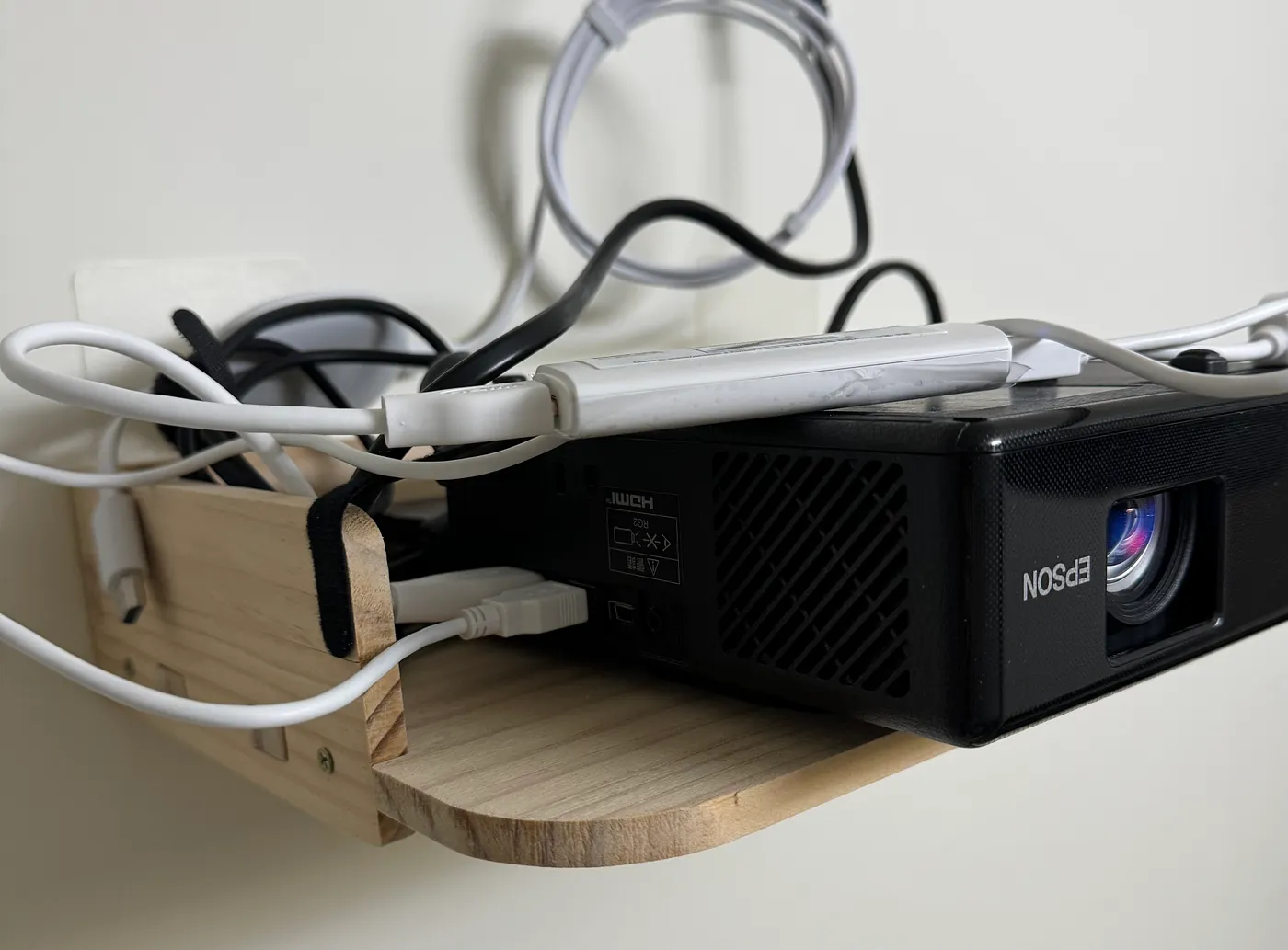
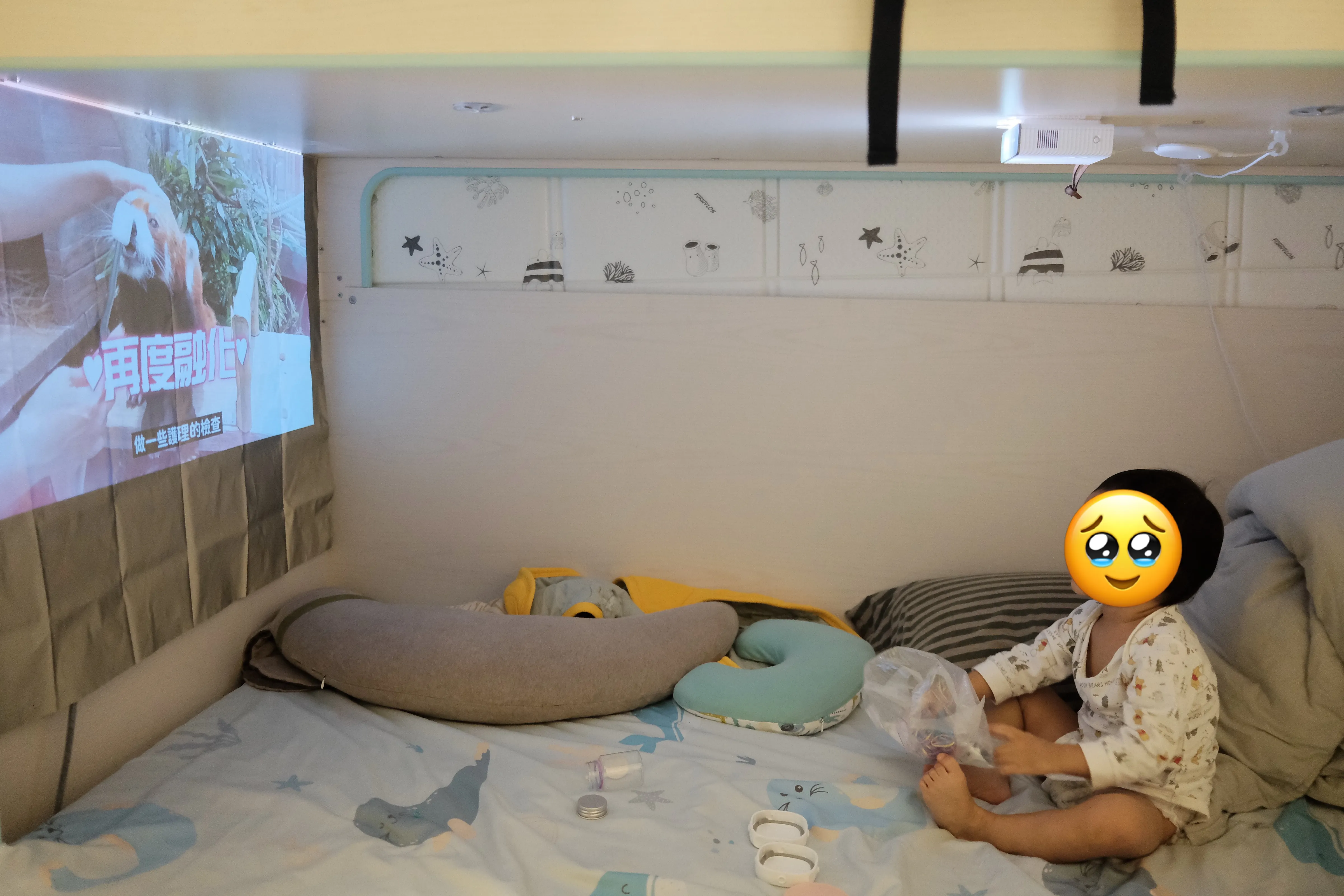
I have three projectors at home: EPSON EF11, EF12, and the BenQ GV10.
The EPSON EF11 is in the master bedroom with Google TV. Its speaker is broken and crackles, so I bought a USB speaker to pair with it. The EF12 is for visits back to my parents’ home in Changhua. It has automatic keystone correction; it’s not super accurate, but still easier than manual. When it launched, it had no Netflix certification. I expected EPSON to add it later, but newer models now have native Netflix, so that ship has sailed. I just use Google TV with it.
When I travel, I bring the BenQ GV10. I’ve even taken it abroad so my daughter can watch TV while lying down at night.
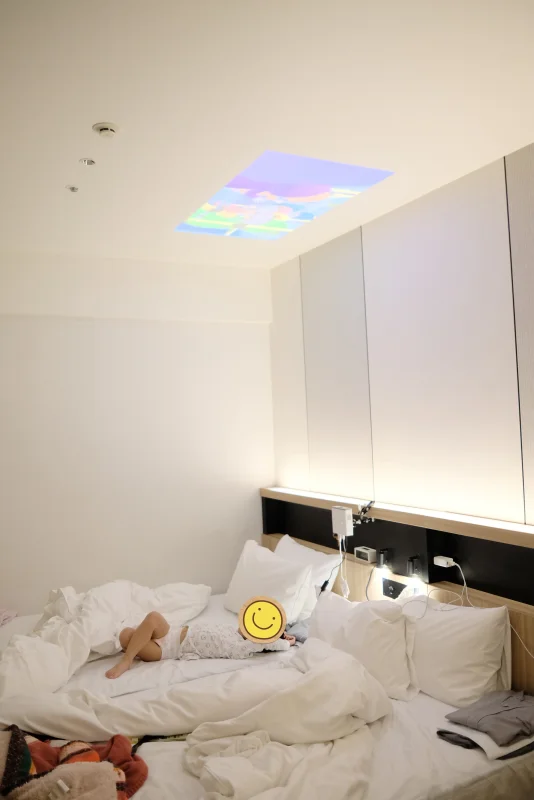
The GV10 is light, but its power brick is not. And since it doesn’t have a built-in OS, you still need a streaming stick, which means you must remember two remotes. I rarely forget the stick’s remote, but I often forget the projector remote, which makes adjusting projection (front, rear, or ceiling) a pain. Another downside for me is the built-in battery. Most portable projectors have one, but I don’t like the dependency. With a battery, the projector can’t be checked in, and I really don’t feel comfortable having a lithium battery by the bed.
I’ve been looking for a projector with these features:
- Lightweight and easy to carry
- No built-in battery
- Type-C power input
- Built-in Netflix
There are basically two models that meet these requirements:
- Samsung Freestyle (0.8 kg, 550 LED lm, Tizen)
- BenQ GV32 (1.6 kg, 500 ANSI lm, Android 11)
There’s also one that almost fits: T1 Pro (1.25 kg, ANSI lm, Linux).
I was tempted by the T1 Pro. It’s really cheap, under NT$7,000, but it lacks the Type-C power input, so I hesitated for months. (In other people’s unboxings, I never even saw a power adapter.)
The Samsung Freestyle has lower brightness on paper, but it’s sleek and light, and I’ve wanted it for a long time. The price was just too high (NT$28,900), so I kept hesitating. Then Toyota chose the second-gen Freestyle as a delivery gift, and suddenly there were many brand-new units on the market for NT$8-9k. I bought one during Lunar New Year this year.
In actual use, I was impressed. Even with lower lumens, the colors are vivid and saturated. It’s more than enough for a bedroom. The charger is tiny and very portable, and any 60W Type-C charger works fine. I was initially unsure about Tizen OS, but the UI is clean and all my usual apps are there. That worry is gone.
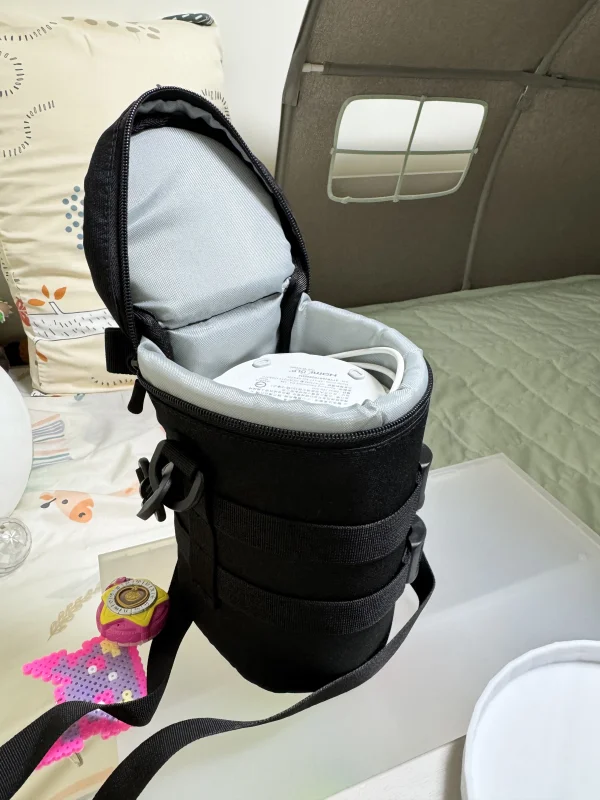
Accessories are hard to find. The official travel bag only comes in a Pokemon collab version now, and it’s super expensive. Since the body is cylindrical, I thought a lens pouch might fit. I found one on Shopee in a similar size, and it fits perfectly.
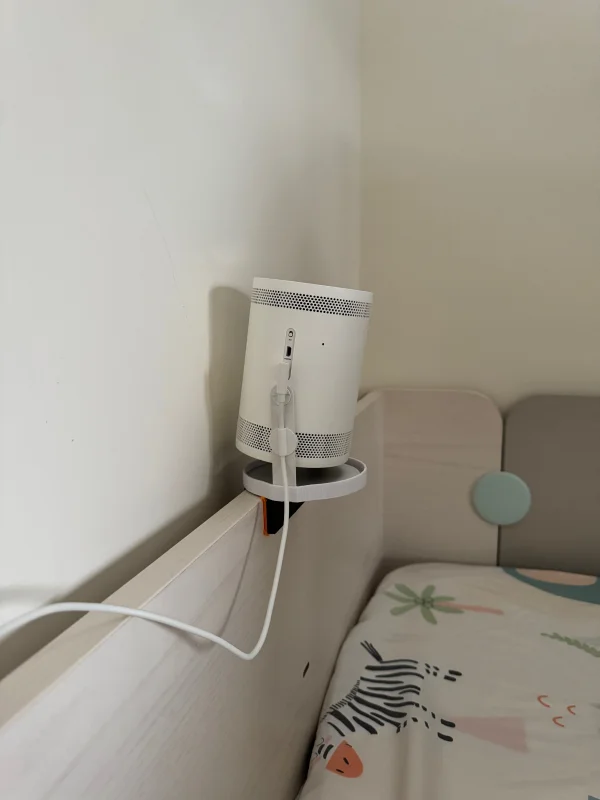
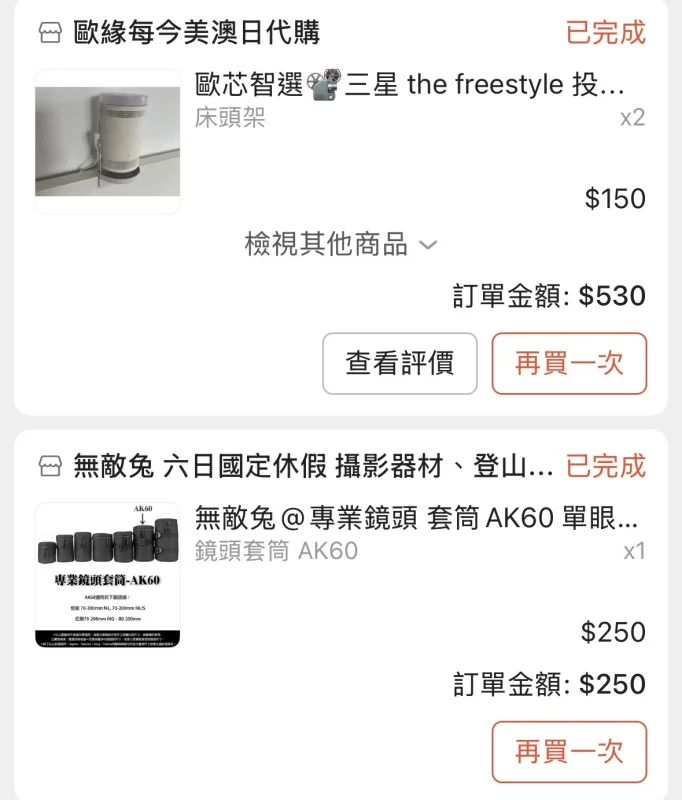
I also found a 3D-printed bedside mount on Shopee. The seller offers custom sizing, and it works well on the bedframe. I also asked the seller to print a wall mount I found online, but I’m worried it might fall, so I haven’t used it.
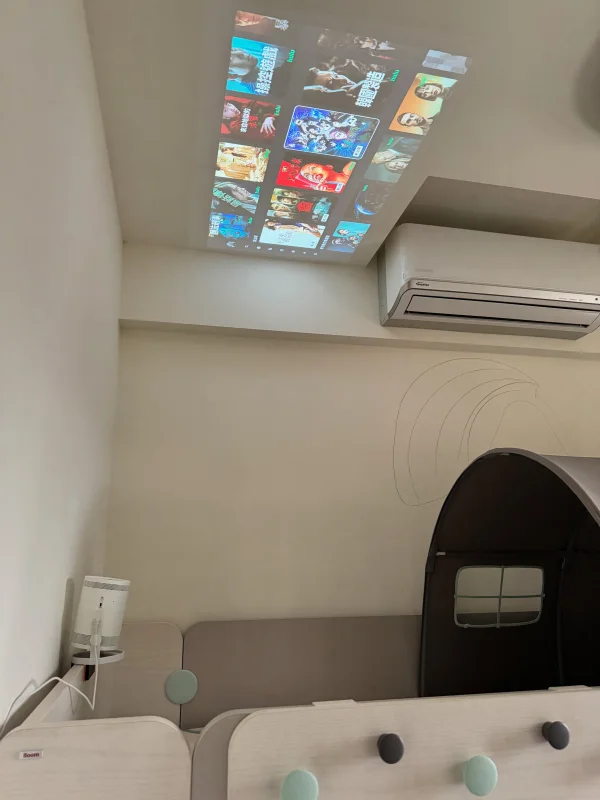
I mentioned this projector while chatting at a Sprint Demo, and a colleague immediately bought one, for under NT$8,000. I’m jealous.
Samsung also sells a power bank accessory for over NT$4,000. I don’t need it right now. Maybe I’ll consider it when 60W power banks become more common.
At CES earlier this year, Samsung announced the next generation Samsung Freestyle + with double the brightness and more features. My guess is it will still be priced around NT$28,000.
BTW, it’s best to see a projector in person. Try holding it and testing it to make sure it’s what you want. There are so many specs and trade-offs, and everyone’s preferences are different. I once saw a tiny soda-can-style projector at Fayaque in Tianmu and really wanted it, but I ruled it out because it had a built-in battery. On a trip to Japan, I also saw many demos at Yodobashi, including the new EF61 and EF72. The more you compare, the easier it is to find the right one.
Note: This article was machine-translated from Traditional Chinese.